Wakeout pack — 14 exercises
Neck Relief
Therapeutic movements and stretches for immediate neck pain relief.
sittingdeskmiddaydo anywhere14 exercises
30-second preview
Full routine on YouTube
Press play and follow along
The whole routine in one video, 3:13 start to finish. Turn it up and follow along.
Reach for this when…
Your neck has gone stiff after a long stretch at the screen and turning your head to look over your shoulder suddenly feels like a big ask.
Why this happens
Acute neck pain at a desk almost always comes from one thing: your head weighs about 5 kg, and every inch it travels forward of your shoulders roughly doubles the load on your upper cervical spine. Three hours hunched at a laptop is 30+ lb of sustained strain on muscles evolved to carry a balanced skull. By the time you feel it, the suboccipitals, levator scapulae, and upper trapezius have been firing protectively for hours — a slow tightening you don't notice until you can't turn your head to check traffic. This pack is built for the 'can't turn my head' moment. The movements are gentle, specific, and sequenced to release the three muscle groups that do the most damage without the full neck rolls that aggravate nerve impingement. Most people feel substantial relief after one round. If pain radiates into an arm, involves numbness, or follows a recent injury, skip these and see a physician — the movements are safe for tension, not for structural issues.
About this routine
Best for tension-pattern neck pain — the stiff-after-a-long-Zoom kind. All movements are seated and take about four minutes. Skip this pack if your pain radiates into your arm, follows a recent injury, or comes with numbness or dizziness — those warrant a doctor, not a desk routine. Safe during pregnancy. None of this replaces actual medical advice, but it's gotten a lot of desk workers through a rough afternoon.
Use this pack when you need to…
Built for these moments
Loosen Neck & Shoulders
Moves aimed at your neck and shoulders, plus arm-only work and push-ups or desk pumps where your arms hold you up.
Why this pack: Chin tucks, halos, open-arm head tilts and look-behind-me turns take your neck on a friendly tour of every direction, so it feels loose and mobile again.
Frequently asked
What people ask about neck relief
Why does my neck hurt so much from working at a desk?
Two mechanical reasons: forward head posture and prolonged static loading. Your head weighs about 5 kg when neutral; every inch forward of your shoulders roughly doubles the strain on your upper traps and suboccipitals. Staring at a laptop below eye level keeps that load on for hours. The pain you feel at 4 p.m. is cumulative muscle fatigue from carrying a heavy skull in a compromised position all day.
Is it safe to do neck exercises when my neck already hurts?
For tension-type stiffness, yes — gentle range-of-motion work usually helps. What you want to avoid is forcing it. No fast head rolls, no cranking the neck into end-range. If pain is sharp, radiates into your arm, or comes with numbness, skip exercise entirely and see a doctor — that combination points to nerve involvement, which worsens with movement.
How often should I do these during a work day?
Most desk workers feel best with one short round every 60 to 90 minutes, not one long session at end of day. The problem you're solving is cumulative static loading, and the fix is frequent micro-breaks. Two minutes, five times a day beats ten minutes once. That's the entire design principle of Wakeout.
What if I also have shoulder pain?
Try the Neck and Shoulders pack instead — it covers both areas with exercises that address how the two regions interact. The levator scapulae and upper trapezius run between them, so shoulder tightness and neck pain usually feed each other. This pack focuses narrowly on cervical mobility when the neck itself is the main problem.
How long until my neck actually feels better?
Most people feel noticeable relief within one round — four minutes of careful mobility. Full resolution of a tension episode typically takes a day or two of repeated short sessions plus rest from the posture that caused it. If pain persists beyond three to five days, worsens with movement, or returns as soon as you sit at the laptop, the issue is likely ergonomic or structural and needs a physical assessment, not more exercises.
You might also like
Packs built for the same body, a slightly different moment.
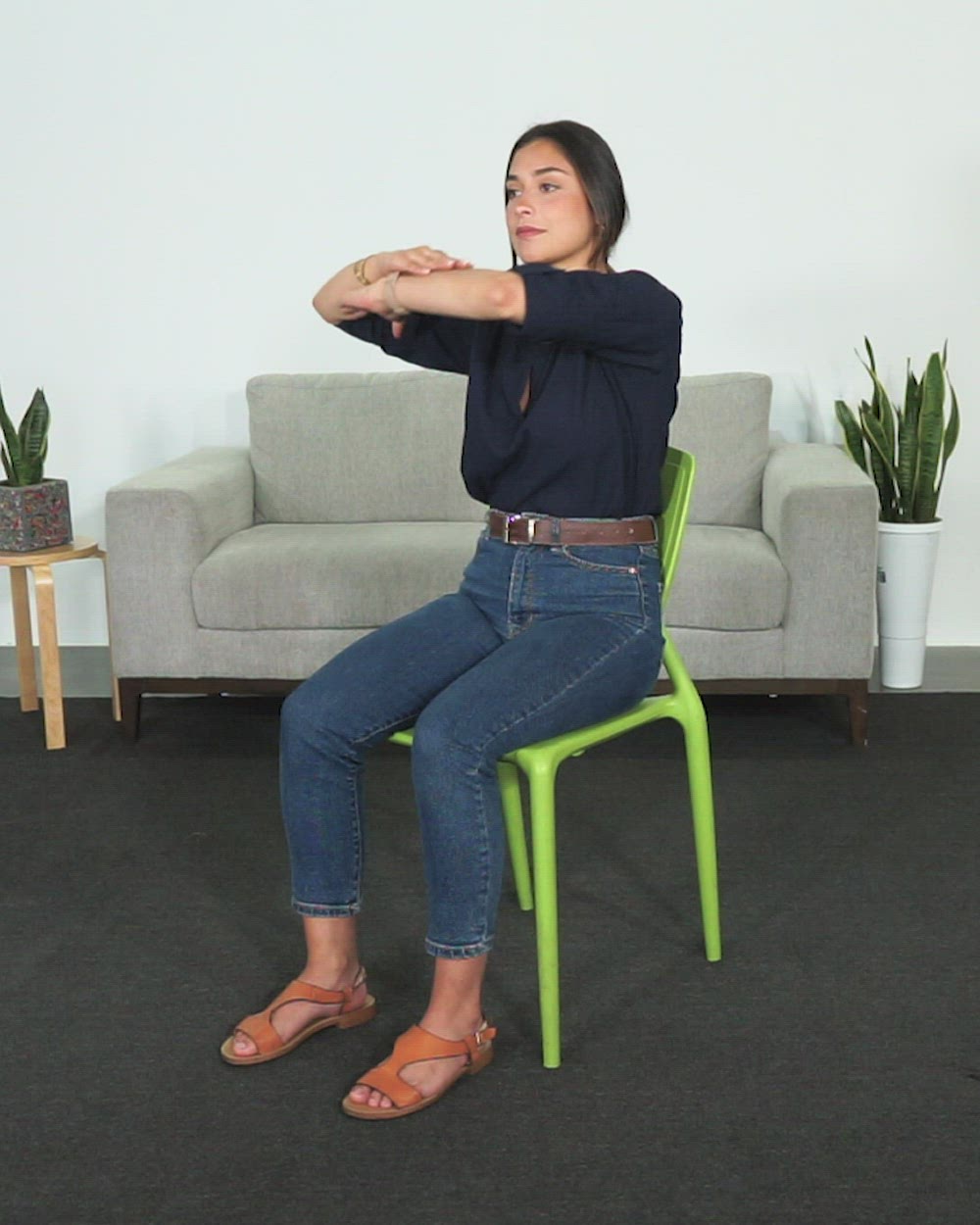 25 exercises
Neck And Shoulders
Targeted stretches and movements to release neck and shoulder tension.
 15 exercises
Shoulder Stretch
Release shoulder tension with targeted stretches for desk workers and device users.
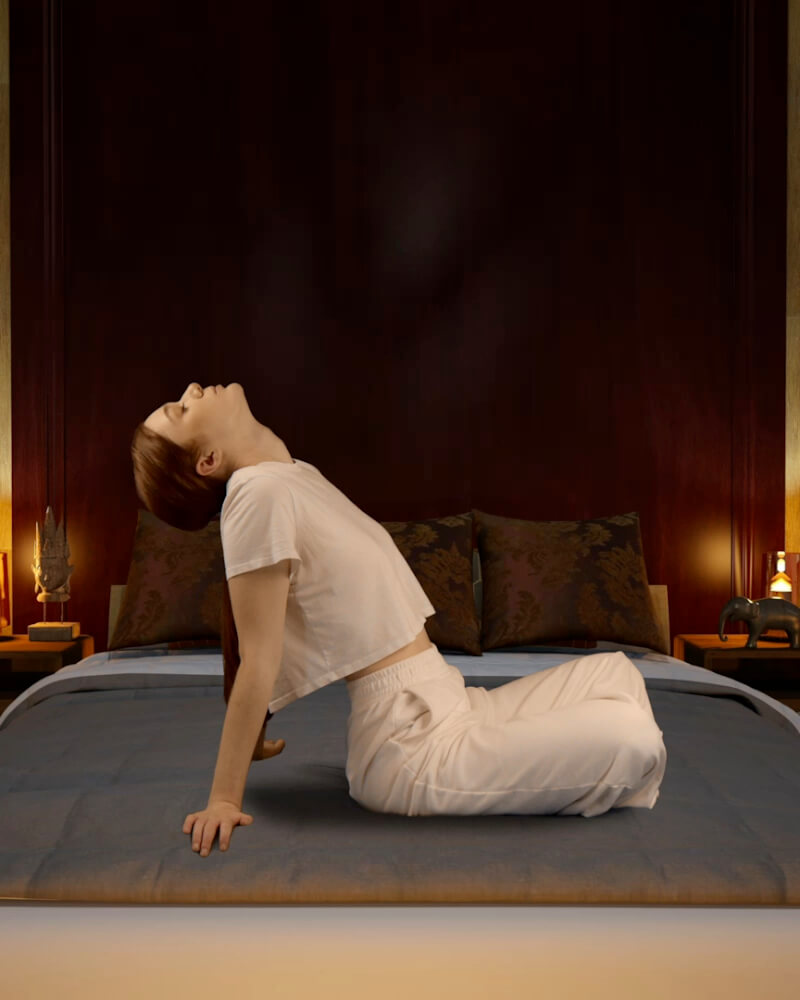 14 exercises
Comfy Tension Release
Gentle bedtime exercises that release accumulated tension and prepare for restful sleep.
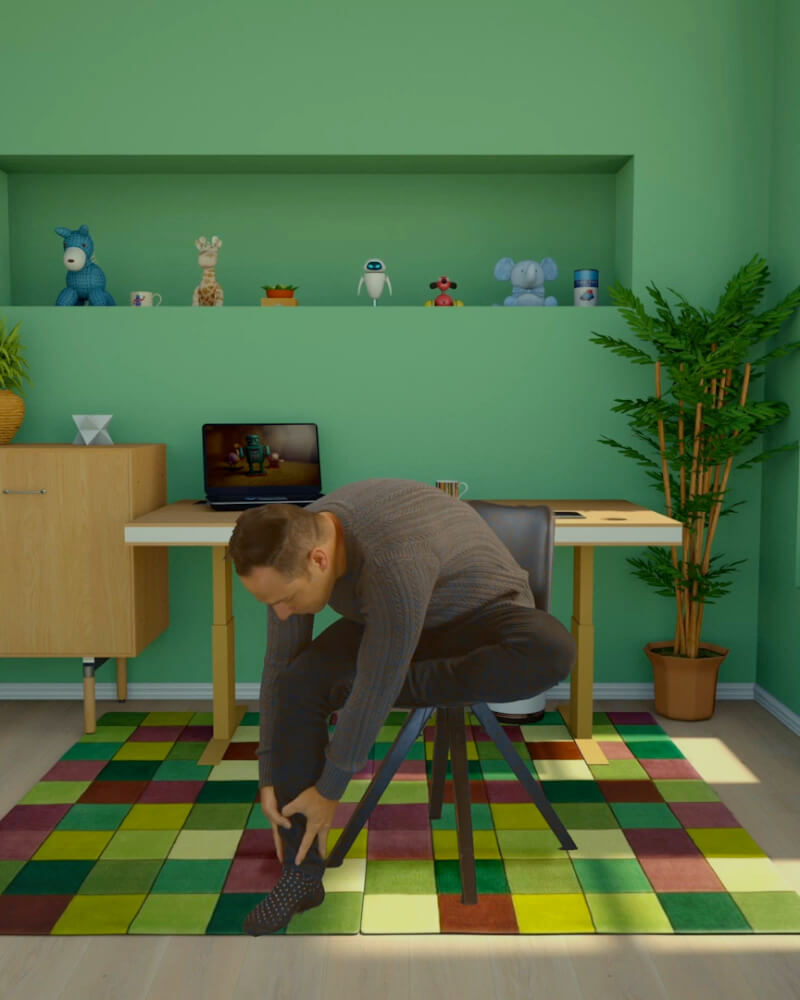 15 exercises
Lower Back Tension Release
Release lower back tension from prolonged sitting with targeted stretches.
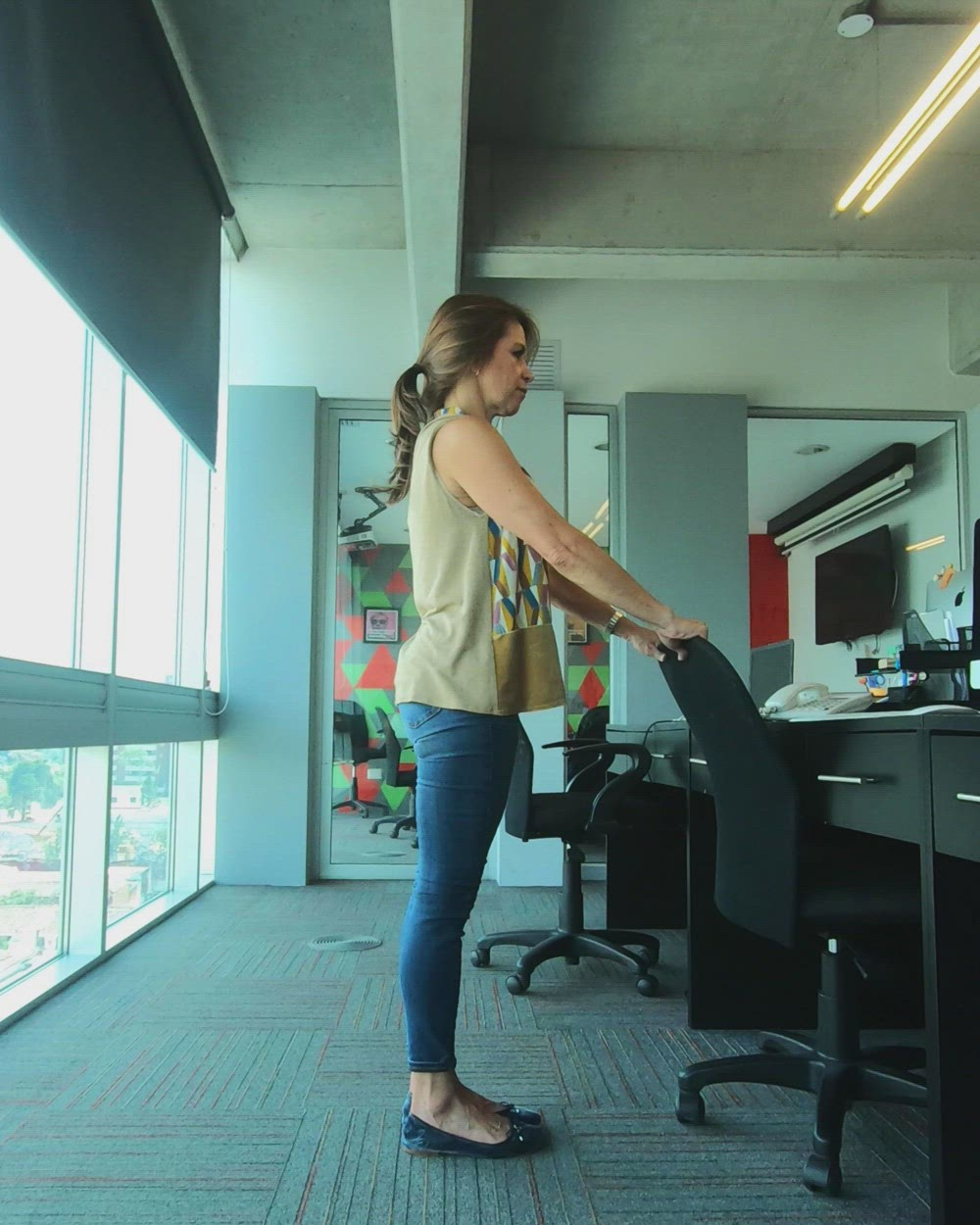 45 exercises
Office Yoga
Adapted yoga poses for the office environment, combining principles with practicality.
Want the full routine?
Three minutes, guided by audio, in the iOS app. Or add Wakeout to Chrome — every new tab becomes a tiny movement break.