Wakeout pack — 15 exercises
Shoulder Stretch
Release shoulder tension with targeted stretches for desk workers and device users.
sittingdeskmiddaydo anywhere15 exercises
30-second preview
Reach for this when…
Your shoulders, not your neck, are aching after a long stretch of typing, mousing or scrolling on your phone.
Why this happens
Shoulder pain from desk work usually isn't really about the shoulder joint — it's about the small muscles that stabilize the shoulder blade against the rib cage. Hours of mouse use and typing shorten the pec minor (which tilts the scapula forward), weaken the serratus anterior and lower trapezius (which normally hold the scapula flat against the ribs), and load the rotator cuff in a compromised position. The result is the specific upper-back and shoulder ache most remote workers know — often mistaken for a neck problem when it's really a scapular one. This pack targets the actual mechanism: mobility work for pec minor, activation for serratus and lower traps, and rotator cuff sequencing to restore the shoulder's mechanical advantage. Shoulders only. If the tension lives in your neck too, Neck and Shoulders covers both regions and how they interact.
About this routine
Best for shoulder and upper-back tension specifically from mouse use, typing, or phone-holding. All seated, takes about four minutes. Skip if you have acute rotator cuff injury, recent shoulder surgery, or a recent dislocation — those need physical therapy, not a desk routine. Safe during pregnancy. Not medical advice — this is a mechanical reset for overuse-pattern shoulder tension, not rehab for structural damage.
The routine
15 exercises in this pack
#
Forward Circles
Behind Head Frontal Raises
Behind Head Outside Raises
Closed Elbow Raises
Elbow Diagonal Touches
9 more in this pack
Unlock the full routine.
The iOS app plays all 15 exercises in order, with audio cues, countdown, and a streak that keeps you honest.
Use this pack when you need to…
Built for these moments
Loosen Neck & Shoulders
Moves aimed at your neck and shoulders, plus arm-only work and push-ups or desk pumps where your arms hold you up.
Why this pack: Arm circles, Hugged Wings and Elbow Drums get your shoulders moving in every direction, a playful way to ease tension and enjoy some extra mobility.
Frequently asked
What people ask about shoulder stretch
Why do my shoulders hurt from typing and using a mouse?
Sustained static loading of small stabilizer muscles. Mouse use and typing hold the arms in front of the body for hours, which shortens the pec minor (in the front of the shoulder) and lengthens the middle and lower trapezius (in the upper back). Over time, the scapula tilts forward and the rotator cuff has to work in a compromised position to stabilize the arm. The ache most desk workers feel between the shoulder blades is usually this pattern — not a shoulder-joint problem but a scapular stabilization problem.
Is this different from the neck and shoulders pack?
Yes. Neck and Shoulders is broader and includes cervical mobility work because the neck and shoulder muscles share tissue (the levator scapulae and upper trapezius run between them). shoulderStretch is shoulders-only, designed for cases where the specific pain is between and around the shoulder blades from mouse arm, typing, or phone use — not neck stiffness. Pick based on where the ache actually lives.
What's 'mouse arm' and how do I know if I have it?
Mouse arm refers to shoulder, upper-back, and sometimes forearm tension from sustained use of a computer mouse. Typical signs: ache in the dominant shoulder, tightness between the shoulder blade and spine on the mouse-hand side, and occasional forearm fatigue. It's a repetitive-strain pattern, not an injury in the structural sense — it responds well to frequent small movement breaks, scapular mobility work, and occasionally an ergonomic review of mouse position and desk height.
Should I stop using the mouse to let my shoulder heal?
Usually not necessary, and often not possible. The fix is more about frequent movement breaks and improving scapular mechanics than eliminating the load. A short round of these exercises every 60 to 90 minutes tends to prevent the slow accumulation of tension that creates mouse-arm pain in the first place. If the pain is severe, radiating down the arm, or not improving with movement breaks over a week or two, see a physical therapist — there's probably something specific to address that a desk routine can't fix.
How long until the tension actually goes away?
Most tension-pattern shoulder pain responds within a few days of consistent movement breaks. The longer the pattern has been in place, the longer it takes to fully resolve — someone with six months of daily mouse-arm pain might need two to three weeks of consistent practice to clear the baseline tension. The immediate effect (feeling looser after three minutes) shows up on day one. Durable change requires the cumulative effect of doing it regularly, which is the entire design principle of Wakeout.
You might also like
Packs built for the same body, a slightly different moment.
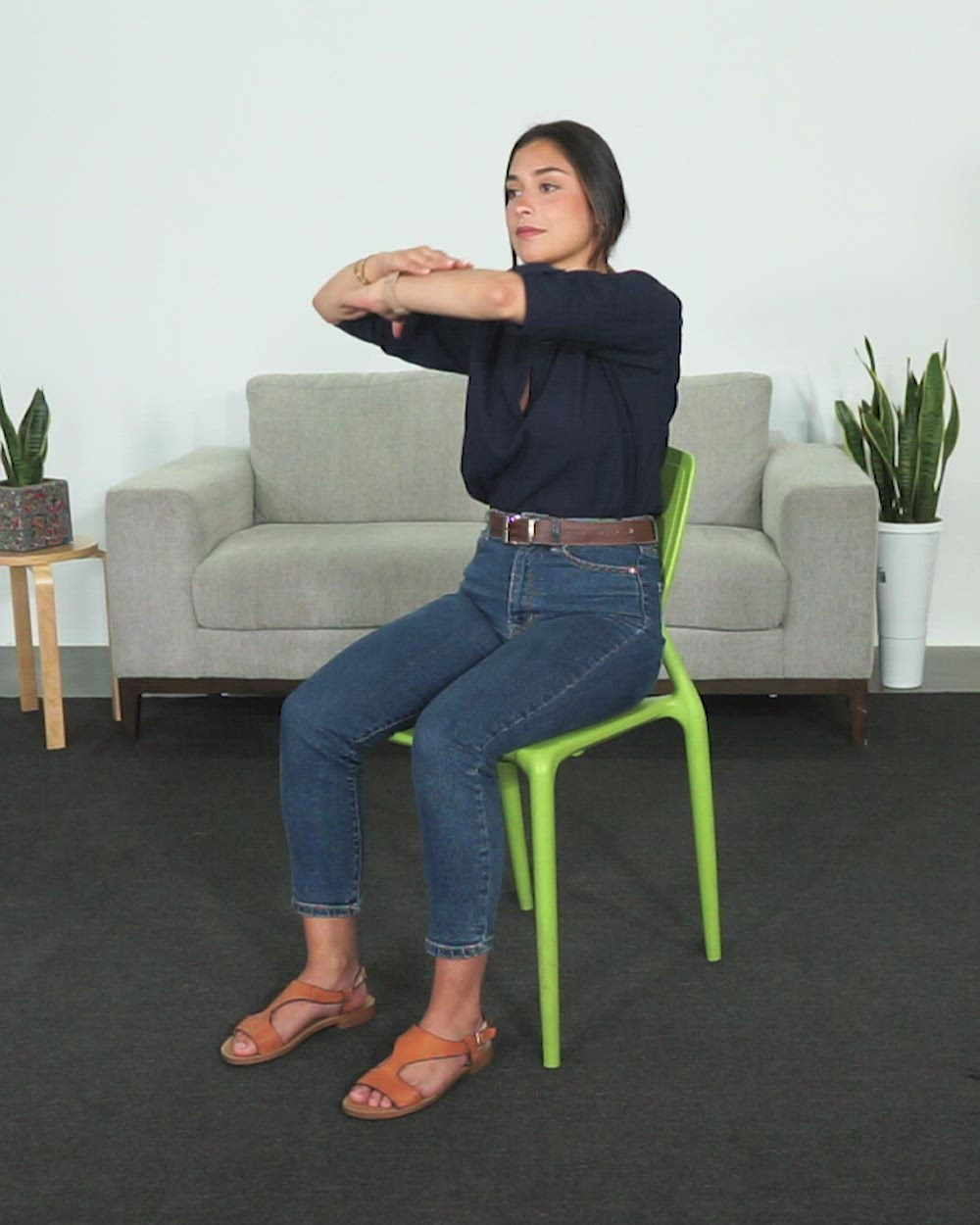 25 exercises
Neck And Shoulders
Targeted stretches and movements to release neck and shoulder tension.
 14 exercises
Neck Relief
Therapeutic movements and stretches for immediate neck pain relief.
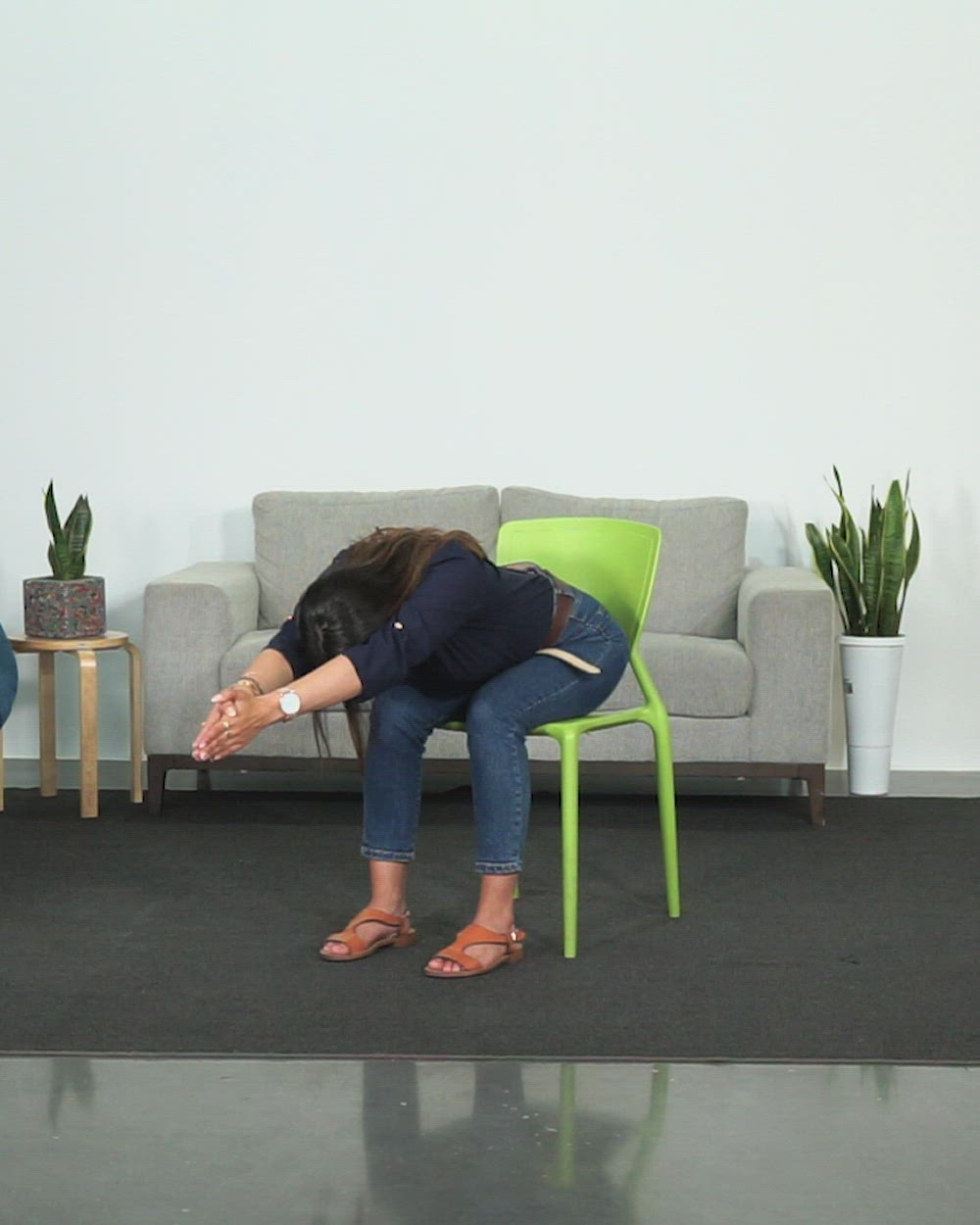 16 exercises
Back Pain
Gentle movements to relieve tension in upper and lower back muscles.
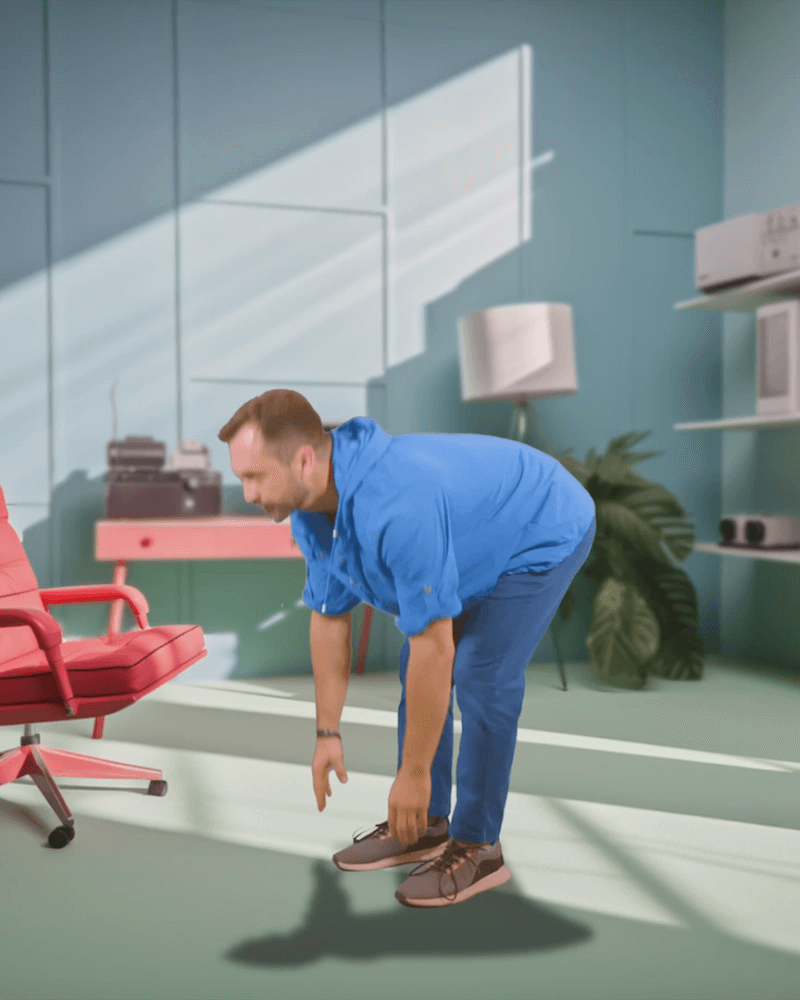 13 exercises
Lower Back Strength
Build functional lower back strength with golf swing-inspired movements.
Want the full routine?
Three minutes, guided by audio, in the iOS app. Or add Wakeout to Chrome — every new tab becomes a tiny movement break.