Wakeout pack — 25 exercises
Neck And Shoulders
Targeted stretches and movements to release neck and shoulder tension.
sittingdeskmiddaydo anywhere25 exercises
30-second preview
Reach for this when…
Your shoulders have quietly crept toward your ears after a few hours of typing and you want to loosen things up early.
Why this happens
Neck and shoulder tension is the signature injury of modern office life, and it's usually not really a neck problem. The upper trapezius, levator scapulae, and scalenes all attach to both the cervical spine and the shoulder girdle, which means that when one area stiffens, the other follows within hours. Typing with elevated shoulders loads the neck; staring at a laptop below eye level loads the shoulders. By the end of a typical work week, most desk workers are carrying low-grade tension through both regions, not because either is specifically injured but because the whole upper quarter has been holding a posture it wasn't designed to hold. This pack takes a preventive, maintenance approach — gentle mobility across both regions, done regularly, to keep tension from accumulating into something sharper. It's the short, steady routine that keeps neck and shoulder tightness from becoming the thing you have to fix after it's already gone too far.
About this routine
Best as a regular desk-day practice — a few minutes two or three times through a working day, seated, no equipment. Skip this pack if pain is acute, sharp, or radiating; try the neck relief pack for urgent neck pain or the shoulder stretch pack when the issue is shoulder-specific. Safe during pregnancy. None of this replaces medical advice for persistent upper-body pain, but it's a reliable way to keep typical tension from escalating.
Use this pack when you need to…
Built for these moments
Loosen Neck & Shoulders
Moves aimed at your neck and shoulders, plus arm-only work and push-ups or desk pumps where your arms hold you up.
Why this pack: From Shoulder Shrugs and Chin Tucks to Butterfly Flaps and Look Behind Me, every stretch and move here is aimed at your neck and shoulders to help tension let go.
Frequently asked
What people ask about neck and shoulders
Why do my neck and shoulders always feel tight at the same time?
They share muscles. The upper trapezius, levator scapulae, and scalenes all cross both regions, so when one is loaded, the other inherits the tension within hours. Typing with shoulders elevated tightens levator scapulae, which pulls on the neck. Forward head posture from screen work loads upper traps, which pulls on the shoulders. You're not imagining the overlap; it's anatomical.
Should I use this pack or the neck relief pack?
Use this one for general desk-life tension — the low-grade tightness you carry through a typical work week. Use the Neck Relief pack when the neck is actively painful, stiff enough that turning your head is hard, or you're in a 'my neck is killing me' moment. This pack is preventive; that one is therapeutic.
What if my shoulders are the real problem, not my neck?
Use the Shoulder Stretch pack if the issue is specifically shoulder tightness — mouse-arm tension, typing strain localized to the shoulder, or that knot that lives between shoulder blade and spine. This pack covers both regions; the shoulder stretch pack goes deeper on shoulders alone. Pick based on whether the problem is general upper-body or specifically one region.
How often should I do these during a typical work day?
Two or three short rounds through a day beats one long session at 5 p.m. Tension accumulates continuously from sustained posture, so the fix is to interrupt that pattern regularly rather than try to undo six hours of it at once. Three minutes mid-morning, three minutes after lunch, three minutes mid-afternoon is the pattern that tends to keep desk workers out of actual pain.
Will this help with tension headaches from screen time?
Often yes. Most screen-time tension headaches originate from sustained upper trap and suboccipital load rather than anything inside the skull. Mobilizing both regions regularly — which this pack does — reduces the cumulative muscle tension that feeds the headache. If headaches are frequent, severe, or accompanied by visual changes or nausea, they warrant a doctor, not a desk routine.
You might also like
Packs built for the same body, a slightly different moment.
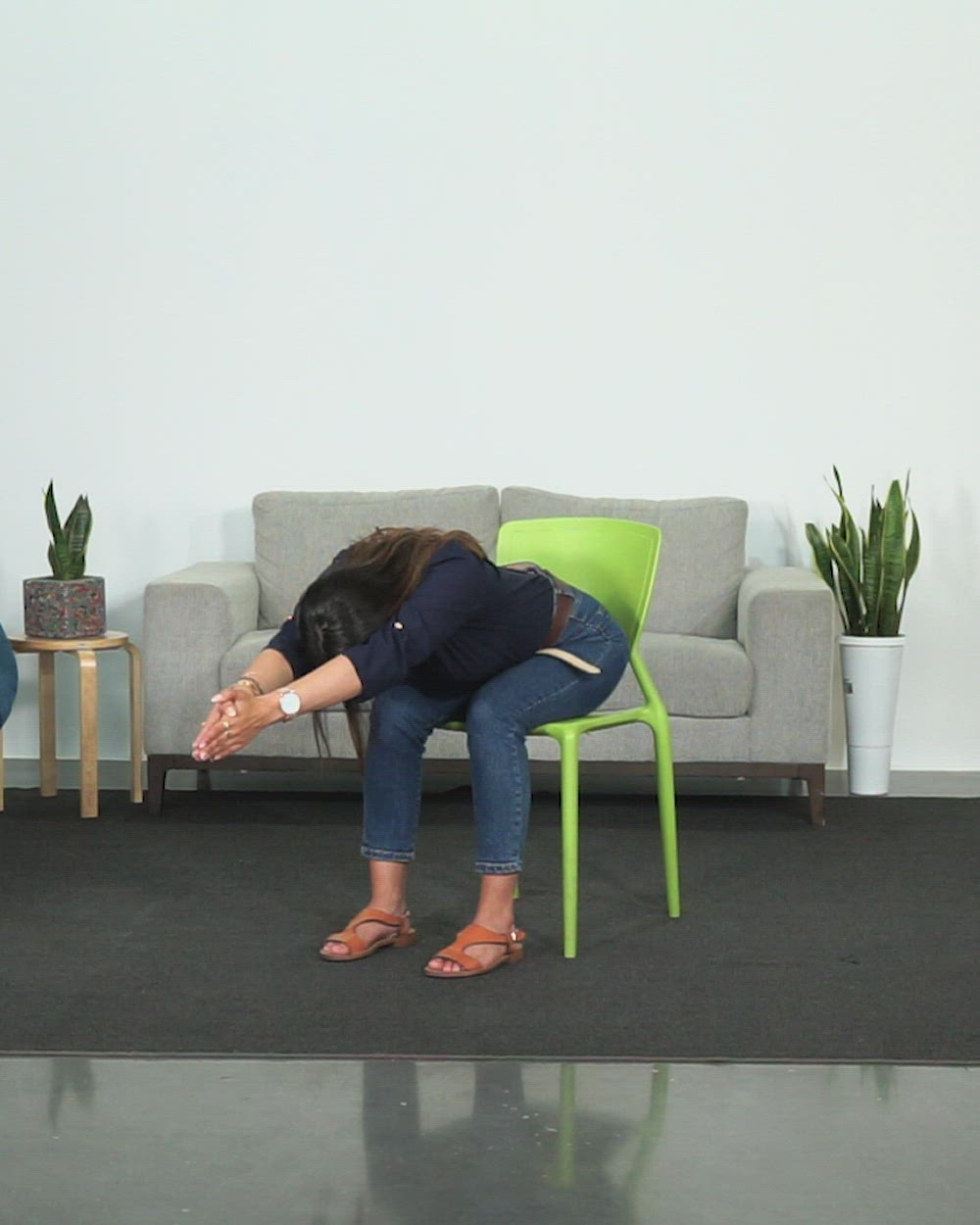 16 exercises
Back Pain
Gentle movements to relieve tension in upper and lower back muscles.
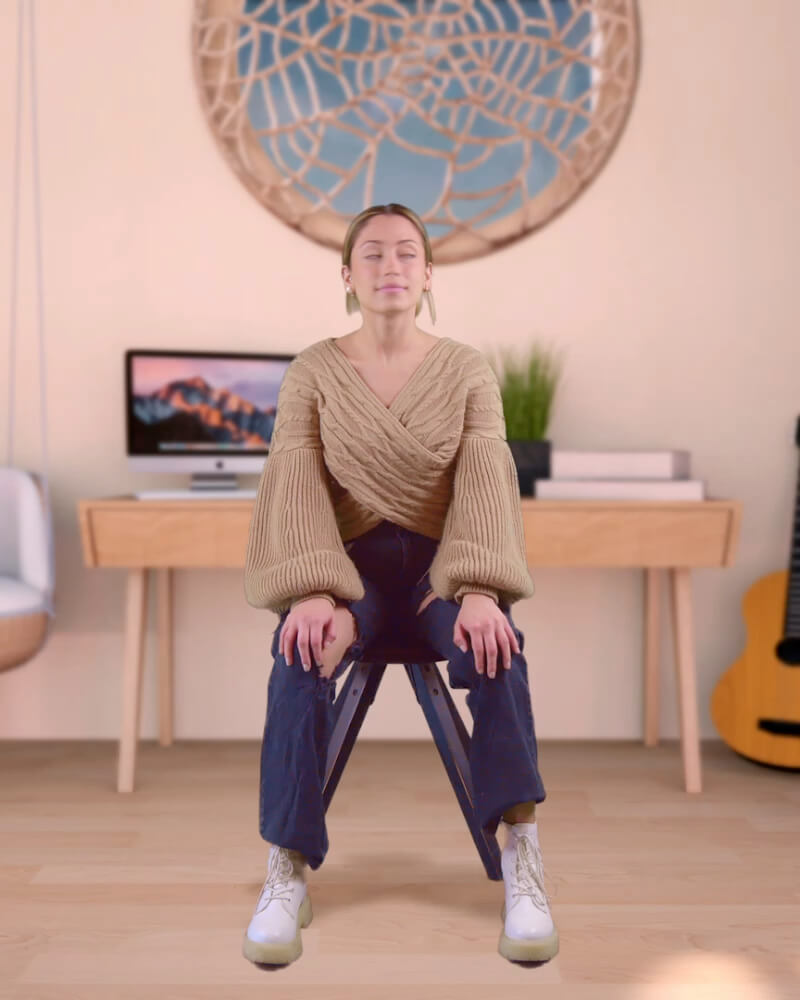 14 exercises
Neck Relief
Therapeutic movements and stretches for immediate neck pain relief.
 15 exercises
Shoulder Stretch
Release shoulder tension with targeted stretches for desk workers and device users.
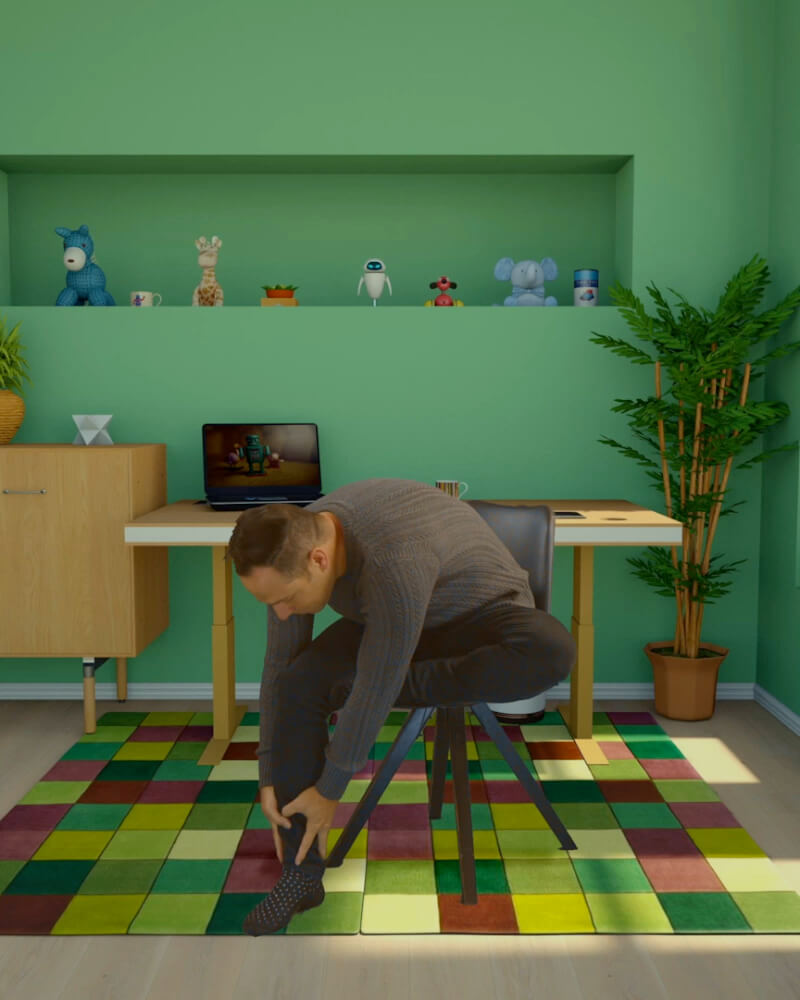 15 exercises
Lower Back Tension Release
Release lower back tension from prolonged sitting with targeted stretches.
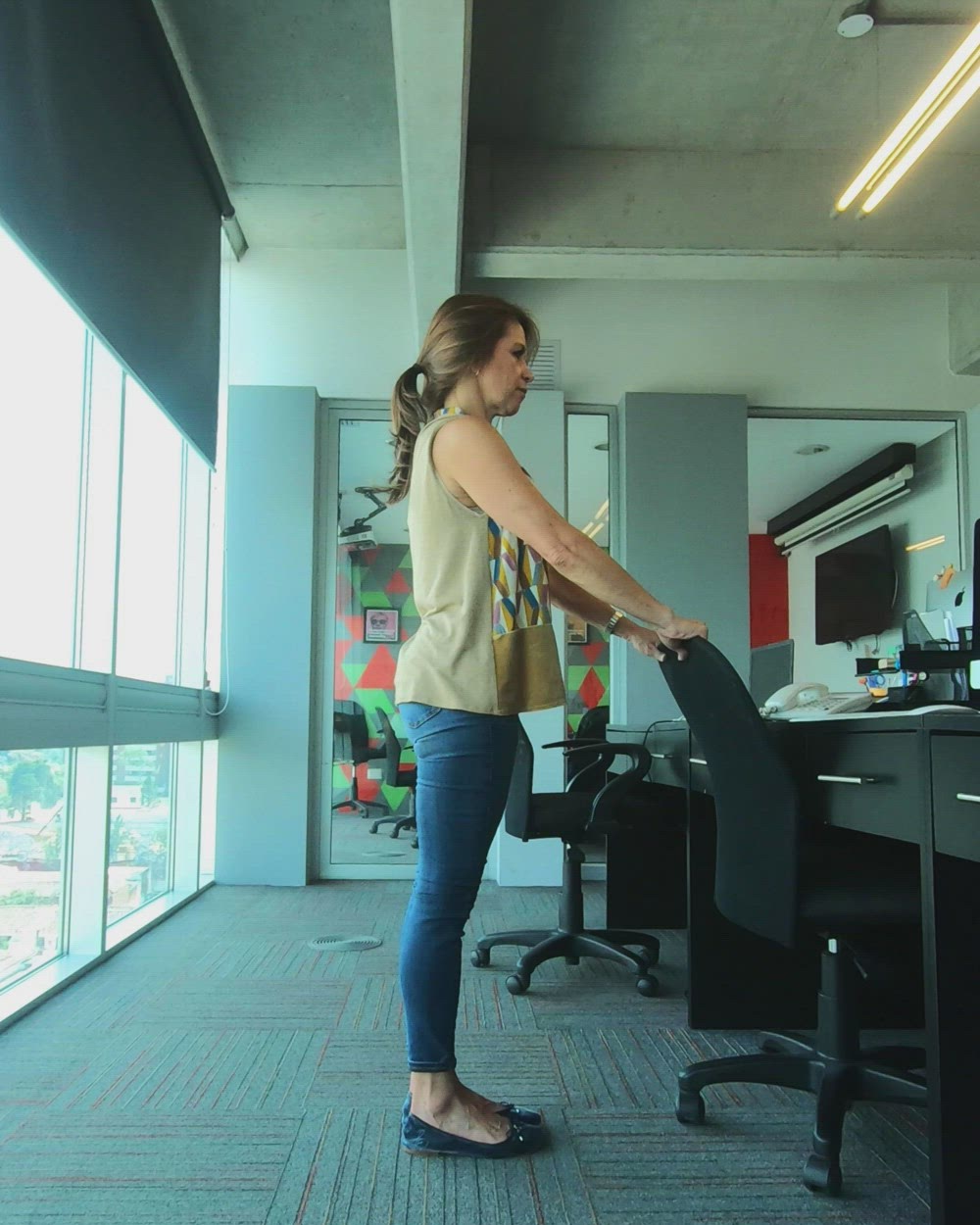 45 exercises
Office Yoga
Adapted yoga poses for the office environment, combining principles with practicality.
Want the full routine?
Three minutes, guided by audio, in the iOS app. Or add Wakeout to Chrome — every new tab becomes a tiny movement break.