Wakeout pack — 45 exercises
Office Yoga
Adapted yoga poses for the office environment, combining principles with practicality.
standingdeskmiddaydo anywhere45 exercises
30-second preview
Reach for this when…
You want familiar yoga shapes that work in office clothes, standing by your desk, with a meeting coming up soon.
Why this happens
Traditional yoga assumes a mat, loose clothing, and a quiet room. Corporate offices offer none of those. But the mechanical problem yoga solves — a closed-down thoracic spine, compressed hip flexors, shallow breath — is worse at work than anywhere else. Eight hours of forward-slumped laptop posture collapses the front of the chest, shortens the iliopsoas, and locks the breath into the upper ribs, which is exactly what yoga was designed to undo. This pack adapts the core of a yoga practice — thoracic extension, hip opening, spinal rotation, and full diaphragmatic breathing — for someone in a button-down and leather shoes with a meeting in twelve minutes. The poses are named and recognizable if you've done yoga before, but rebuilt so they work standing next to a desk, fully clothed, without anyone noticing you're practicing. Breath integration is the load-bearing piece. Most office workers chest-breathe all day; the nervous-system reset comes from moving the breath back down.
About this routine
Best for desk workers who have some yoga background and want the familiar shapes adapted to a workplace setting. All poses are standing or standing-adjacent, no mat or change of clothes needed, and the sequence fits in a short between-meetings window. Skip this pack during active lower-back flares, first-trimester pregnancy with morning sickness, or if you have a known disc issue aggravated by rotation. Not a substitute for a full practice, not medical advice — a way to keep the thoracic spine mobile and the breath deep through the workday.
Use this pack when you need to…
Built for these moments
Strengthen Back
Desk yoga and focused moves that strengthen and stretch your lower back and give your spine some kind attention.
Why this pack: Office-ready yoga poses like Correct Your Posture and Fortitude give your back and posture steady, spine-friendly attention right where you work.
Loosen Neck & Shoulders
Moves aimed at your neck and shoulders, plus arm-only work and push-ups or desk pumps where your arms hold you up.
Why this pack: Desk-friendly poses like Dissarm and Correct Your Posture work on flexibility and posture, so your neck and shoulders get a welcome chance to loosen up.
Engage My Hips
Hip exercises, leg stretches, kicks and Pilates-style moves that get your hips and legs happily in motion.
Why this pack: Alongside moves like Balance and Harmony, these office-adapted poses work in hip openers and leg stretches that get your hips moving and give your back and posture some love.
Engage My Core
Torso twists, side touches and similar moves that work your whole core: your abs, your sides and your lower back.
Why this pack: Seated and standing twists and side stretches wake up your core and lower back, while moves like Balance and Courage keep it practical for your office day.
Frequently asked
What people ask about office yoga
Can you actually do yoga in office clothes at work?
Yes, if the poses are chosen carefully. Forward folds, deep hip openers on the floor, and anything requiring bare feet don't translate to offices. But thoracic extensions, standing twists, chest openers, and breath work all adapt well to business casual — they don't require hinging at the hip past your waistline or kneeling. This pack is built around that adapted subset. It won't replace a full studio practice, but it keeps the parts of yoga that matter most for desk work available during the workday.
What's the difference between this and a regular office stretch routine?
Yoga integrates breath with movement, and that's the piece most office stretches skip. A generic shoulder stretch opens the joint; the same shape with a coordinated inhale expands the ribcage, resets the breath pattern, and down-regulates the sympathetic nervous system that Zoom meetings crank up. The physical shapes are similar to other mobility work, but the cadence and the breath focus turn a stretch into a practice. Over time, that difference compounds — better breath patterns throughout the day, not just during the break.
Why does my chest and upper back feel so tight at work?
Laptop posture collapses the front of the chest and overstretches the upper back at the same time. Your pectoralis major and minor shorten from hours of arms-forward typing, while the rhomboids and mid-traps get stuck in a lengthened, fatigued position trying to hold your shoulders back. The result is the tight-in-front, tight-in-back paradox most desk workers live in. Thoracic extension and chest-opening poses directly reverse this pattern, which is why yoga-style work feels different from a generic stretch.
Is it weird to do yoga at my desk in front of coworkers?
The poses in this pack are chosen specifically to not read as yoga. Standing side bends, gentle spinal twists, and chest openers look like ordinary stretching to anyone passing by. If you're self-conscious, start in a meeting room or lounge. Most offices have come around to visible movement breaks — the colleague judging you for a two-minute stretch is usually the one who needs it most.
How is this different from the home office yoga pack?
This pack assumes corporate office constraints — work clothes, no mat, no privacy — and leans on standing poses and subtler shapes. The Home Office Basic Yoga pack assumes you can move more freely in your own space, and includes gentler, more classical poses. Pick this one if you're at a corporate office or coworking space; pick the home office version if you're working from home and can take a fuller break.
You might also like
Packs built for the same body, a slightly different moment.
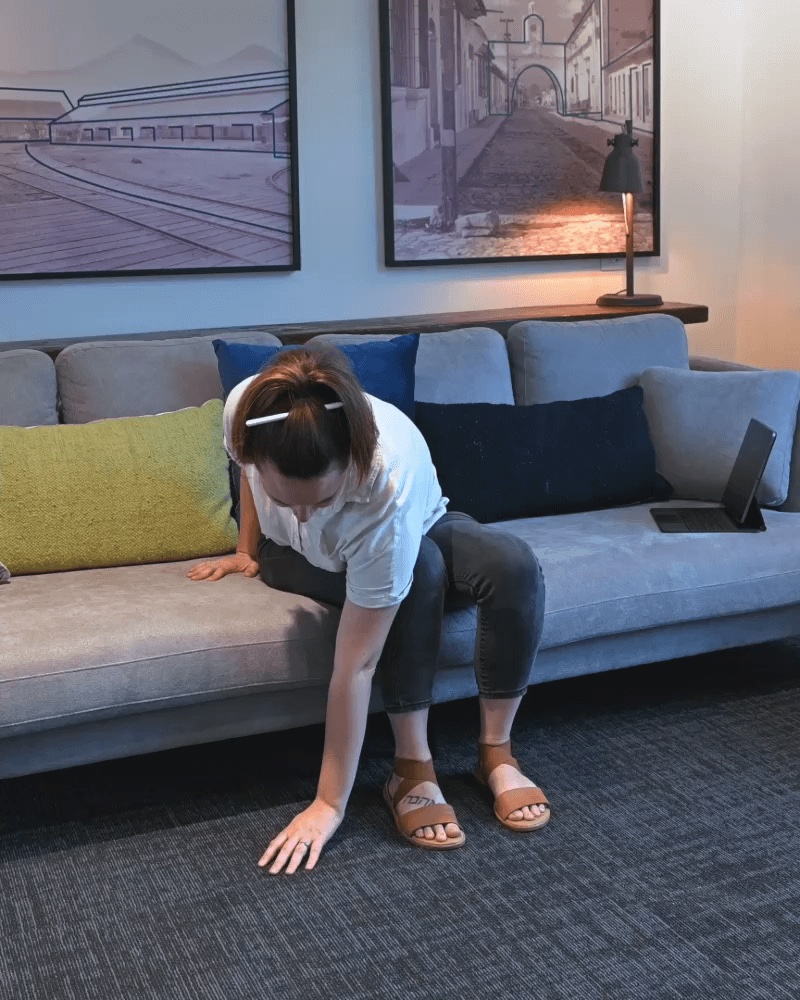 18 exercises
Couch Stretch
Creative comfort-focused stretches using your couch as a stretch station.
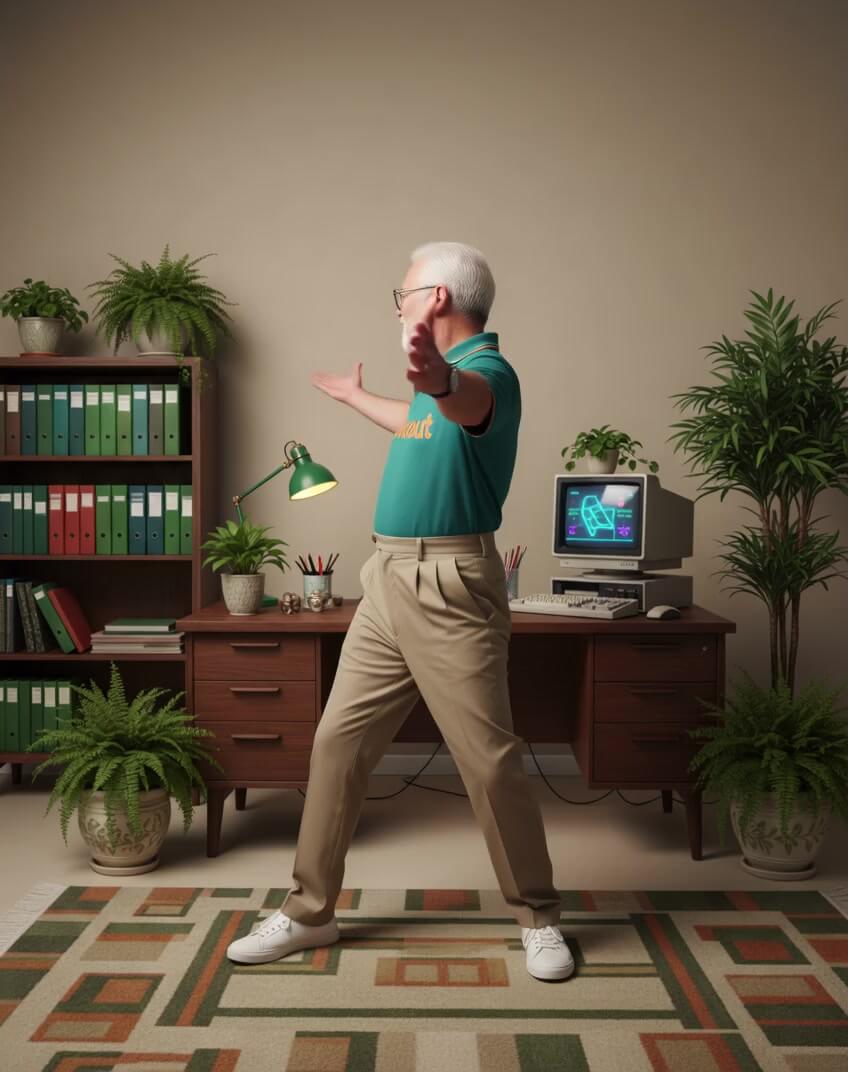 16 exercises
Home Office Basic Yoga
Simple standing yoga poses that enhance mobility and clarity without needing a mat.
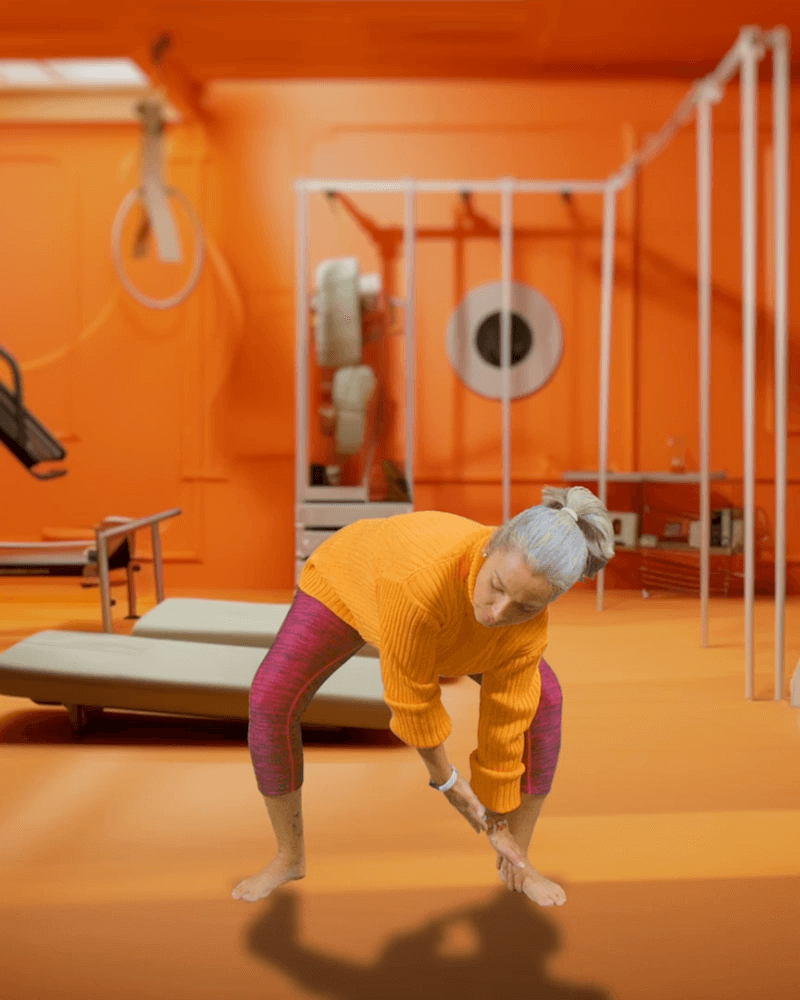 13 exercises
Mobility Range Extender
Delightful stretches targeting multiple body parts to expand range of motion.
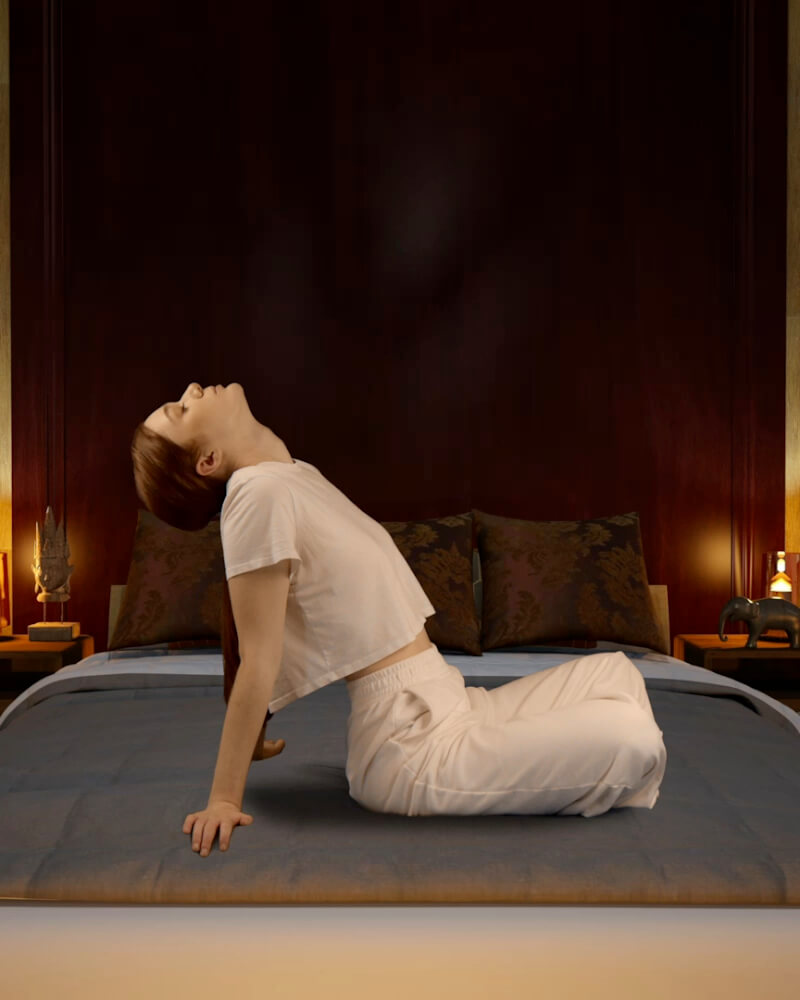 14 exercises
Comfy Tension Release
Gentle bedtime exercises that release accumulated tension and prepare for restful sleep.
 12 exercises
Desk Pump
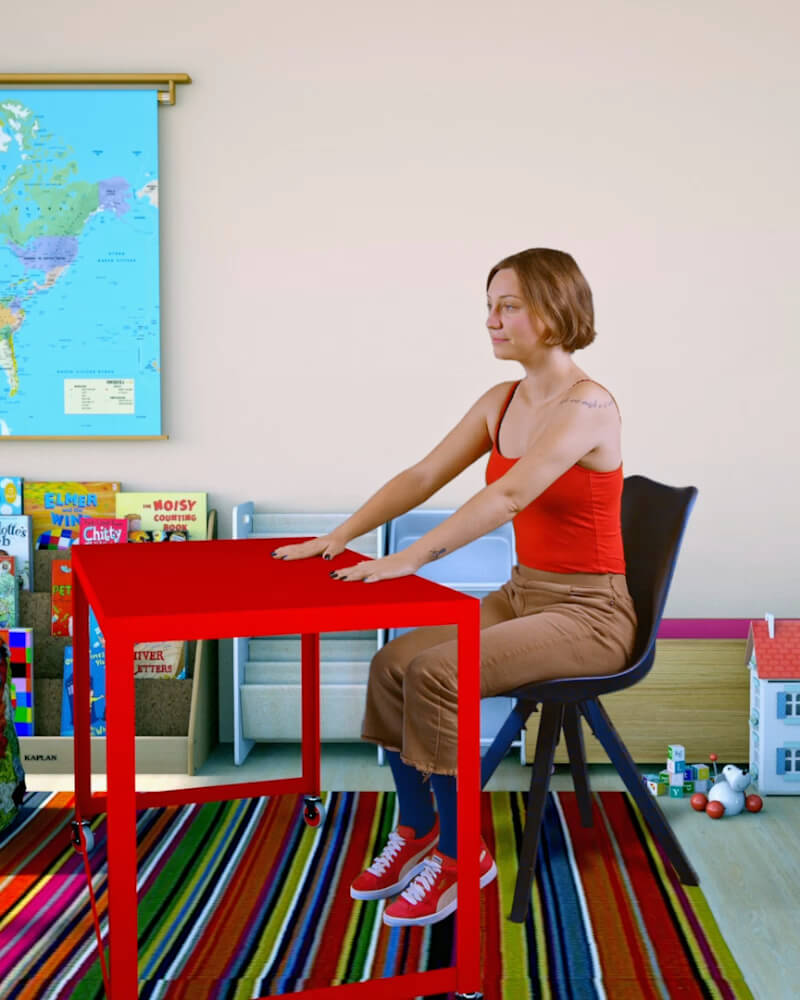
Use your desk and chair as exercise equipment to maintain energy and strength.
Want the full routine?
Three minutes, guided by audio, in the iOS app. Or add Wakeout to Chrome — every new tab becomes a tiny movement break.