Wakeout pack — 12 exercises
Desk Pump
Use your desk and chair as exercise equipment to maintain energy and strength.
standingdeskmiddaydo anywhere12 exercises
30-second preview
Reach for this when…
You want to treat your desk and chair like gym equipment and squeeze in a real burst of strength work.
Why this happens
The desk, chair, and surrounding office furniture are more capable strength equipment than most people realize. A sturdy desk edge supports incline push-ups that load the chest and triceps at a real resistance. An armless chair supports tricep dips that use body weight the same way a dip station would. A doorway supports isometric rows. This pack stops pretending the office is a place for 'light movement' and treats it as a legitimate strength environment. The mechanism is identical to gym resistance training: progressive load against muscles that otherwise spend eight hours doing nothing. Desk workers lose roughly half a percent of muscle mass per year of sedentary work; brief, intense resistance bursts during the day meaningfully slow that drift. Four minutes of this, twice a day, is more strength training than most office workers get in a week.
About this routine
Best when you want real resistance work without leaving the office and have a sturdy desk and chair available. All movements are standing or using the desk/chair as load and take about four minutes. Skip this pack if you have an acute shoulder, wrist, or elbow injury — incline push-ups and dips load those joints directly. Check your desk is stable before loading it. None of this replaces a structured strength program, but for a desk worker it compounds meaningfully over months.
Use this pack when you need to…
Built for these moments
Boost Energy
High-energy moves you can do seated or standing, like seated boxing and kicks, right at your desk when you need a lift.
Why this pack: Your desk and chair become your gym here, with sitting and standing moves like Desk Hops and Knee Ups that keep your energy up right where you work.
Make Me Stand Up
Higher-intensity moves that get you up on your feet, from sit-to-stand flows to moves for your standing desk.
Why this pack: Moves like Stand And Raise Arms, Wide Marches and Desk Push ups get you up from your desk for a stronger, more intense workout that still fits the office.
Loosen Neck & Shoulders
Moves aimed at your neck and shoulders, plus arm-only work and push-ups or desk pumps where your arms hold you up.
Why this pack: Desk Dips, Tricep Extensions and Desk Push And Arm Raise get your shoulders and arms working, a friendly way to give your neck and shoulders some relief.
Gain Mental Clarity
Cardio moves like punches, kicks, jumps and desk pumps that send oxygen through your blood and leave your head feeling clearer.
Why this pack: Get oxygen pumping with Roller Coaster, Bicycles and Desk Hops, turning your workspace into a little exercise zone for a clearer head without leaving the office.
Frequently asked
What people ask about desk pump
Can I really build strength at my desk?
Yes — muscle responds to tension and progressive overload regardless of setting. Desk push-ups at an incline load the chest and triceps at real resistance; chair dips load triceps at body weight. The limitation isn't the equipment, it's volume and progression. If you do this twice a day, five days a week, you're accumulating meaningful training stimulus. You won't bench 225, but you'll maintain functional upper-body strength that most sedentary workers lose steadily over the years.
Is my desk actually strong enough to do push-ups on?
Most corporate desks and standing desks are rated for 100+ kg of static load and handle incline push-ups without issue. Avoid IKEA-style particleboard desks with thin legs, glass-top desks, or anything that wobbles when you lean on it. Test with a hard two-handed press before you load your full body weight. If in doubt, use a wall for push-ups instead — same muscle pattern at lighter resistance.
Should I do this instead of going to the gym?
No — this is a supplement, not a replacement. A proper strength program with progressive overload, rest, and a full range of exercises will always produce more results. But most people don't strength-train consistently, and desk-based resistance work fills the gap. If you're already lifting three days a week, add this for extra volume. If you're not lifting at all, this gets you 60% of the stimulus for 10% of the effort, which is a good deal.
Will this make me sweaty and unprofessional-looking?
Four minutes of moderate resistance work usually doesn't cross the sweat threshold for most people, especially in an air-conditioned office. If you go hard on the dips and push-ups back-to-back, you might warm up enough that you want a minute to cool before the next meeting. For workouts you can do while staying presentable, Arms Only and Sitting Pilates stay lighter. Desk Pump is deliberately the intense option.
What if my chair has arms or wheels?
Wheeled chairs are the real problem — they roll when you dip. Lock the wheels or push the chair against a wall before any dip movement. Chairs with arms can work if the arms are sturdy and the right width, but standard task-chair arms usually aren't rated for bodyweight dips. If your chair isn't safe, use the desk edge for a modified dip, or skip the dip movements and focus on the push-up and isometric work the pack includes.
You might also like
Packs built for the same body, a slightly different moment.
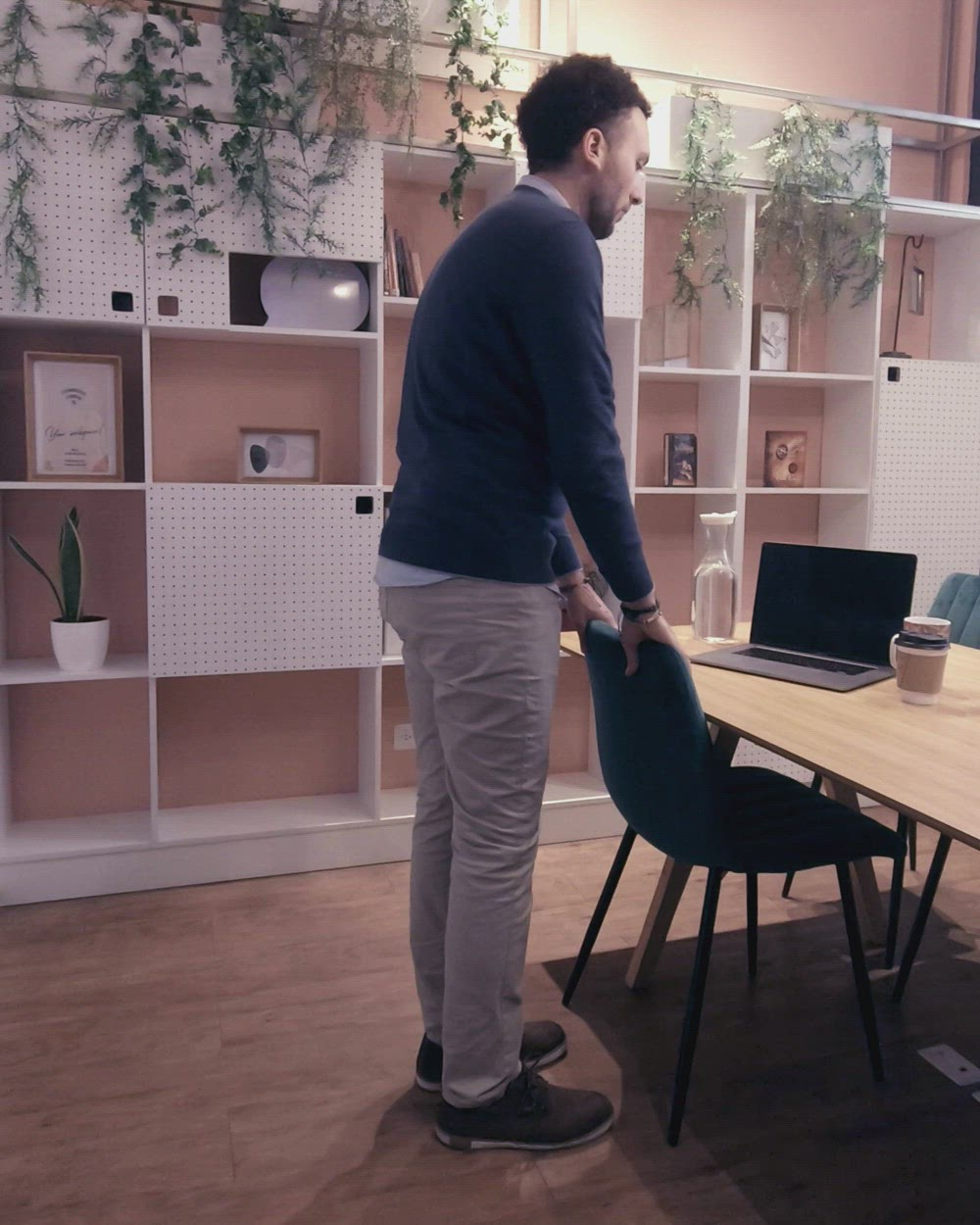 70 exercises
Desk - Standing
Energizing exercises for standing desk users to maintain focus and energy.
 18 exercises
Productivity Break By Francesco D'Alessio
Desk-based exercises designed to maintain focus and energy during work sessions.
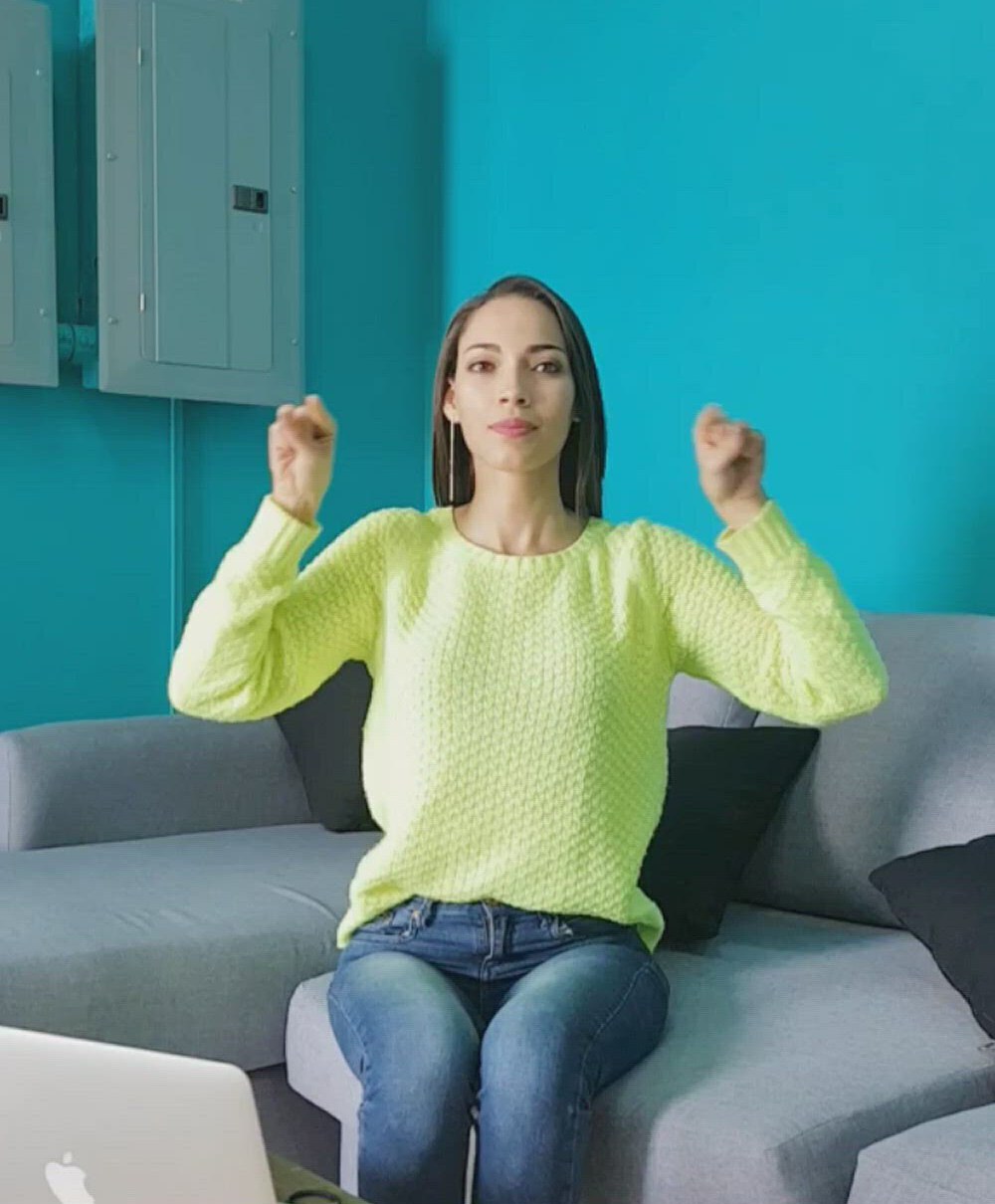
 13 exercises
Post-Meeting Recovery
Release mental weight and tension after long Zoom sessions with refreshing movements.
 30 exercises
Lounge
Energize between meetings with discrete movements for office lounge spaces.
 14 exercises
Zoom Meeting Fatigue
Relieve meeting fatigue with discrete desk movements you can do between calls.
Want the full routine?
Three minutes, guided by audio, in the iOS app. Or add Wakeout to Chrome — every new tab becomes a tiny movement break.