Wakeout pack — 70 exercises
Desk - Standing
Energizing exercises for standing desk users to maintain focus and energy.
standingdeskmiddaydo anywhere70 exercises
30-second preview
Reach for this when…
You've been standing at your desk a while and your energy or focus is starting to drift, but you want to keep working.
Why this happens
Standing desks solve the sitting problem by introducing a different one: prolonged static standing. After two to three hours upright, the plantar fascia stiffens, the knees absorb compression with none of the gentle shock-absorption that walking provides, and the lumbar erectors fatigue from holding the pelvis neutral against gravity. Blood pools in the lower legs, and the brain, which runs on circulation as much as caffeine, starts to drift. The fix isn't more standing — it's micro-movement inside the stand. This pack is the default for standing-desk users who need to keep working but feel their feet going numb, their lower back tightening, or their focus slipping at the 2pm mark. The movements are small enough to do while reading Slack, varied enough to reach the foot arches, calves, hip flexors, and mid-back without breaking flow. Frequent short rounds beat one long stretch session — static tissue loads rebuild within minutes of stopping.
About this routine
Best for office workers at a standing desk who are starting to feel fatigue creeping in — foot ache, knee stiffness, low-back tightness, or mid-afternoon fog. All movements are done standing in the same square foot of floor space, no props required, office clothes fine. Skip this pack if you're recovering from a lower-body injury, have acute plantar fasciitis, or are pregnant past the first trimester and standing itself is the problem. Not medical advice — just what keeps a lot of people upright through the afternoon.
Use this pack when you need to…
Built for these moments
Boost Energy
High-energy moves you can do seated or standing, like seated boxing and kicks, right at your desk when you need a lift.
Why this pack: Desk Burpees, Desk Climbers and Chair Bounces turn your standing desk into a little energy station, so you keep your focus and your spark going.
Make Me Stand Up
Higher-intensity moves that get you up on your feet, from sit-to-stand flows to moves for your standing desk.
Why this pack: With moves like Brisk Stand Up, Confused Stand-up and Chair Squats, this pack makes getting up from your seat feel like the fun part of your day.
Activate My Legs
Higher-intensity leg moves, seated or standing, including kicks, sit-to-stands and office chair moves that put your legs to work.
Why this pack: Calf Raises, Chair Lunges, Backward Leg Raises and a Chair Stroll give your legs plenty of lively things to do while you stand at your desk.
Engage My Hips
Hip exercises, leg stretches, kicks and Pilates-style moves that get your hips and legs happily in motion.
Why this pack: Chair Dead Lifts, Chair Rotations, Chair Swings and a Chair Supported Stretch get your hips hinging, turning and stretching right by your standing desk.
Gain Mental Clarity
Cardio moves like punches, kicks, jumps and desk pumps that send oxygen through your blood and leave your head feeling clearer.
Why this pack: A quick round of Cross Toe Touches, Chair Laps or Check Under Desk gets you moving and breathing deeper, so you stay focused and full of energy at your desk.
Frequently asked
What people ask about desk - standing
Why do my feet and lower back hurt at a standing desk?
Standing still for hours loads the same tissues continuously without the pumping action that walking provides. The plantar fascia — the band of connective tissue along the arch of your foot — stiffens under constant static load, and the lumbar erectors fatigue from holding your pelvis neutral for hours. Unlike sitting, where gravity is handled by the chair, standing transfers the full weight of your torso down through your knees, ankles, and feet. Without micro-movement, those tissues stop recovering between loads.
How often should I move at a standing desk?
Every 30 to 45 minutes is the sweet spot for most standing-desk users. The goal isn't a long break — it's a short interruption to reintroduce circulation and reset the loaded tissues before they stiffen further. Two minutes of small standing movement, several times an hour, prevents the cumulative fatigue that makes you want to collapse into a chair by 4pm. Long stretches at end of day can't undo eight hours of static loading.
Is a standing desk actually better than sitting?
Only if you alternate. The research on standing desks is clear on one thing: static standing all day has its own fatigue pattern — lower-back tension, varicose-vein risk, and knee compression. The benefit comes from the ability to vary position throughout the day. Most ergonomists recommend a ratio of standing, sitting, and walking, not pure standing. This pack is designed to extend your productive standing windows so you get the benefits without the pattern fatigue.
What if I already feel foot pain by mid-morning?
Start with the foot-specific movements and check your anti-fatigue mat and footwear before blaming your body. Hard office floors transmit compressive load directly through the arches; a decent mat and supportive shoes cut that load significantly. If foot pain is already setting in by 10am, you're likely accumulating load faster than recovery — try shortening standing intervals to 20 minutes with seated breaks, and run this pack at each transition. If pain is sharp or under the heel specifically, rule out plantar fasciitis with a physician.
Can I do this during a meeting or video call?
Most of it, yes. The movements are designed to be small enough that they won't register as fidgeting on camera, and they keep your frame mostly steady. Save the bigger reaches and rotations for when you're off-camera or between calls. For camera-on meetings where you're stuck frozen in frame, try the Zoom Meeting Fatigue pack instead, which is built specifically for that constraint.
You might also like
Packs built for the same body, a slightly different moment.
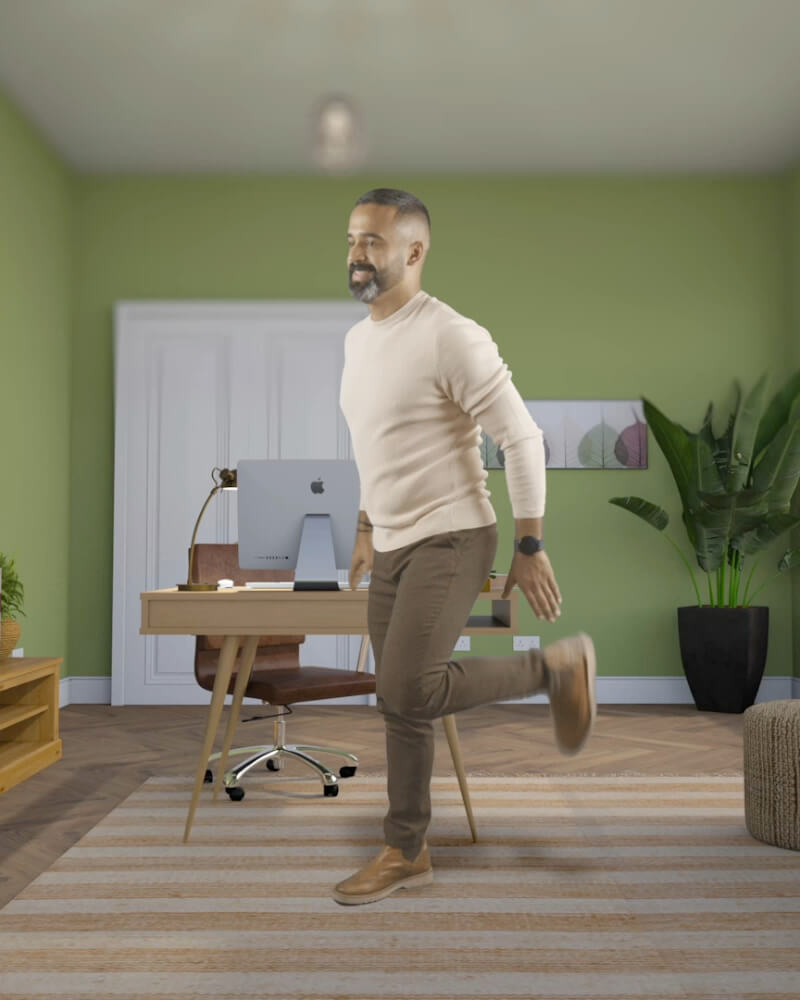 13 exercises
Fun Kicks
Playful kicking movements that energize your legs and promote lower body circulation.
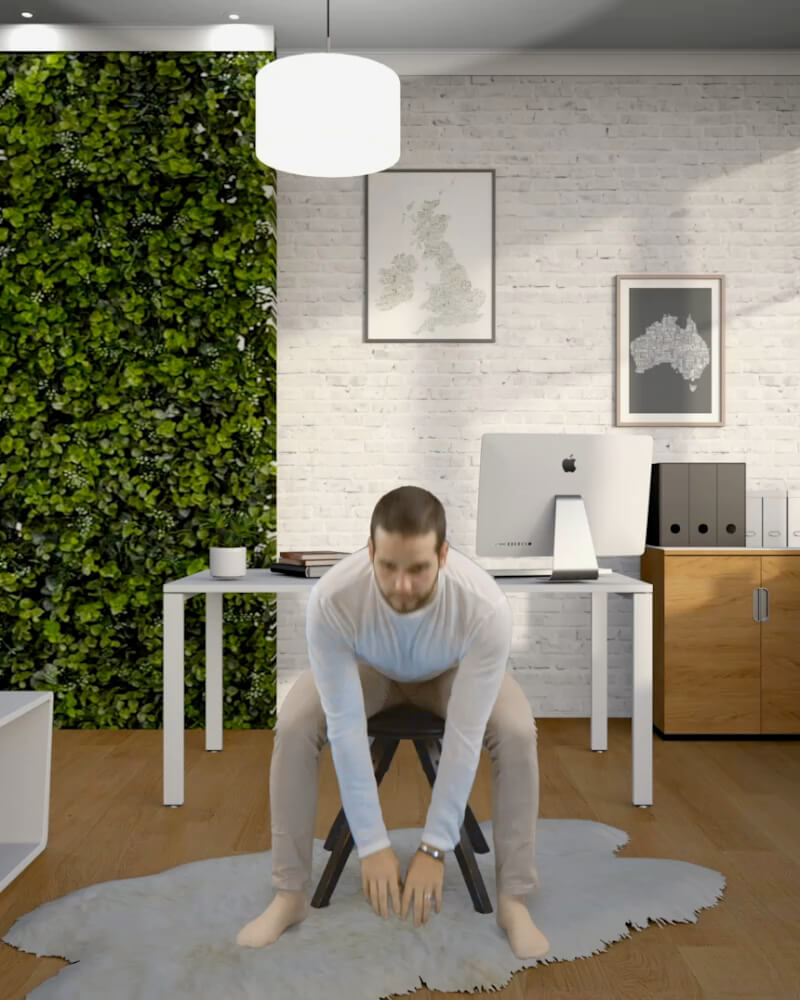 13 exercises
Sit And Stand
Dynamic movements transitioning between seated and standing positions.
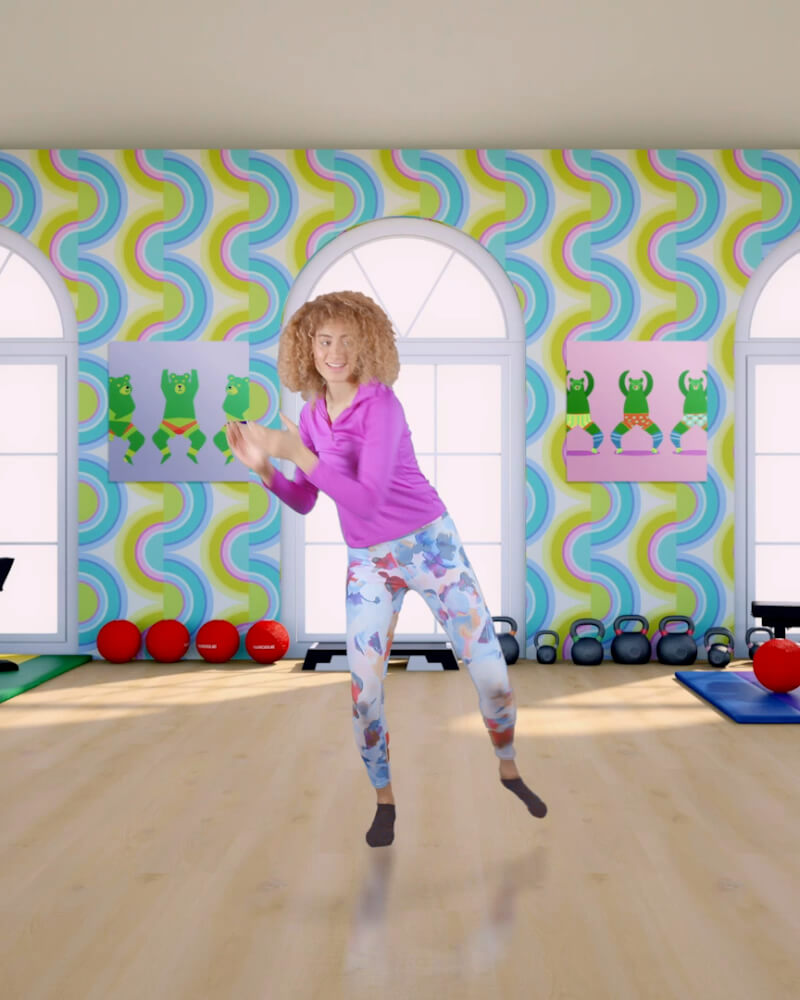 13 exercises
Funrobics
Retro 80s aerobics with upbeat movements updated for modern times.
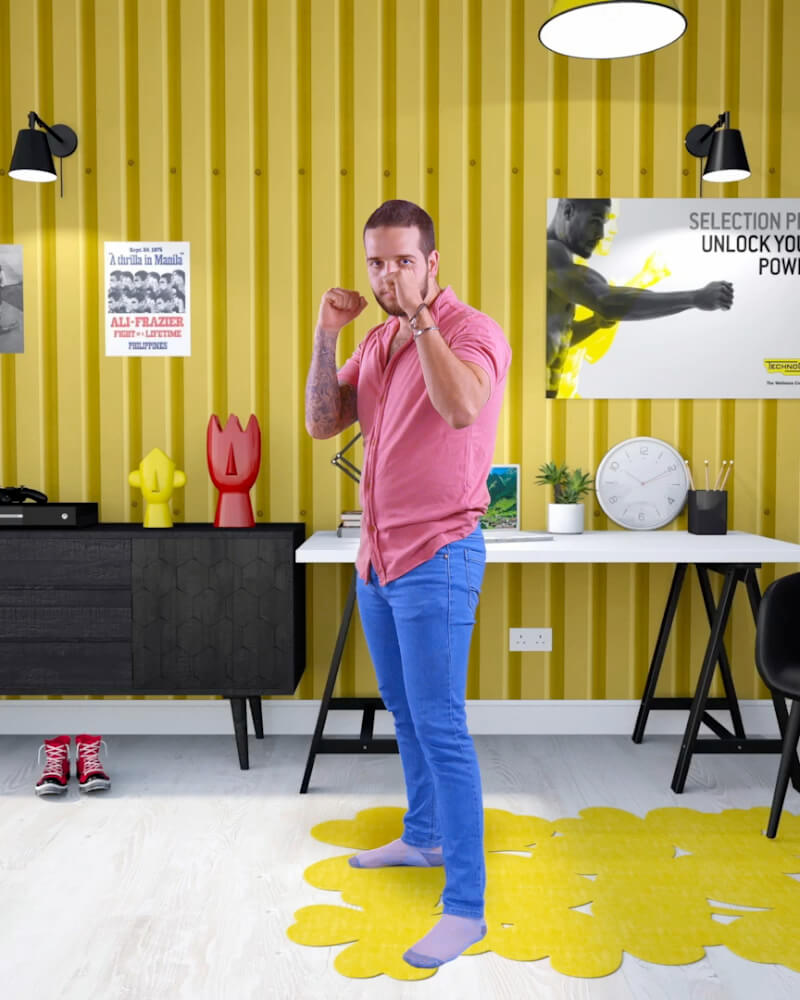 19 exercises
Standing Boxing
Upright boxing combinations that boost energy and confidence without equipment.
 39 exercises
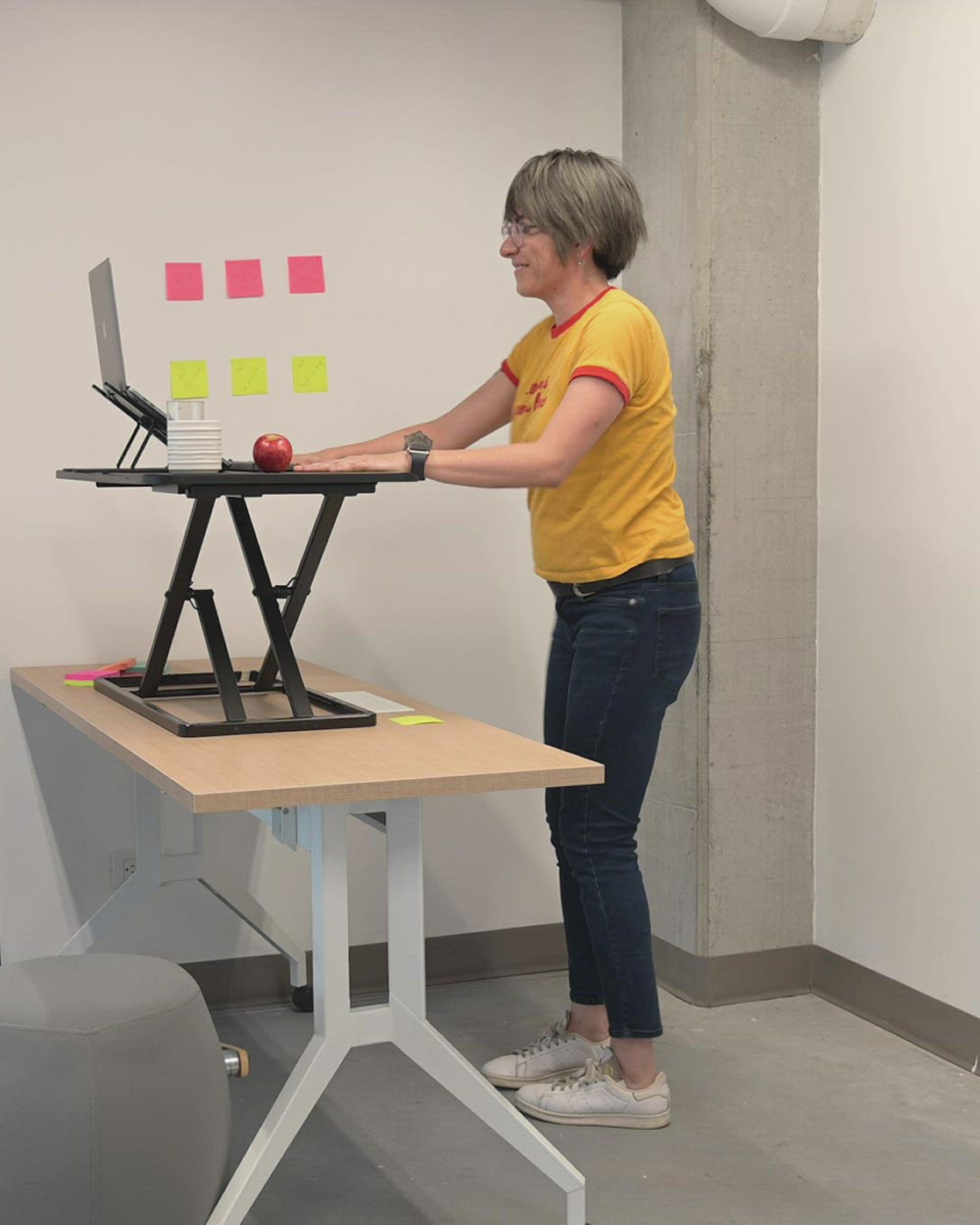
Standing Desk
Exercises to keep you energized at your standing desk while preventing stiffness.
Want the full routine?
Three minutes, guided by audio, in the iOS app. Or add Wakeout to Chrome — every new tab becomes a tiny movement break.