Wakeout pack — 39 exercises
Standing Desk
Exercises to keep you energized at your standing desk while preventing stiffness.
standingdeskmiddaydo anywhere39 exercises
30-second preview
Reach for this when…
You've been standing at your desk a while, your legs feel stiff, and you want a quick move to wake up and stay sharp.
Why this happens
The assumption that standing desks solve sitting problems misses that standing has its own problems. Prolonged standing causes lower-leg venous pooling, foot pain, postural fatigue in the low back, and a habit called 'locked knees' — where the weight rests on passive joint structures instead of active muscle support. Office workers who switch to all-day standing often trade one set of complaints for another within a few weeks. This pack is built specifically for that moment: you've committed to the standing desk, you've been up too long, and now your feet hurt, your back is tight, and you're starting to notice you're leaning on one hip. The movements address the specific failures of prolonged standing — calf circulation, foot mobility, hip alternation, and gentle spinal reset. Short, frequent rounds beat one long session. Standing desks are a real upgrade when used well, but 'used well' means moving within them, not just standing in them.
About this routine
Best for anyone at a standing desk who's starting to feel stiff, sore, or wobbly from prolonged standing. Requires a standing desk setup and enough floor space to shift weight, lift a knee, or do small lunges. Skip if you have acute lower-body pain, balance issues that make single-leg work unsafe, or if standing itself aggravates a medical condition. Safe for most healthy adults. Not a substitute for alternating sit and stand, which research supports more strongly than pure standing.
Use this pack when you need to…
Built for these moments
Boost Energy
High-energy moves you can do seated or standing, like seated boxing and kicks, right at your desk when you need a lift.
Why this pack: Hops, Butt Kicks and Knee Ups bring quick, energizing cardio right to your standing desk, so you can perk up your workday without going anywhere.
Make Me Stand Up
Higher-intensity moves that get you up on your feet, from sit-to-stand flows to moves for your standing desk.
Why this pack: Every move here happens on your feet at your standing desk, from Half Squats to Hops, giving you a lively reason to stand up and get some cardio going.
Engage My Hips
Hip exercises, leg stretches, kicks and Pilates-style moves that get your hips and legs happily in motion.
Why this pack: Hip Circles both ways, Lateral Knee Raises and Half Squats work your hips and legs, while stretches like the L-stretch help keep stiffness away when you've been standing a while.
Gain Mental Clarity
Cardio moves like punches, kicks, jumps and desk pumps that send oxygen through your blood and leave your head feeling clearer.
Why this pack: Upbeat standing cardio like Hops and Butt Kicks gets your oxygen pumping, a playful way to give your head a little room to breathe and think clearly.
Frequently asked
What people ask about standing desk
Is standing all day at a standing desk bad for you?
Standing all day is not clearly better than sitting all day — both produce problems. Prolonged standing is linked to lower-back pain, leg fatigue, venous issues, and foot problems, while prolonged sitting has its own set. The best-supported approach is alternating between sit and stand throughout the day, with movement breaks in either position. If you have an all-standing setup, frequent micro-movement (like this pack) helps reduce the downsides.
Why do my feet hurt at a standing desk?
Foot pain at a standing desk comes from sustained pressure on the plantar fascia and the small muscles of the foot, often worsened by shoes that don't support well and by a hard floor. Shifting weight, lifting heels, and doing small calf raises interrupts the sustained load and improves circulation. An anti-fatigue mat helps significantly. If pain is sharp, localized, or persistent, that warrants a physical therapist rather than more standing.
How long should I stand before sitting down?
Most ergonomics research suggests 20 to 45 minute blocks before switching positions, with a strong preference for alternating rather than extremes. Listen to signals like locked knees, low-back tightening, or foot ache — those are your body telling you to change. There's no magic duration; the goal is frequent variety, not hitting a standing quota.
Will standing desks help my posture?
Standing desks can improve posture in some ways (less slouch, more engaged core) and worsen it in others (leaning on one hip, locked knees, desk too low causing neck flexion). The desk itself is neutral; how you use it determines the outcome. Setting monitor height correctly and building in movement matters far more than the fact that you're standing.
What if I'm new to a standing desk?
Ramp up gradually — most people who switch to all-day standing too fast end up with foot or back pain within a week. Start with 15 to 20 minute standing blocks, build up over two to three weeks, and always have the option to sit. An anti-fatigue mat and supportive shoes (or going barefoot on appropriate flooring) make a meaningful difference. This pack helps once the habit is established; early on, shorter standing blocks matter more.
You might also like
Packs built for the same body, a slightly different moment.
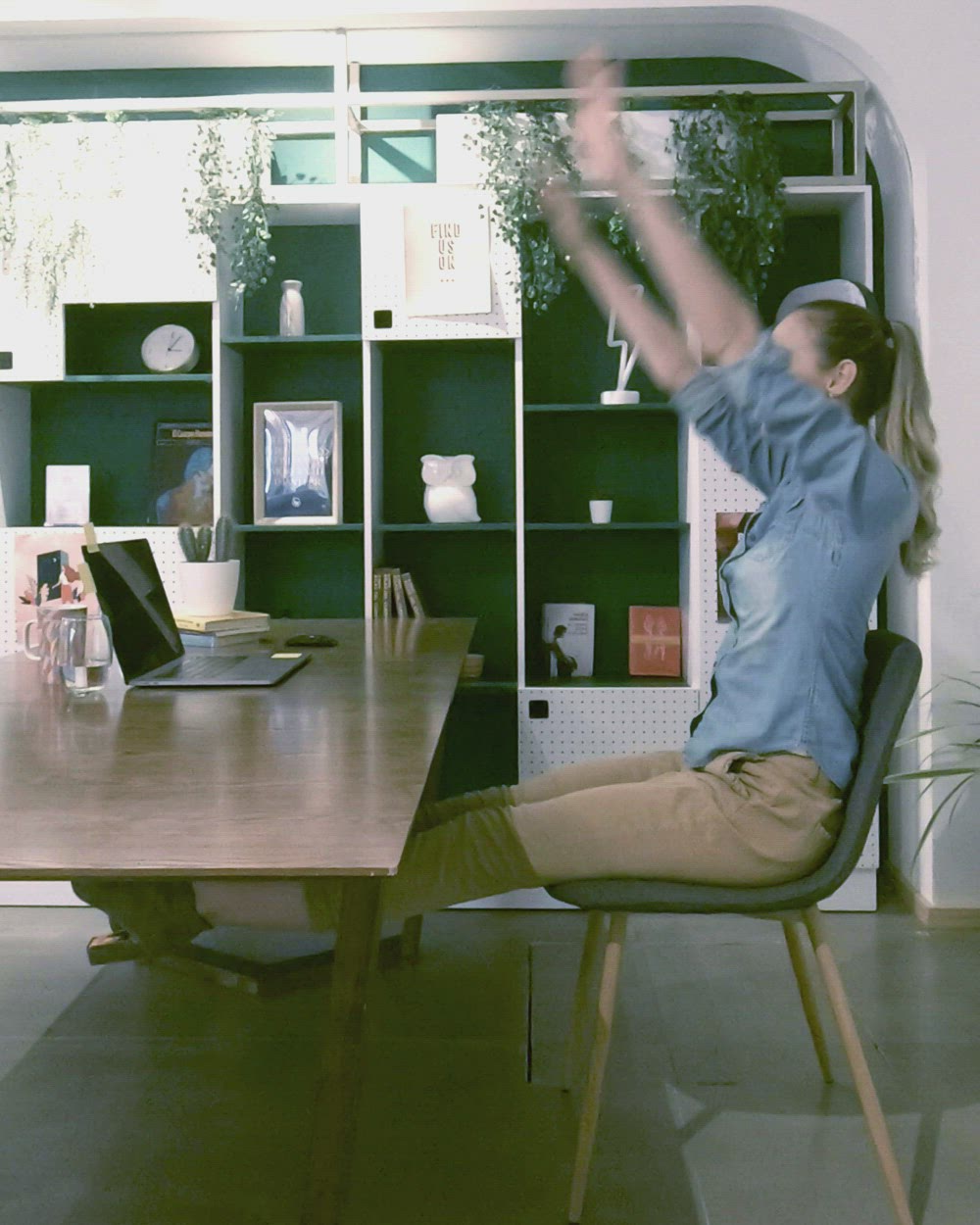 93 exercises
Desk - Sitting
Desk-friendly movements from leg raises to seated punches to combat sedentary work.
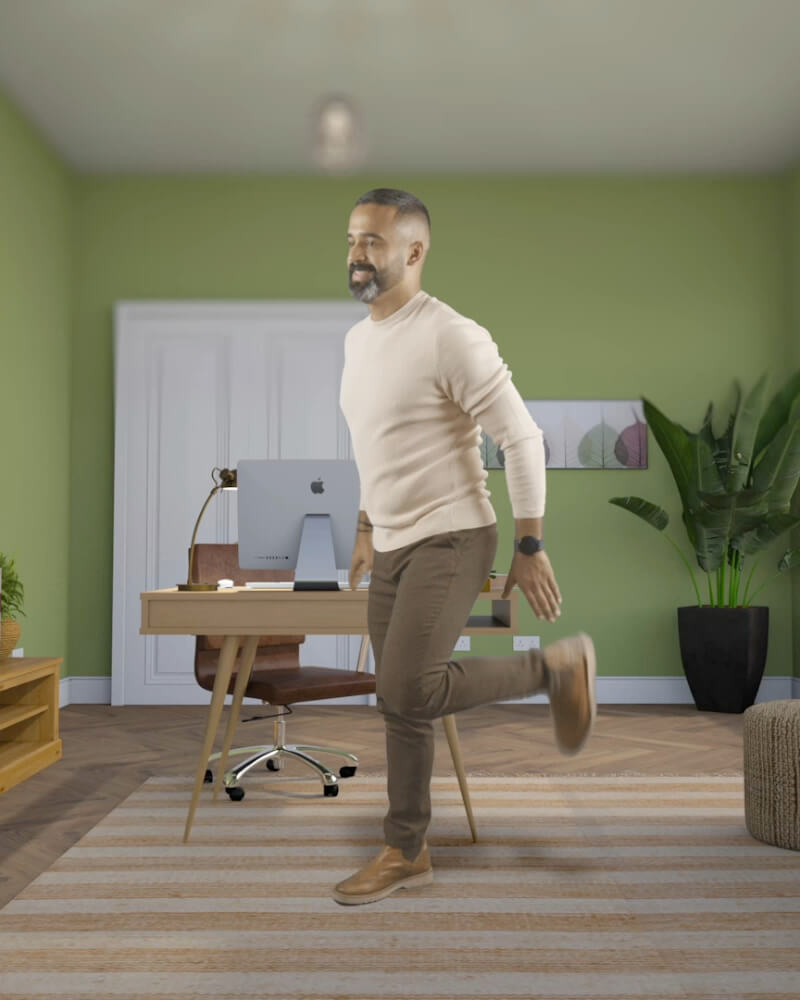 13 exercises
Fun Kicks
Playful kicking movements that energize your legs and promote lower body circulation.
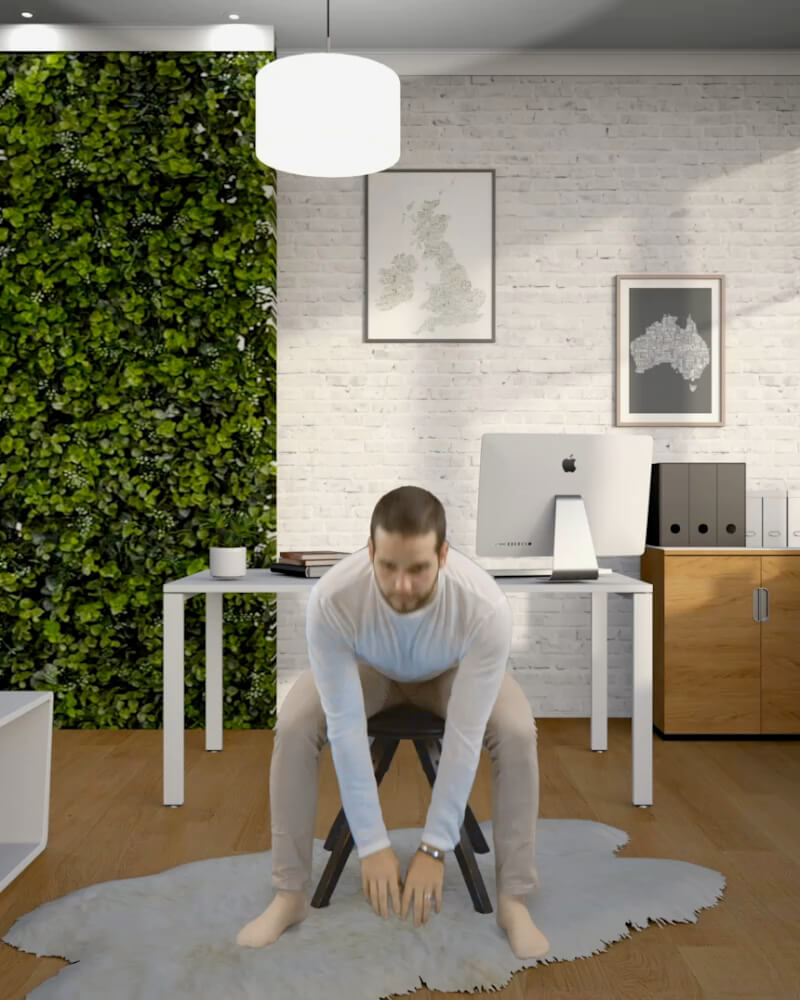 13 exercises
Sit And Stand
Dynamic movements transitioning between seated and standing positions.
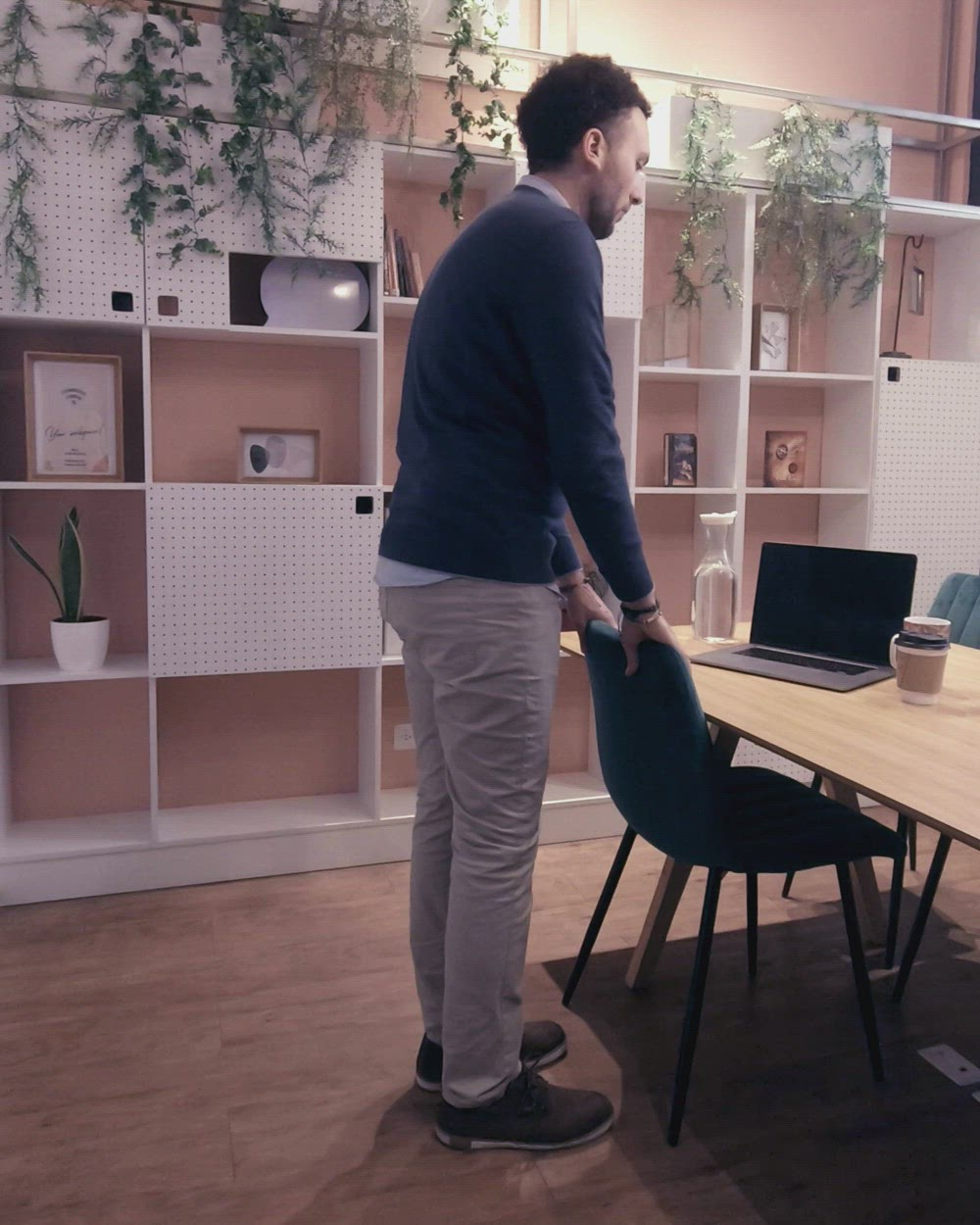 70 exercises
Desk - Standing
Energizing exercises for standing desk users to maintain focus and energy.
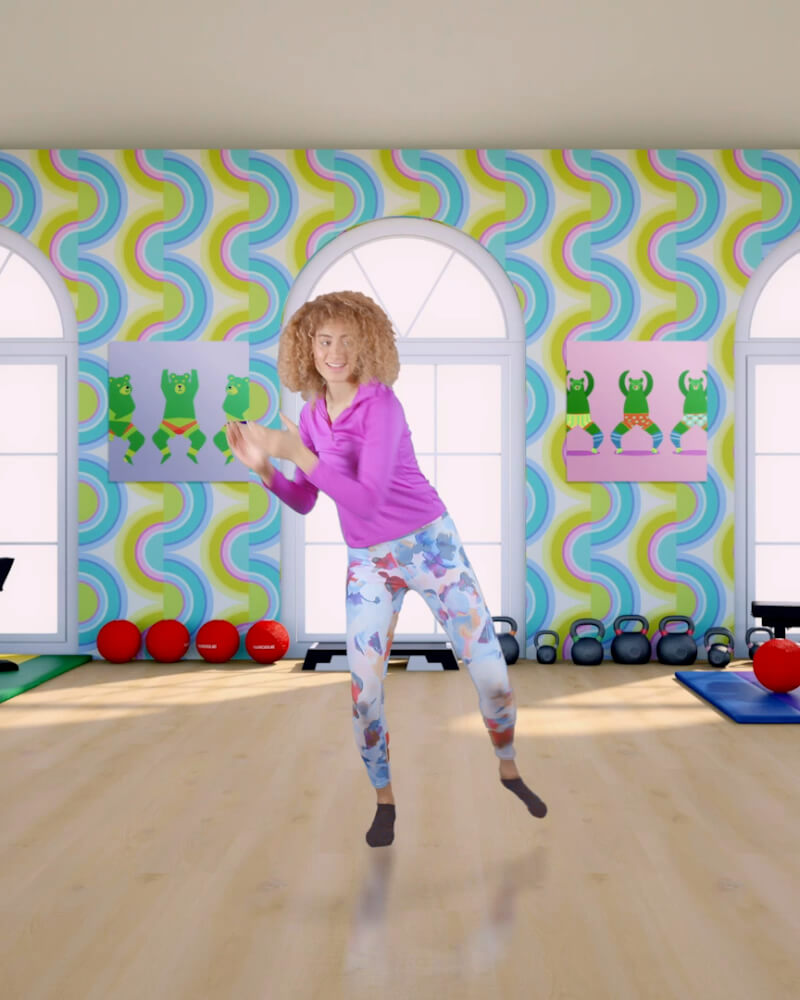 13 exercises
Funrobics
Retro 80s aerobics with upbeat movements updated for modern times.
Want the full routine?
Three minutes, guided by audio, in the iOS app. Or add Wakeout to Chrome — every new tab becomes a tiny movement break.