Wakeout pack — 13 exercises
Sit And Stand
Dynamic movements transitioning between seated and standing positions.
standingdeskmiddaydo anywhere13 exercises
30-second preview
Reach for this when…
You have a sit-stand setup and want every switch between chair and standing to double as a quick, feel-good workout.
Why this happens
The human body is built to change positions, not hold one. Emerging research on sedentary behavior increasingly points away from 'sit less, stand more' and toward something more precise: the frequency of position change itself drives cardiometabolic benefit. Static standing all day produces its own problems (venous pooling, foot pain, back fatigue), while static sitting compresses hip flexors and slows postprandial glucose clearance. This pack treats the sit-to-stand transition as the workout. Every few minutes, the body moves through a full hip and knee flexion cycle, reactivates the posterior chain, and resets circulation to the lower limbs. Designed for convertible-desk users who already alternate but want to make the transition itself productive. Best paired with a timer or a water-bottle nudge (the walk to refill doubles as a circulation reset). None of these replace real exercise, but the research is clear that breaking up sedentary time matters more than most people assume.
About this routine
Best for anyone with a height-adjustable desk who already alternates positions and wants to make transitions more deliberate. Requires a desk that moves and enough floor space to stand fully. Skip if standing causes pain or dizziness, if you're recovering from a lower-body injury, or during pregnancy if standing aggravates symptoms. Safe for most healthy adults. Not a substitute for cardio, strength training, or medical advice on chronic pain — this is circulation and movement hygiene, not rehab.
The routine
13 exercises in this pack
#
Reach For Something
Stand And Do A Hip Circle
Stand And Forward Lunge
Stand And Hop
Stand And Knee Circle Out
7 more in this pack
Unlock the full routine.
The iOS app plays all 13 exercises in order, with audio cues, countdown, and a streak that keeps you honest.
Use this pack when you need to…
Built for these moments
Boost Energy
High-energy moves you can do seated or standing, like seated boxing and kicks, right at your desk when you need a lift.
Why this pack: Built for your desk or office, this pack keeps you popping up and down with hops, knee ups and arm raises, a lively way to wake up your energy.
Make Me Stand Up
Higher-intensity moves that get you up on your feet, from sit-to-stand flows to moves for your standing desk.
Why this pack: Every move here is a sit-to-stand moment, from Stand And Sit to Stand And Hop, so getting up from your chair comes with a happy burst of energy.
Strengthen Back
Desk yoga and focused moves that strengthen and stretch your lower back and give your spine some kind attention.
Why this pack: Each rise from your chair works your core and lower back, and Stand And Superman Arm Raises add a little extra to build strength that supports your spine.
Activate My Legs
Higher-intensity leg moves, seated or standing, including kicks, sit-to-stands and office chair moves that put your legs to work.
Why this pack: Squat-like Stand And Sit reps, forward lunges, leg raises and hops give your legs plenty to do every time you rise from your seat.
Engage My Hips
Hip exercises, leg stretches, kicks and Pilates-style moves that get your hips and legs happily in motion.
Why this pack: Hip circles, knee circles out and crossing a leg as you sit, plus all those squat-style transitions, give your hips a playful range of motion.
Gain Mental Clarity
Cardio moves like punches, kicks, jumps and desk pumps that send oxygen through your blood and leave your head feeling clearer.
Why this pack: Rising, reaching and rotating your torso gets your blood flowing and your energy up, a lovely way to clear your head between seated moments.
Frequently asked
What people ask about sit and stand
Is standing all day at a standing desk actually better than sitting?
Static standing all day is not clearly better than static sitting — both cause problems, just different ones. Prolonged standing is linked to lower-limb venous issues, foot pain, and back fatigue, while prolonged sitting affects metabolic markers and hip mobility. The emerging consensus favors alternation: changing position every 20 to 45 minutes gives the body what it evolved for. This pack is built around that principle — the transitions themselves are the point.
How often should I switch between sitting and standing?
Most ergonomics research points to roughly 20 to 45 minutes in either position before switching. The exact number matters less than the fact that you switch frequently rather than holding one posture for hours. A common practical target is a 1:1 or 2:1 sit-to-stand ratio across the day, with movement breaks in between. The movements in this pack are designed to slot into the transition itself, so changing position becomes a small movement ritual rather than just a height adjustment.
Do I need a standing desk to do this pack?
A height-adjustable desk makes this pack work as designed — the sit-to-stand transitions are the mechanism. Without one, you can still do many of the movements, but the pack loses its defining feature. If you don't have an adjustable desk, Work Sitting or Standing Desk will better match your setup.
Will switching positions all day actually help my back?
Frequent position change generally helps desk-related back discomfort more than either static posture alone. The mechanism is simple: back muscles and spinal discs respond better to varied loading than sustained loading, which is what causes the stiff-at-4pm feeling. If your back pain is acute, sharp, or radiates into a leg, that warrants a clinician rather than a position-switching routine — those symptoms point to something mechanical that won't resolve on its own.
You might also like
Packs built for the same body, a slightly different moment.
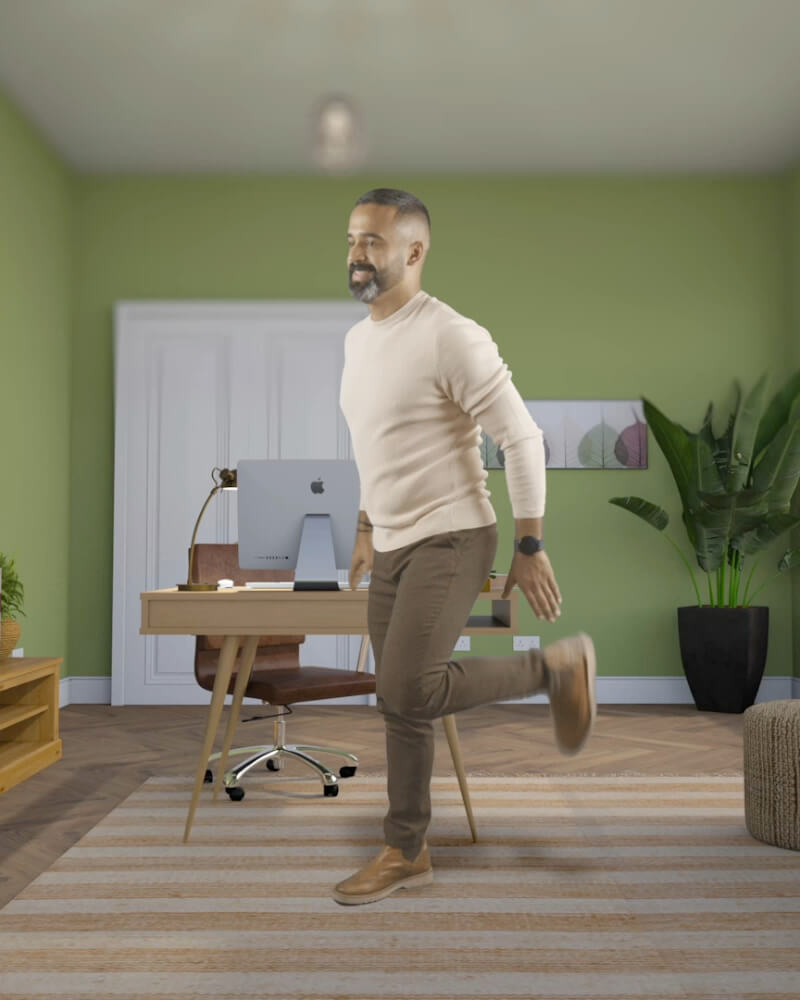 13 exercises
Fun Kicks
Playful kicking movements that energize your legs and promote lower body circulation.
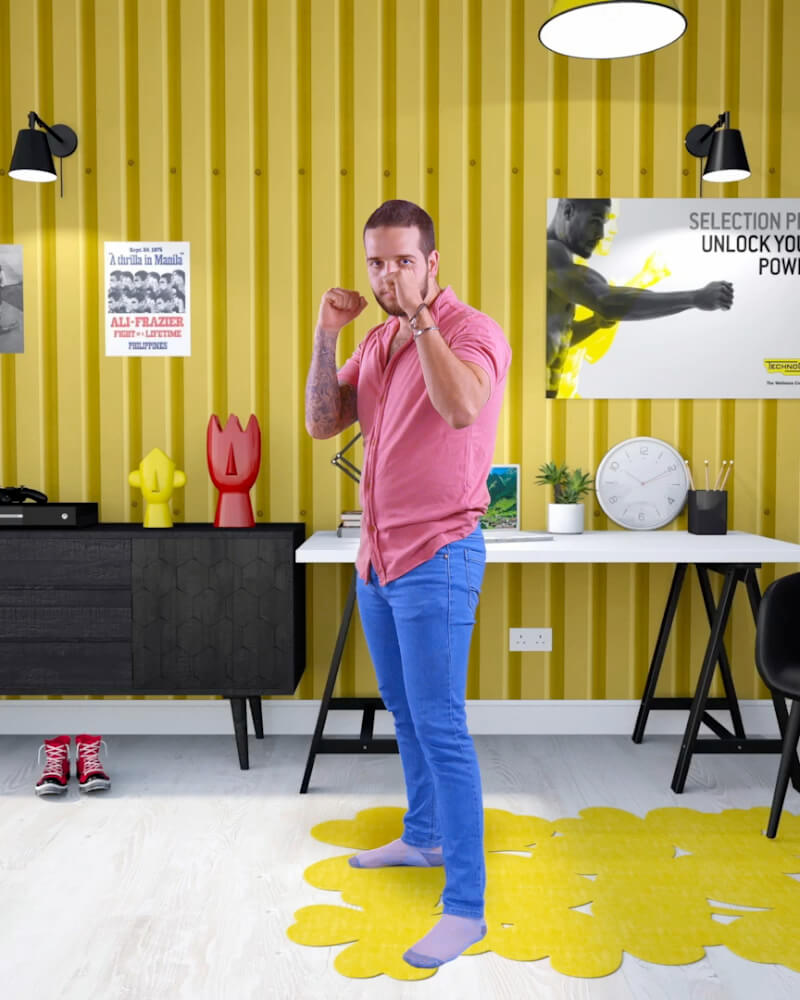 19 exercises
Standing Boxing
Upright boxing combinations that boost energy and confidence without equipment.
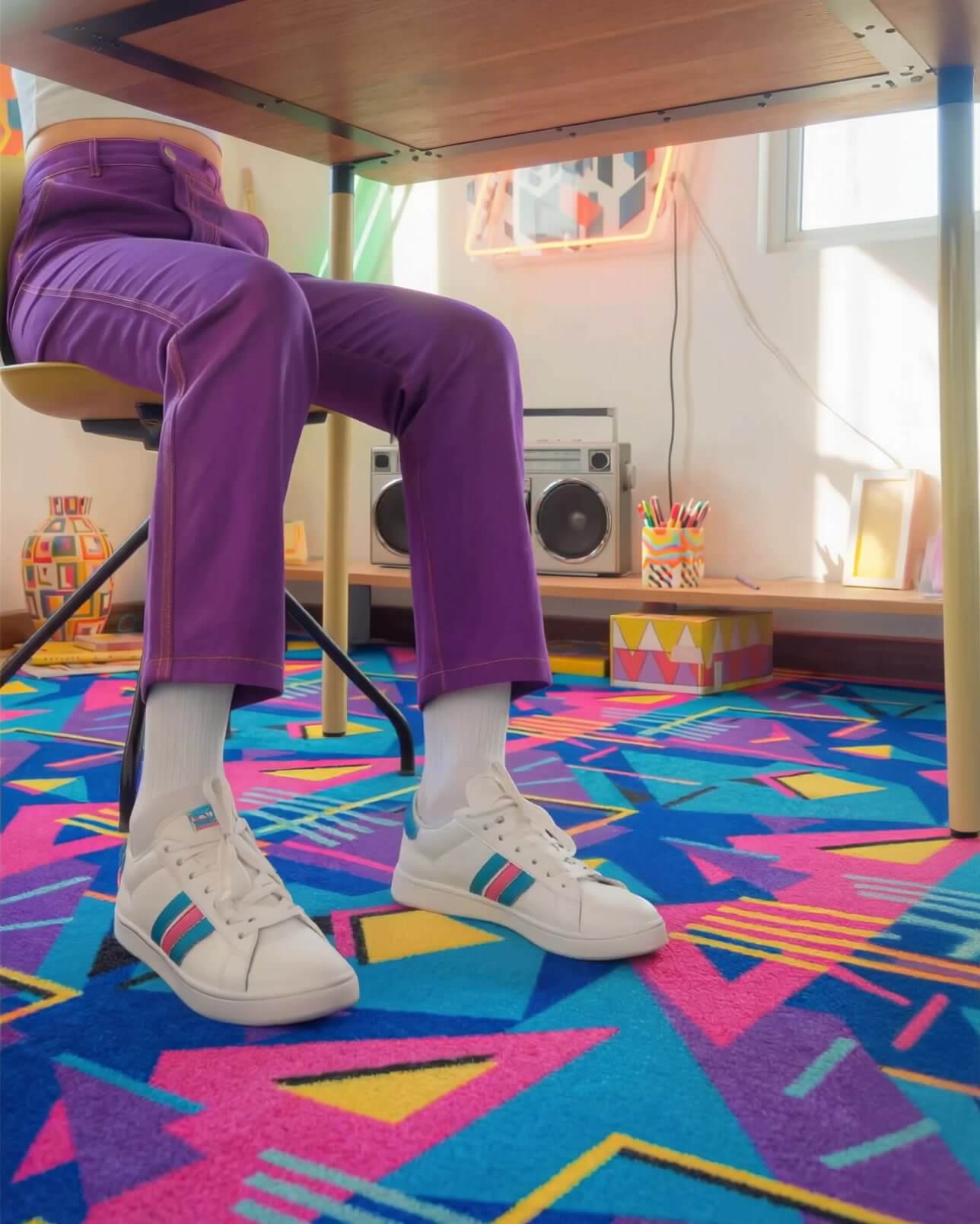 21 exercises
Sneaky Feet Party
Discreet under-desk foot movements that boost circulation and energy secretly.
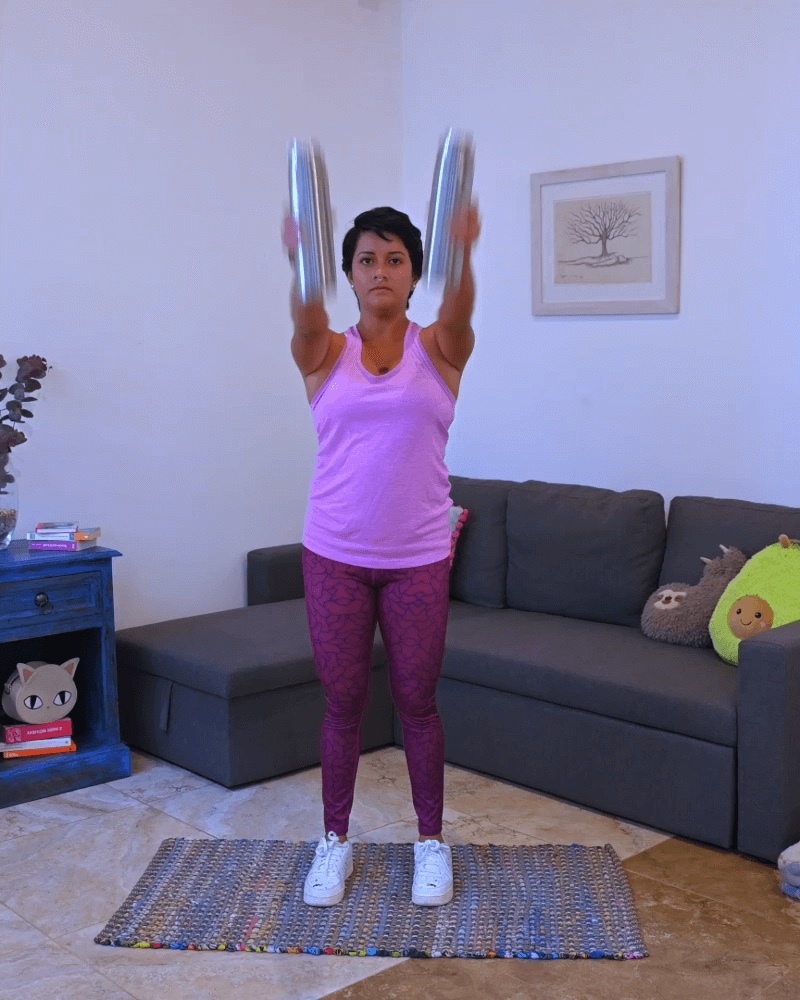 30 exercises
Water Bottles
Turn water bottles into exercise weights for seated workplace strength training.
 61 exercises
Park
Exercises designed for park benches and open areas to connect with nature.
Want the full routine?
Three minutes, guided by audio, in the iOS app. Or add Wakeout to Chrome — every new tab becomes a tiny movement break.