Wakeout pack — 13 exercises
Mobility Range Extender
Delightful stretches targeting multiple body parts to expand range of motion.
standingbedroom / living roommorning / eveningdo anywhere13 exercises
30-second preview
Reach for this when…
You feel a bit locked up all over and want more easy, usable range in your hips, shoulders and spine.
Why this happens
Mobility isn't flexibility. Flexibility is how far a muscle can be passively lengthened; mobility is how much usable range the nervous system will actually let you access under control. Most adults who sit for a living have decent passive range but a nervous system that locks down end-range because it doesn't trust the position. The fix isn't to pull harder — it's to repeatedly visit those end ranges with intent, which rebuilds neural tolerance and slowly changes tissue viscoelasticity. This pack works across the major joints — hips, spine, shoulders, thoracic rotation — because mobility gains in isolation tend not to transfer; the body moves in chains. Fifteen minutes done consistently outperforms an hour done sporadically. The test isn't whether you can touch your toes. It's whether reaching into the back seat, getting off the floor, or picking something up off a low shelf feels like something your body remembers how to do.
About this routine
Best for a non-painful body that feels generally restricted — the 'everything feels a bit locked' state. Works any time of day, requires about a meter of standing space. Skip if you have an acute injury, are post-surgical within recovery timelines, or have a hypermobility disorder where more range is the opposite of what you need. Safe during uncomplicated pregnancy with attention to balance. None of this replaces a physio assessment for specific mobility blocks.
The routine
13 exercises in this pack
#
Backward Moon Right
Behind Back Arm Raises
Crossed Arms Hang
Crossed Knee Raises
Foot Circles Left
7 more in this pack
Unlock the full routine.
The iOS app plays all 13 exercises in order, with audio cues, countdown, and a streak that keeps you honest.
Use this pack when you need to…
Built for these moments
Make Me Stand Up
Higher-intensity moves that get you up on your feet, from sit-to-stand flows to moves for your standing desk.
Why this pack: These standing stretches, like Squat And Good Morning and Half Hacksaw Squat, lift you out of your chair for a big full-body wake-up from your legs to your neck.
Strengthen Back
Desk yoga and focused moves that strengthen and stretch your lower back and give your spine some kind attention.
Why this pack: Backward Moon on each side and Squat And Good Morning bring spine-friendly mobility and back stretches that ease tension while your core happily joins in.
Loosen Neck & Shoulders
Moves aimed at your neck and shoulders, plus arm-only work and push-ups or desk pumps where your arms hold you up.
Why this pack: Behind Back Arm Raises and Crossed Arms Hang get your arms and shoulders moving, with stretches that reach up into your neck for a friendly loosen-up.
Engage My Hips
Hip exercises, leg stretches, kicks and Pilates-style moves that get your hips and legs happily in motion.
Why this pack: Supported Piriformis Stretches on both sides, Crossed Knee Raises and Squat Hold Floor Touches wake up your hips and whole lower body with playful leg stretches.
Frequently asked
What people ask about mobility range extender
What's the difference between mobility and flexibility?
Flexibility is passive — how far a limb can be pulled or stretched without active control. Mobility is active — how much of that range you can produce and control on your own. Someone can be flexible enough to touch their toes but lack the mobility to lift a straight leg to hip height. Mobility work is the harder and more useful of the two, because it's the range your body can actually use without needing gravity or a partner to help.
How often do I need to do mobility work to see changes?
Three to five times a week is the threshold where adaptations start accumulating. Mobility gains are driven by two things — tissue remodeling, which takes weeks, and neural tolerance, which updates every session. Skip more than a few days and the neural piece resets quickly; the tissue piece holds longer. That's why little and often outperforms long-and-rare for this kind of work.
Is this better in the morning or the evening?
Either works, but the effect differs. Morning mobility feels harder but carries through the day. Evening mobility is easier on stiff tissue but the nervous system is less receptive to updating tolerance after mental fatigue. If you can only pick one, morning usually gives more functional carryover. If you're using it as a wind-down, go for gentler end ranges and longer holds.
How is this different from the morning mobility pack?
Morning mobility is built for the specific problem of overnight stiffness — gentler, shorter, designed as an on-ramp to the day. This pack is broader and more demanding, aimed at genuinely expanding end-range across multiple joints whenever in the day you do it. Use morning mobility to get moving; use this one when you've got time to actually work on range.
Will this help me touch my toes?
Probably yes, but toe-touching isn't the real goal. Hamstring length is about 10 percent of what limits forward bending in most adults — the rest is hip extensor tightness, lumbar segmental mobility, and nervous-system protective tone. This pack addresses all of those. Progress shows up as easier bending, better hip rotation, and a body that tolerates end-range without flinching, not as a dramatic new finger-to-floor measurement.
You might also like
Packs built for the same body, a slightly different moment.
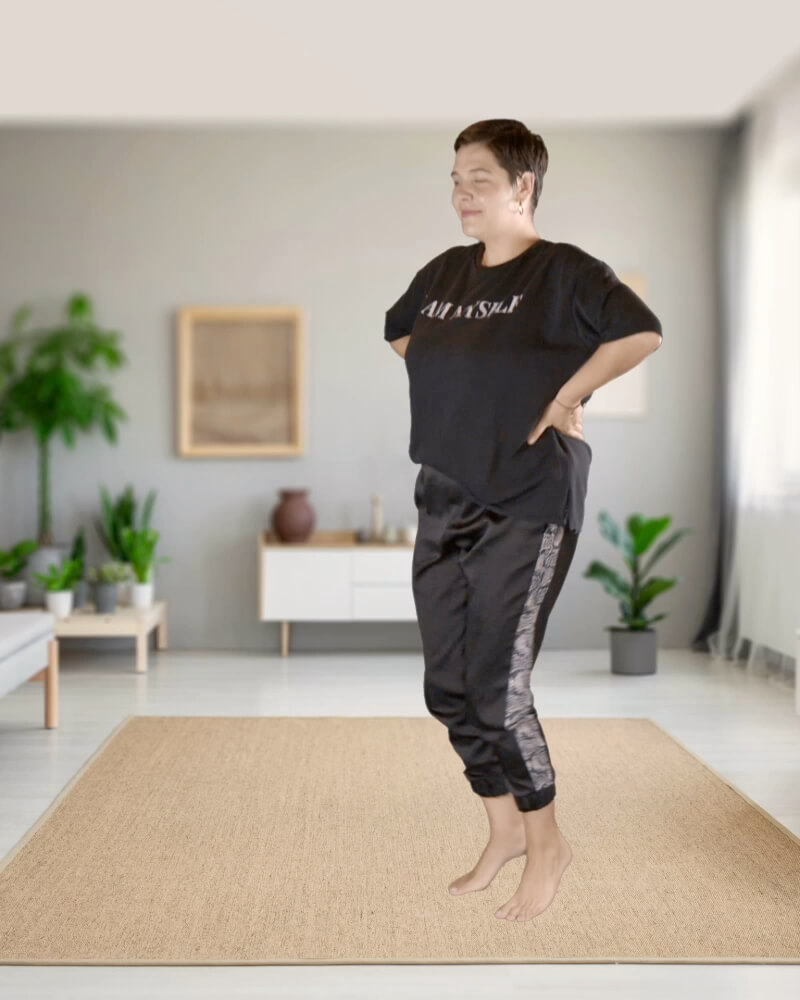 32 exercises
Morning Mobility
Gentle mobility exercises targeting stiffness from sedentary habits.
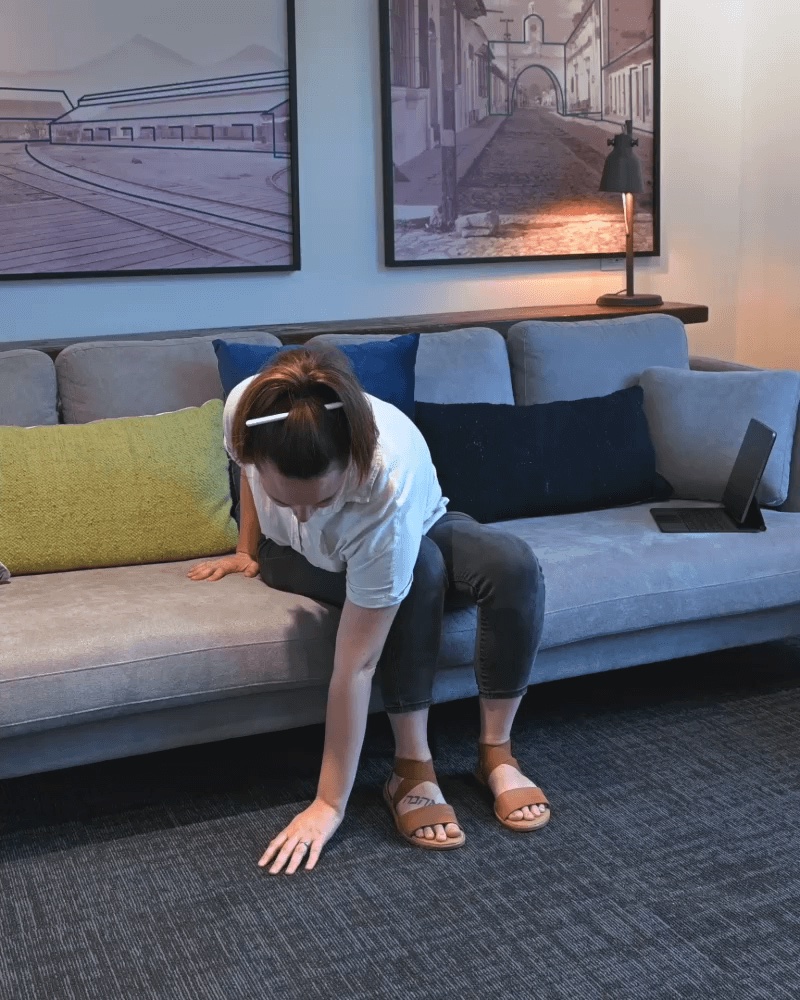 18 exercises
Couch Stretch
Creative comfort-focused stretches using your couch as a stretch station.
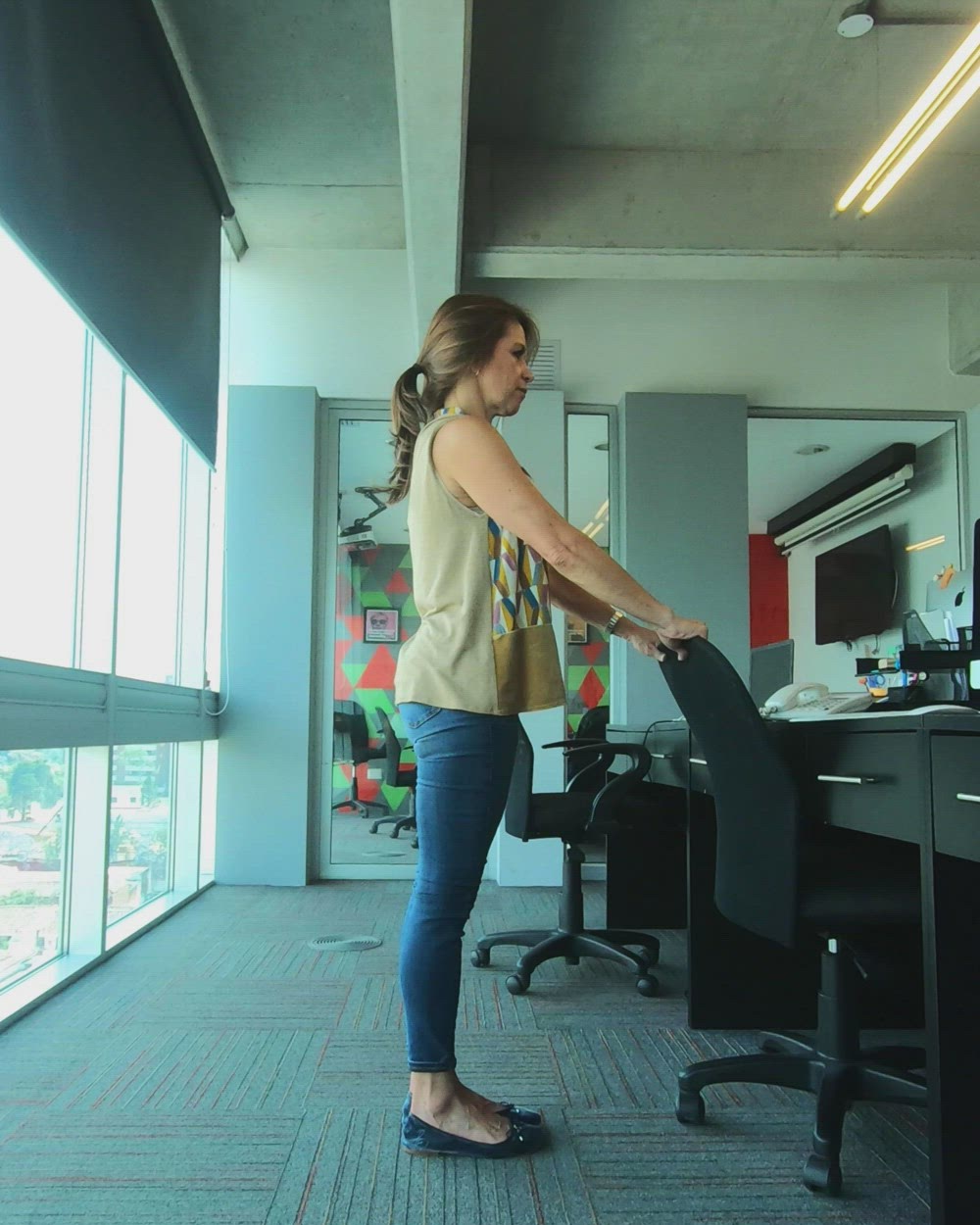 45 exercises
Office Yoga
Adapted yoga poses for the office environment, combining principles with practicality.
 17 exercises
Balance Training
Standing exercises focused on balance and body awareness to prevent falls.
 12 exercises
Lower Back Warm Up
Morning exercises to activate and protect lower back muscles.
Want the full routine?
Three minutes, guided by audio, in the iOS app. Or add Wakeout to Chrome — every new tab becomes a tiny movement break.