Wakeout pack — 15 exercises
Lower Back Tension Release
Release lower back tension from prolonged sitting with targeted stretches.
sittingdeskmiddaydo anywhere15 exercises
30-second preview
Reach for this when…
Your lower back feels stiff and achy after a long stretch at your desk, and you want some relief without leaving your chair.
Why this happens
The specific lower-back ache that shows up after a long sitting day has a clear cause. When hips stay flexed for hours, the iliopsoas shortens and pulls the lumbar spine into an exaggerated curve. The quadratus lumborum, a deep muscle running between the pelvis and the lowest ribs, tightens to stabilize against that pull. The erector spinae, working against gravity to hold a forward-leaning torso up, slowly fatigues into a dull, constant burn. By late afternoon the whole lumbar region is guarded. This pack is built for that exact pattern — seated, gentle, relief-focused. The mechanism is parasympathetic-friendly release: gentle flexion, side-bends, and subtle rotations that give the quadratus lumborum and erectors permission to relax without demanding any new strength work. It is the opposite of the Lower Back Strength pack, which prevents future pain by building strength. This one eases what already hurts.
About this routine
Best for end-of-day lumbar ache from prolonged sitting — the dull, bilateral tension that builds over hours at a desk. All movements are seated, slow, and gentle. Skip this pack if the pain is sharp, radiates down a leg, involves numbness or weakness, follows a recent injury, or wakes you from sleep — those patterns suggest nerve involvement or structural injury, which need medical evaluation, not a seated stretch. Safe during pregnancy with normal modifications. Not medical advice. It is relief work for stable backs with sitting-pattern tension.
The routine
15 exercises in this pack
#
Bent Right Leg Foot Reach
Forward Leans
Left Arm Across Leg Pull
Left Arm Under Leg Pull
Left Elbow To Right Knee
9 more in this pack
Unlock the full routine.
The iOS app plays all 15 exercises in order, with audio cues, countdown, and a streak that keeps you honest.
Use this pack when you need to…
Built for these moments
Strengthen Back
Desk yoga and focused moves that strengthen and stretch your lower back and give your spine some kind attention.
Why this pack: Forward Leans, Side To Side Bends and Leg Hugs ease tension in your lower back and give your spine room to move, a friendly boost for back health.
Engage My Hips
Hip exercises, leg stretches, kicks and Pilates-style moves that get your hips and legs happily in motion.
Why this pack: Foot Pulls, Bent Leg Foot Reaches and Leg Hugs get your legs moving alongside lower back stretches, so your hips can loosen up and enjoy some flexibility.
Engage My Core
Torso twists, side touches and similar moves that work your whole core: your abs, your sides and your lower back.
Why this pack: Your lower back is part of your core, and the Elbow To Knee moves plus Side To Side Bends keep your spine mobile while that area gets some relief.
Frequently asked
What people ask about lower back tension release
Why does my lower back hurt after sitting all day?
Three muscles usually drive the ache: the iliopsoas shortens from hours of hip flexion and pulls the lumbar spine into hyperextension; the quadratus lumborum tightens to stabilize; the erector spinae fatigues from holding the torso upright. Together they produce the familiar dull bilateral tension most desk workers feel by late afternoon. It is muscular, not structural — which means gentle mobility usually helps, where a heavy stretch or workout might aggravate it.
Is it safe to stretch my lower back when it hurts?
For sitting-pattern tension, yes — gentle flexion, side-bends, and slow rotation generally reduce the ache. What to avoid is forcing any movement, deep end-range stretches, or anything that sharpens the pain. If the pain radiates into a leg, involves numbness, weakness, or follows a recent injury, stop and see a clinician — those patterns suggest nerve or structural involvement, which self-directed stretching can make worse. This pack is calibrated for muscular tension, not those cases.
How is this different from the Lower Back Strength pack?
This pack is seated and relief-focused — built for people with current lumbar tension who need ease, not loading. Lower Back Strength is standing and preventive, built for healthy backs that want to stay healthy through strengthening the erectors and multifidus. Stretching a tight back is the right move when it hurts now; strengthening a healthy back is the right move when it does not. Use the one that matches your current state.
What if my back pain radiates down my leg?
Stop and see a physician. Pain that radiates below the buttock into the back of the thigh, calf, or foot is typically nerve-pattern pain — most often sciatic — and it needs medical evaluation, not a seated stretch. Self-directed mobility work can worsen nerve compression if the underlying cause is a disc or bony issue. This pack is for muscular tension only. When in doubt, err on the side of professional assessment.
How often can I run this pack in a day?
Every two to three hours during a heavy sitting day is reasonable, and once or twice in the evening is common for chronic tension. The movements are low-load and the mechanism is muscular relaxation, both of which respond well to frequent short doses. If you feel better after a round, it is working. If a round leaves the back more sore or more guarded, stop and reassess — that is a signal that the problem is not the sitting-pattern muscular tension this pack is built for.
You might also like
Packs built for the same body, a slightly different moment.
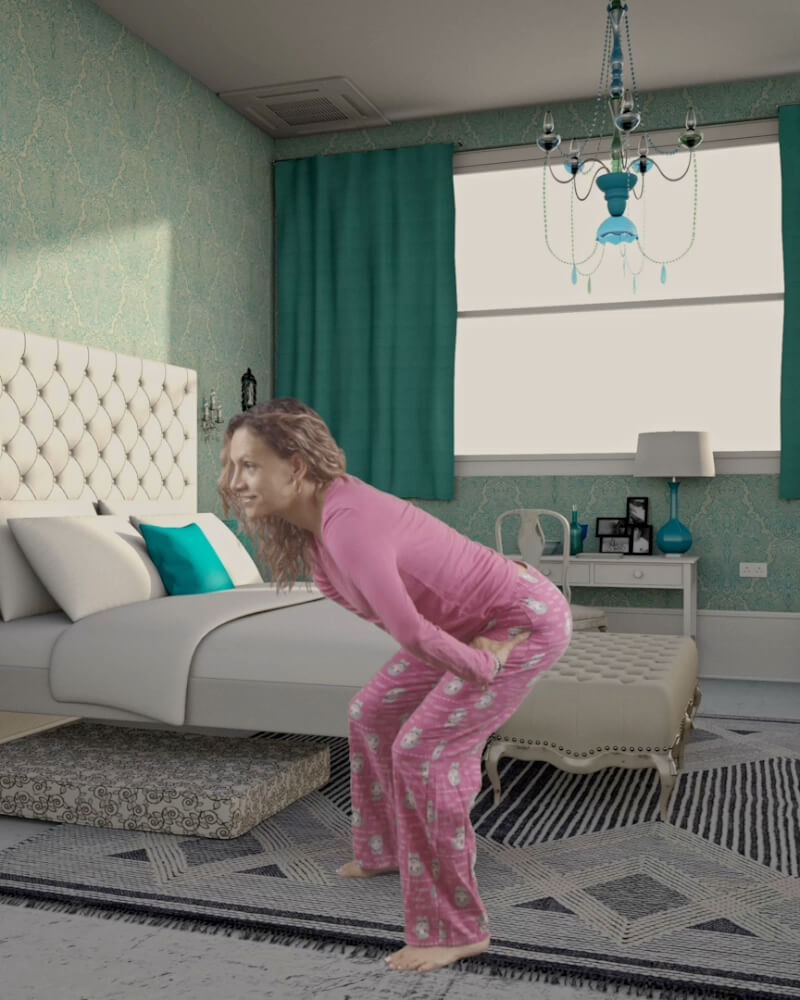 12 exercises
Lower Back Warm Up
Morning exercises to activate and protect lower back muscles.
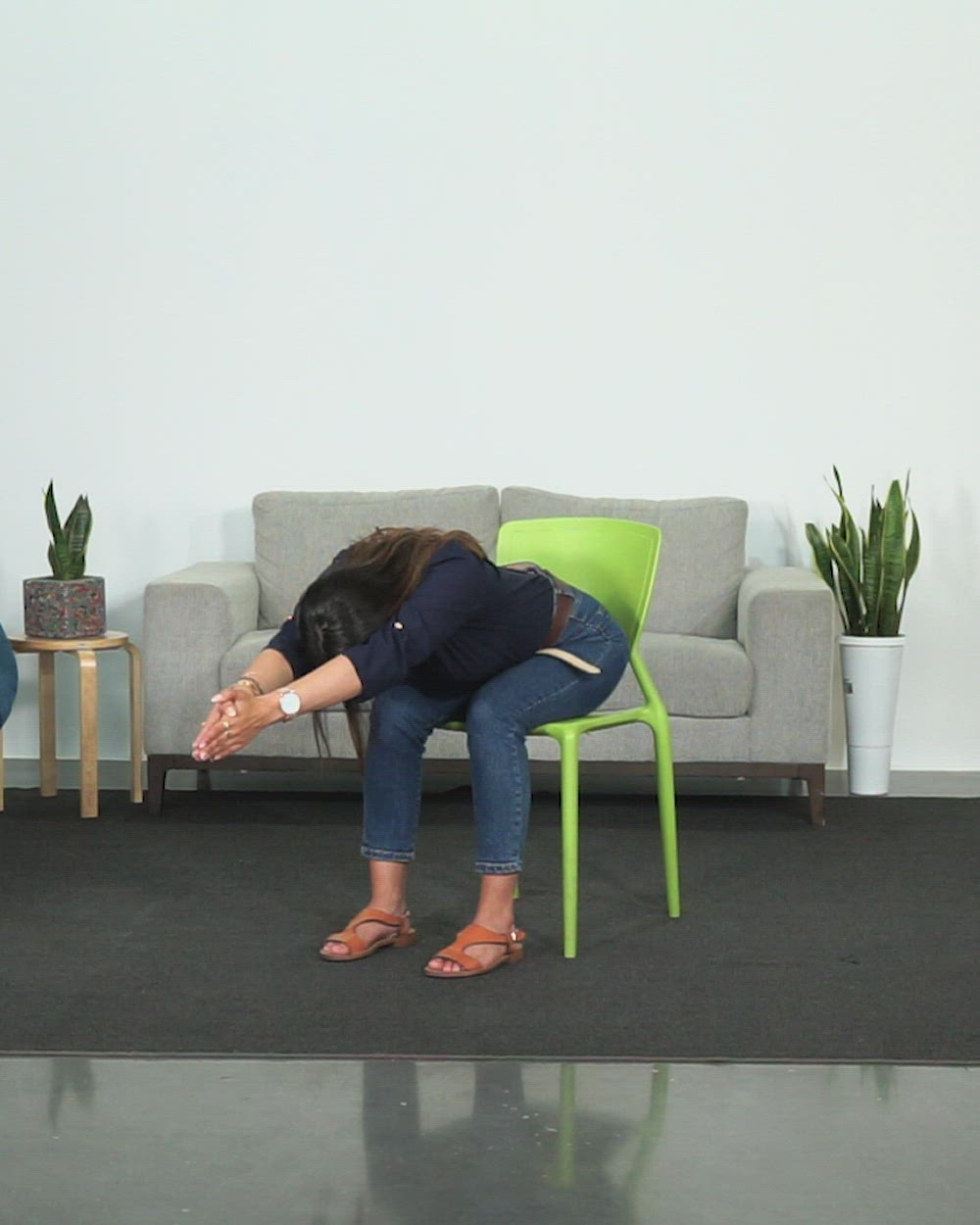 16 exercises
Back Pain
Gentle movements to relieve tension in upper and lower back muscles.
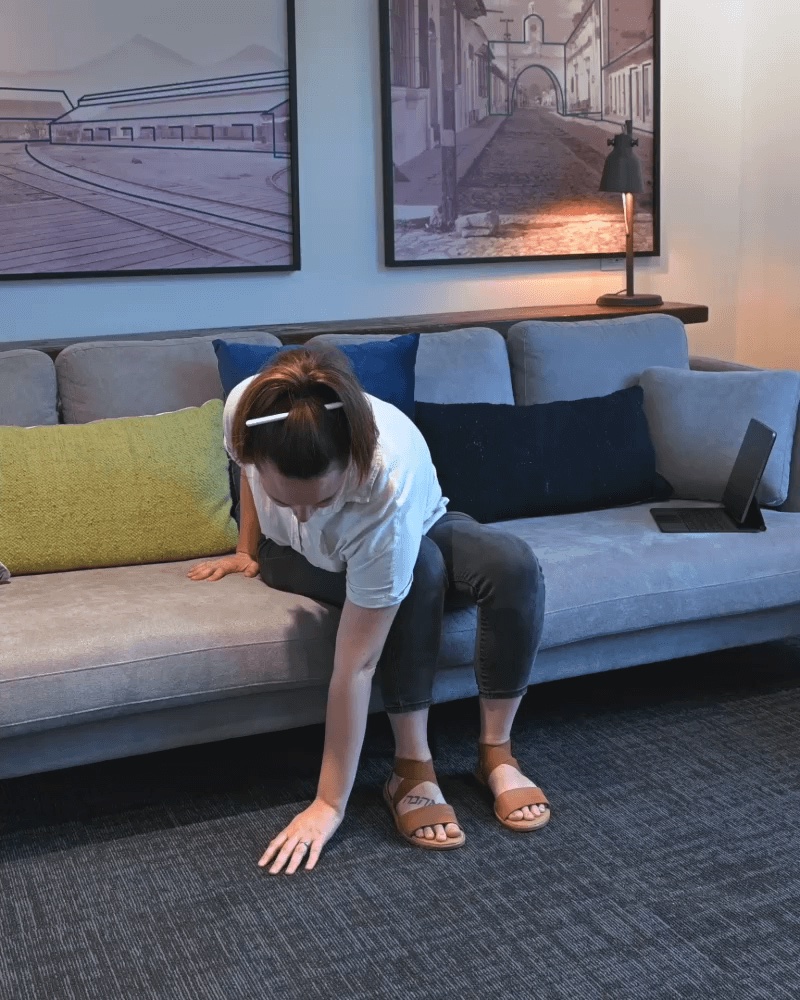 18 exercises
Couch Stretch
Creative comfort-focused stretches using your couch as a stretch station.
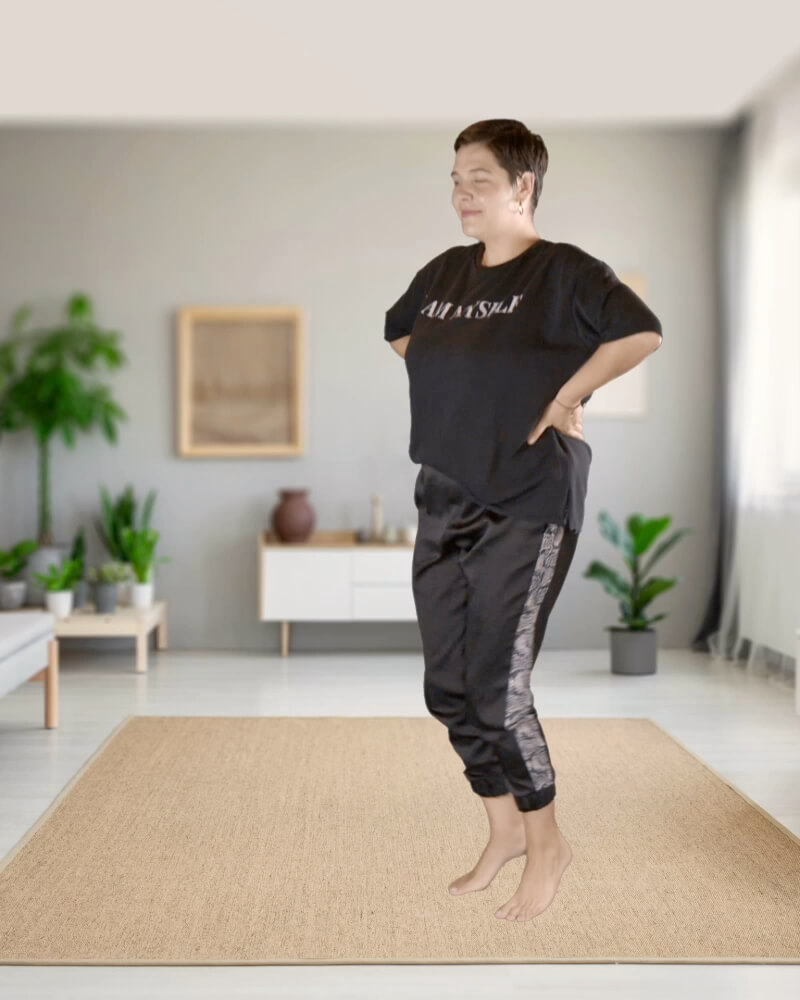 32 exercises
Morning Mobility
Gentle mobility exercises targeting stiffness from sedentary habits.
Want the full routine?
Three minutes, guided by audio, in the iOS app. Or add Wakeout to Chrome — every new tab becomes a tiny movement break.