Wakeout pack — 30 exercises
Back Pain
Gentle movements to relieve tension in upper and lower back muscles.
sittingdeskmiddaydo anywhere30 exercises
30-second preview
Full routine on YouTube
Press play and follow along
The whole routine in one video, 2:56 start to finish. Turn it up and follow along.
Reach for this when…
Your upper and lower back both feel stiff after a long stretch at your desk, and you want to loosen everything at once.
Why this happens
Generalized back pain from sitting is rarely one problem. It's the stacked outcome of a hip flexor complex (the iliopsoas) shortening after hours of flexion, the glutes deactivating from lack of extension, the lumbar erectors holding static tension to keep the torso upright, and the thoracic spine stiffening into the slight forward curve of screen work. By 4 pm, the whole posterior chain is under load it was never designed to carry in a motionless position. This pack addresses the full span — upper and lower back together — rather than isolating one region, because treating only the lumbar when the thoracic is locked is how lower-back problems come back. Sixteen seated and standing movements mobilize the spine segmentally, reopen the hips so the lower back isn't fighting them, and extend the thoracic curve that monitor height reliably kills. Relief that sticks means moving the whole chain, not just the spot that hurts.
About this routine
Best for general desk-induced back stiffness, the all-over ache from a long sitting day. The main routine works in a chair with brief standing transitions, no mat needed; the seated lower back routine below never leaves the chair, so it works on calls and in meetings. Skip this if pain radiates down a leg, involves numbness, tingling, or weakness, or follows a fall or lifting injury: those patterns point to disc or nerve involvement and warrant evaluation. For lower-back-only issues, Lower Back Tension Release is more targeted. Not a substitute for medical care if pain is acute, severe, or persistent.
Stuck in your chair?
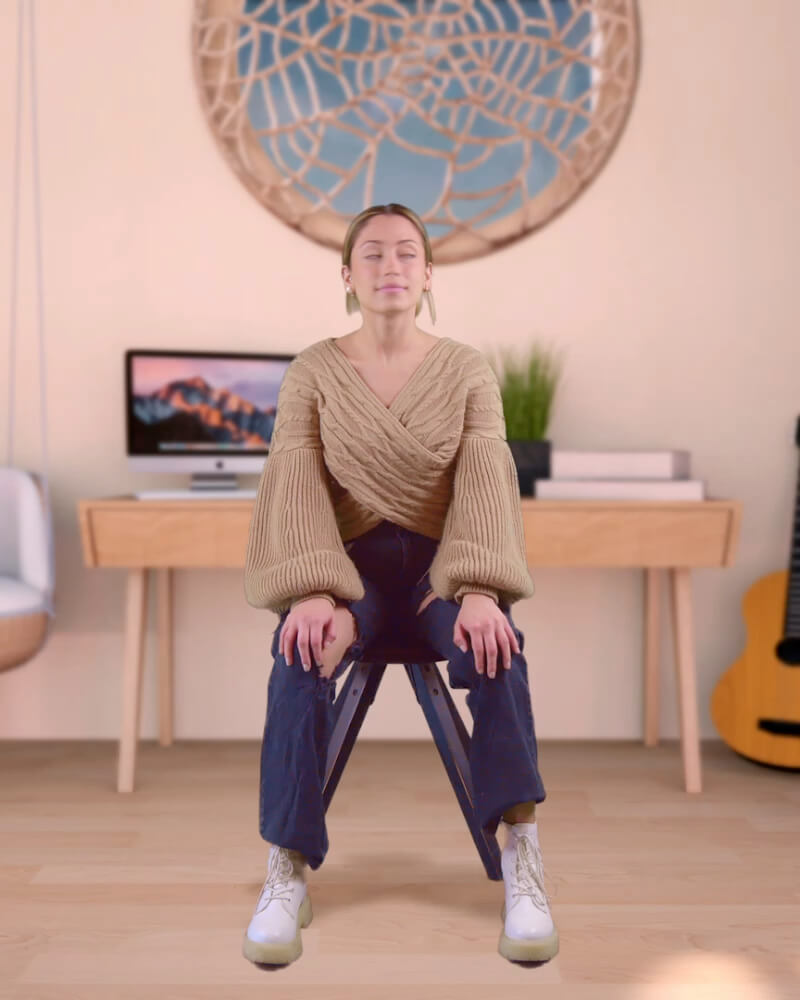
Seated lower back routine: 14 stretches without standing up
On a call, in a meeting, or just not ready to stand? These all happen in the chair. Forward folds, slow twists and a little core work loosen the lower back, about 30 seconds each.
Arrow Bows
Cross-leg Twist - Left
Cross-leg Twist - Right
Elbow To Knees
Floor Touch Hold
Floor Touch To Arm Raise
8 more in this pack
Unlock the full routine.
The iOS app plays all 14 exercises in order, with audio cues, countdown, and a streak that keeps you honest.
Use this pack when you need to…
Built for these moments
Strengthen Back
Desk yoga and focused moves that strengthen and stretch your lower back and give your spine some kind attention.
Why this pack: Built for cranky backs, Floor Birds, Lumbar Crunches and Chair Thrusts work your upper and lower back while twists and folds keep your spine mobile and posture tall.
Loosen Neck & Shoulders
Moves aimed at your neck and shoulders, plus arm-only work and push-ups or desk pumps where your arms hold you up.
Why this pack: Slow Upperbody Circles, Thoratic Extension and Elbow Up Twists get your neck moving and ease upper back tension, so your shoulders get some sweet relief too.
Frequently asked
What people ask about back pain
Why does my whole back hurt from sitting at a desk all day?
Sitting loads the back in a way standing doesn't: the hip flexors shorten, the glutes switch off, the thoracic spine rounds toward the monitor, and the lumbar erectors work isometrically for hours to hold the torso up. Every region compensates for the others, so by late afternoon the ache is everywhere rather than localized. Disc pressure also rises in flexion, which is why sustained forward-leaning postures produce cumulative discomfort. Addressing the full chain — hips, mid-back, and lumbar — produces more durable relief than treating one region.
Should I stretch my back when it's already hurting?
For tension-pattern back pain, gentle mobility helps; for acute injury or disc involvement, it can worsen symptoms. If the pain is dull, diffuse, and improves with movement throughout the day, a slow mobility routine like this one usually brings relief. If pain is sharp, shoots down a leg, involves tingling or weakness, or started after a specific injury, stop and see a physician. The movements here are safe for general stiffness, not for structural problems.
What's the difference between this pack and lower back tension release?
This pack treats the whole back as one system — thoracic, lumbar, and hips — because upper-back stiffness and tight hip flexors both feed into lower-back pain. Lower Back Tension Release is more targeted, using seated lumbar-specific stretches when the pain is isolated to the lower region. Use this broader pack when stiffness is diffuse; use the targeted one when you can point to exactly where it hurts.
How often should I do this through a workday?
A short round every 90 minutes prevents more cumulative stiffness than one long session at the end of the day. Back pain from sitting is a dose-response problem — the longer the uninterrupted sit, the deeper the pattern sets. Frequent small interruptions let the tissues reset before they've loaded to the point of real discomfort. Even two minutes of standing and thoracic extension between meetings keeps most of the pattern from developing in the first place.
What are the best lower back stretches to do at my desk?
Start with the ones that undo the sitting shape. A seated forward fold, chest resting toward your thighs while you breathe, lengthens the lower back. A cross-leg twist to both sides gets the spine rotating again. Torso circles and gentle lumbar crunches wake up the muscles that have held you upright all day. Give each about 30 seconds, go slowly, and stay out of sharp pain. The seated lower back routine on this page strings these together so you don't have to think about it.
How do I relieve back pain from sitting at a desk all day?
Break up the stillness. Most desk back pain comes from holding one position for hours, so a two or three minute movement break every 30 to 60 minutes does more than one long stretch at the end of the day. Stand up when you can, walk to refill your water, and raise your screen to eye level so you stop rounding toward it. When you can't get up, do a few seated moves right in your chair. A reminder helps, because nobody remembers on their own.
Can I do back exercises without getting out of my chair?
Yes. Every move in the seated lower back routine happens in the chair: folds, twists, side stretches and a little core work. They are quiet enough for a video call with the camera off and need no floor space. A chair with a backrest and no wheels is easiest; if yours rolls, plant your feet wide.
Should I use a lumbar support pillow?
A lumbar support can help if your chair lacks one, but it's not a cure for desk-related back ache. The underlying problem is static loading, not posture alone — even perfect posture held for hours produces tension. The better intervention is frequent movement breaks like the ones on this page. Use lumbar support to make long sits tolerable, use movement breaks to actually address the cause.
You might also like
Packs built for the same body, a slightly different moment.
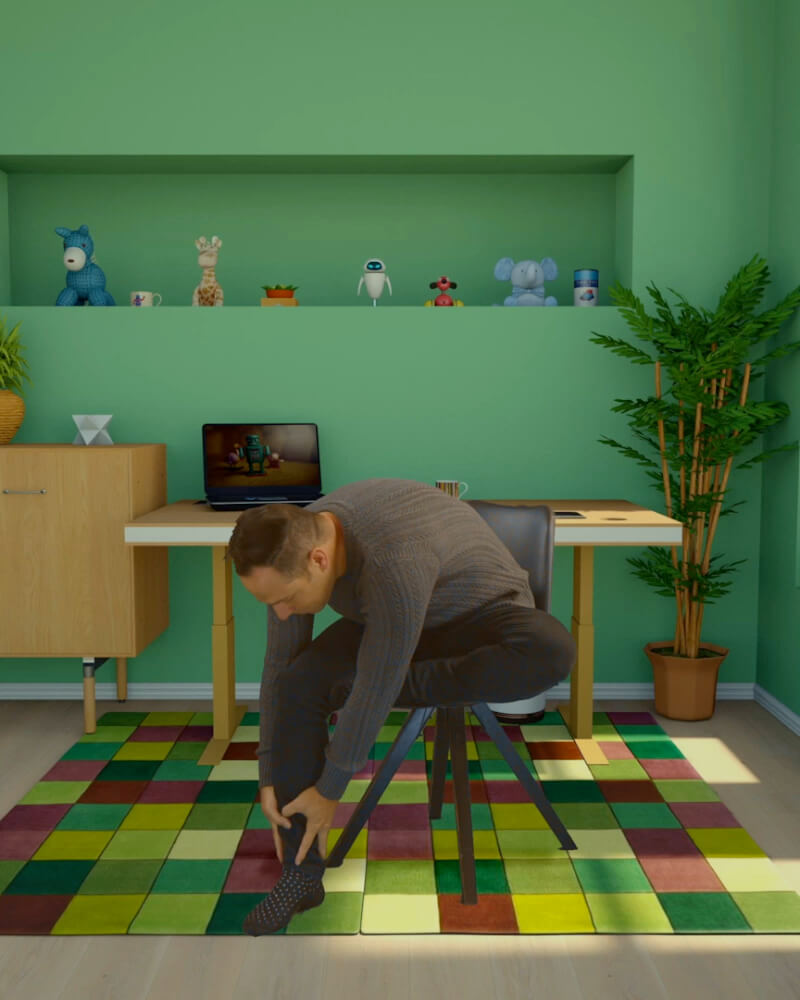 15 exercises
Lower Back Tension Release
Release lower back tension from prolonged sitting with targeted stretches.
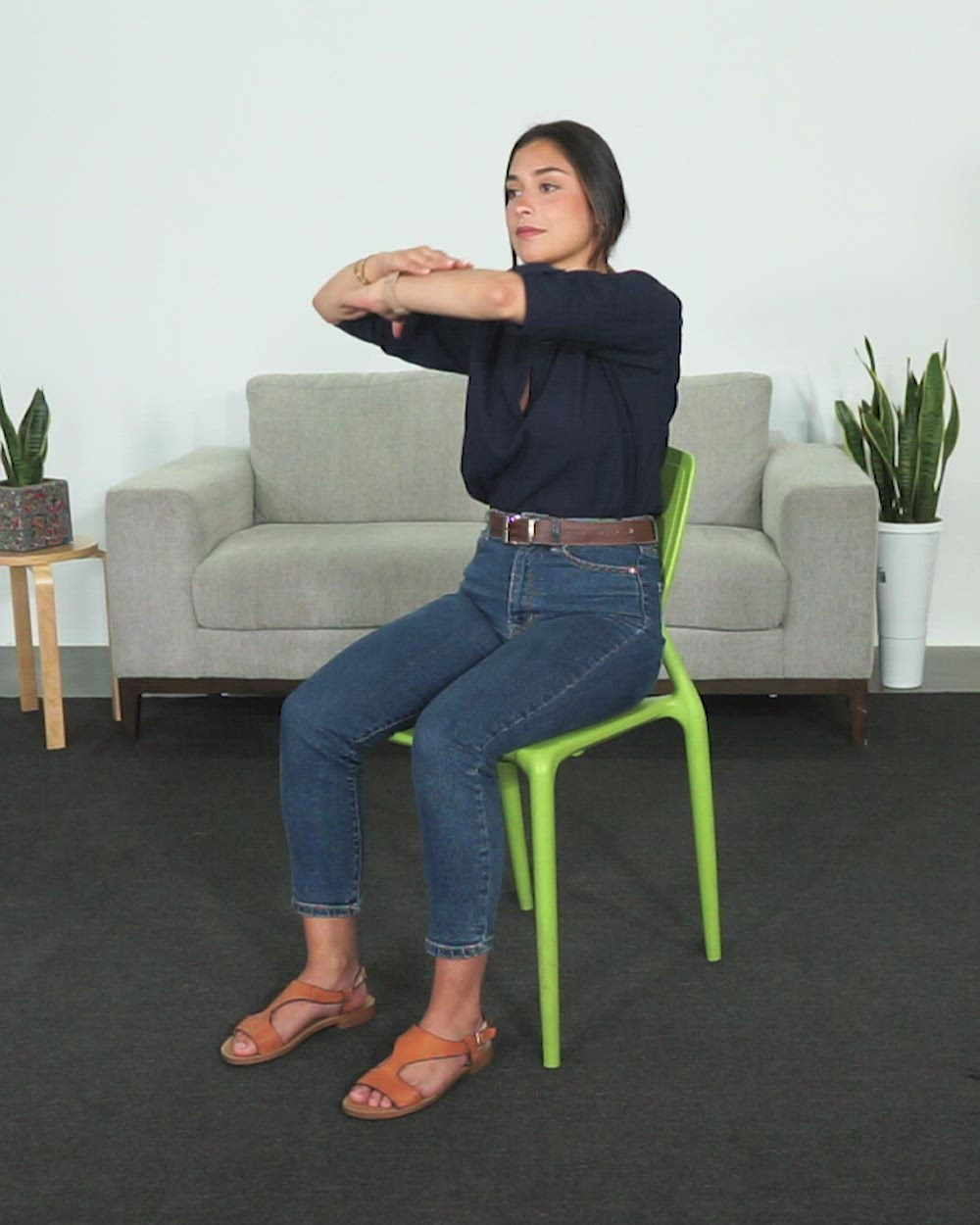 25 exercises
Neck And Shoulders
Targeted stretches and movements to release neck and shoulder tension.
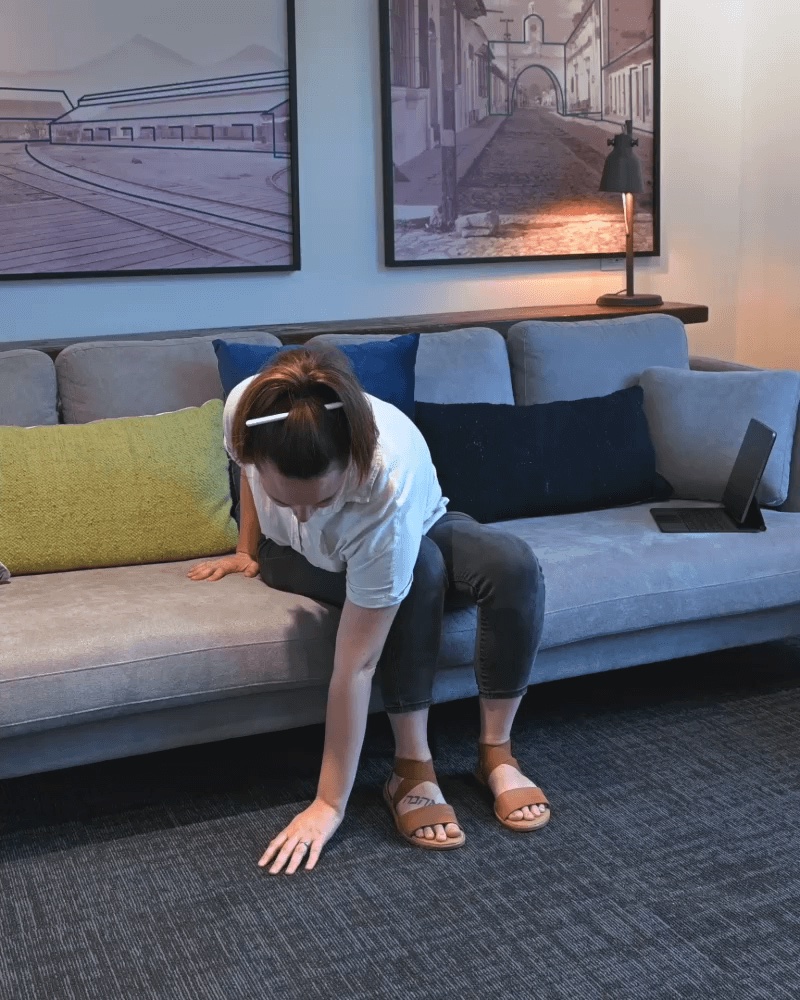 18 exercises
Couch Stretch
Creative comfort-focused stretches using your couch as a stretch station.
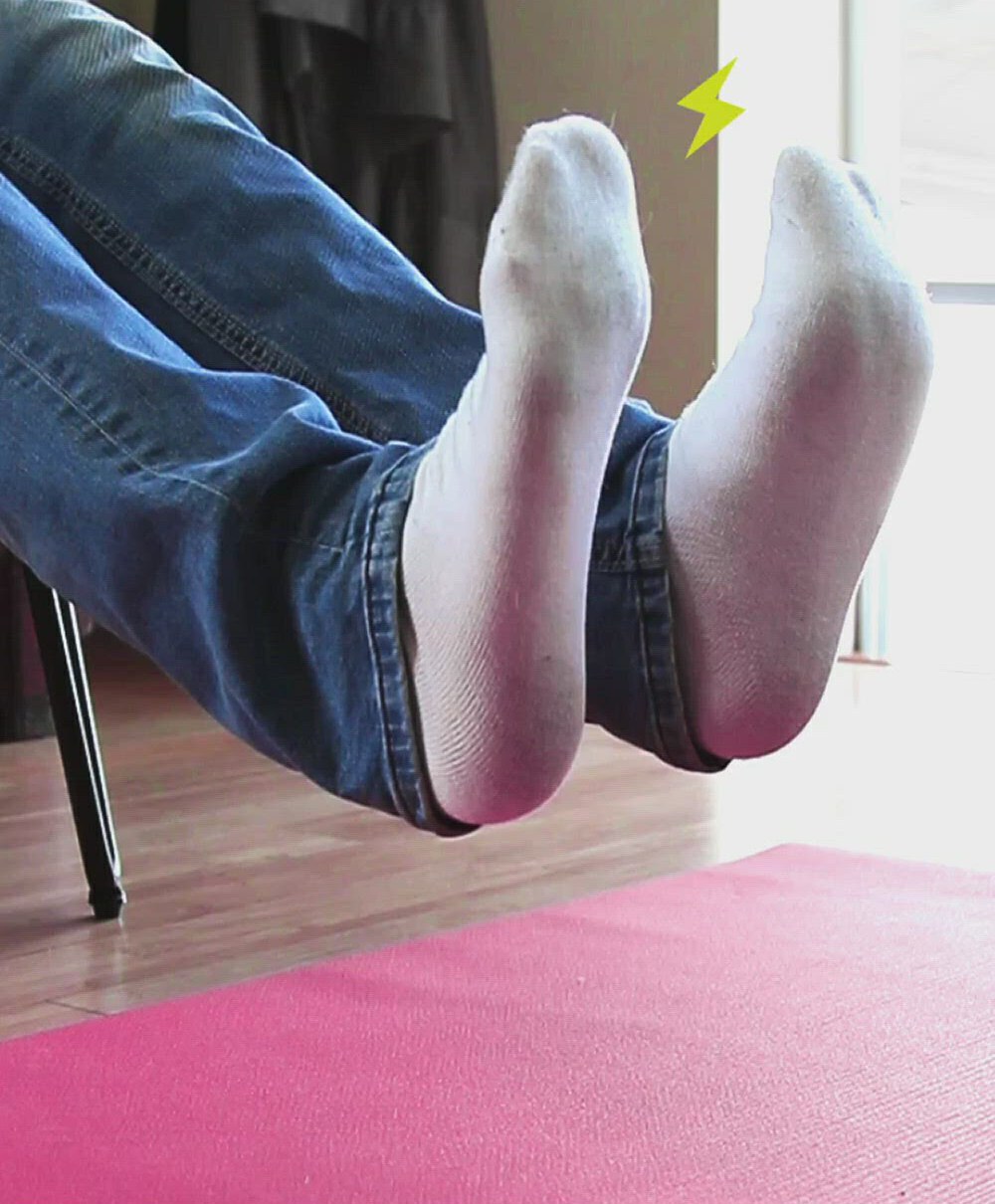 81 exercises
Feet Relief
Self-massage techniques combining stretching and pressure points for foot rejuvenation.
 14 exercises
Neck Relief
Therapeutic movements and stretches for immediate neck pain relief.
Want the full routine?
Three minutes, guided by audio, in the iOS app. Or add Wakeout to Chrome — every new tab becomes a tiny movement break.