Wakeout pack — 13 exercises
Evening Breathing Ritual
A standing routine of yoga and tai chi-inspired movements synchronized with your breath—inhale on one motion, exhale on the return. Ideal for winding down in your living room without disturbing a sleeping partner. The rhythmic breathing activates your parasympathetic nervous system and prepares your body for deep sleep.
standingliving roomeveningdo anywhere13 exercises
30-second preview
Reach for this when…
It's almost bedtime, the lights are low, and you want to wind down quietly without disturbing anyone already asleep.
Why this happens
Slow diaphragmatic breathing is the most direct tool available for shifting the autonomic nervous system from sympathetic to parasympathetic. Extending the exhale past the inhale — a 4-count in, 6-count out, for example — stimulates the vagus nerve, lowers heart rate, and tells the body that threat has passed. This pack pairs that breath pattern with slow standing movements drawn from tai chi and gentle yoga: weight shifts, arm flows, quiet spinal waves. The combination matters. Breath alone can calm the nervous system, but adding low-amplitude standing movement sends additional proprioceptive input that deepens the parasympathetic shift. Standing also keeps the practice active rather than sleepy, which is why it works as a bedtime ritual even for people who get restless when they try to meditate lying down. Lights low, four minutes, no equipment, no sound — a real transition out of the day without waking a sleeping partner.
About this routine
Best for the half-hour before sleep in a quiet room, ideally with dim light. All movements are standing and slow, taking about four minutes. Skip this pack if you have balance issues that make standing with eyes partially closed unsafe — a few movements use soft-gaze or eyes-closed moments. Safe during pregnancy. None of this is medical treatment for sleep disorders, but it's a consistent way to signal to the nervous system that the day is over.
Use this pack when you need to…
Built for these moments
Engage My Hips
Hip exercises, leg stretches, kicks and Pilates-style moves that get your hips and legs happily in motion.
Why this pack: Squat And Rise Breaths, Drop Breaths and Inhale Exhale Twists bring your hips and legs along through weight shifts, stretches and flowing standing yoga and tai chi moves.
Frequently asked
What people ask about evening breathing ritual
How does slow breathing actually help me sleep?
Extended exhales — longer out than in — directly stimulate the vagus nerve, the main parasympathetic pathway. This lowers heart rate, reduces blood pressure, and signals to the body that it's safe to downshift. The resulting autonomic shift is one of the cues the sleep system uses to begin the transition to rest. It's the same mechanism used in clinical anxiety protocols and in ancient meditation traditions, because it reliably moves the needle on arousal within minutes.
Why standing instead of lying down?
Lying down for breathwork often tips into drowsiness before the nervous system has fully downshifted, which produces a light, twitchy kind of sleep. Standing keeps you alert enough to actually do the breathing correctly while still allowing relaxation. The slow weight shifts also add proprioceptive input that deepens the parasympathetic effect. Once you've done the pack, lying down for sleep happens from a properly prepared state rather than a half-activated one.
Is this the same as tai chi or yoga?
It borrows from both but isn't a full practice in either. The movements draw on tai chi's slow weight shifts and on gentle yoga's breath-movement coupling, but the pack is designed around one specific goal — evening nervous-system wind-down — rather than teaching a full system. If you want to go deeper into either tradition, pursue them properly. This pack is the applied-physiology version: the part that actually changes autonomic state, distilled to four minutes.
Will this wake up my partner?
No — the whole pack is designed to be done in near-silence with low light. The movements are quiet, there's no audio guidance required, and the standing format means you can do it in a living room or hallway without disturbing anyone asleep. It's specifically built for the post-bedtime scenario where one partner needs a wind-down ritual while the other is already out. For the lying-down equivalent without getting into bed, try Pillow Breathing and Stretch.
You might also like
Packs built for the same body, a slightly different moment.
 13 exercises
Couch To Bed Transition
Pressure points and sensory techniques to shift from binge-mode to sleep-ready.
 14 exercises
Couch Unwind
Pajama-ready cushion movements to transition from screen time to sleep time.
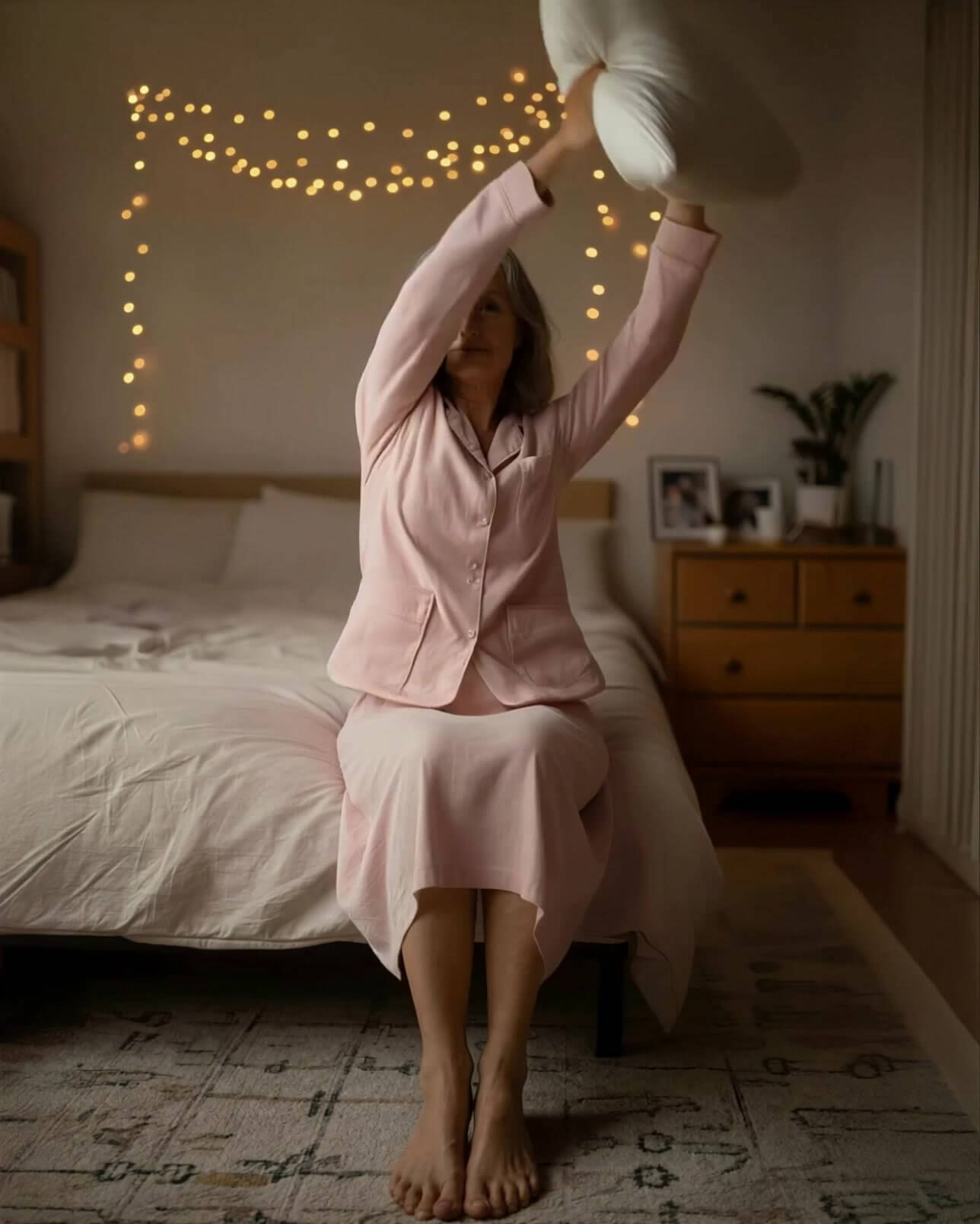 15 exercises
Pillow Breathing And Stretch
Hug and breathe with your pillow to calm your mind for bed.
 16 exercises
Knee Pain Relief
Gentle standing movements to reduce knee pain and improve joint mobility.
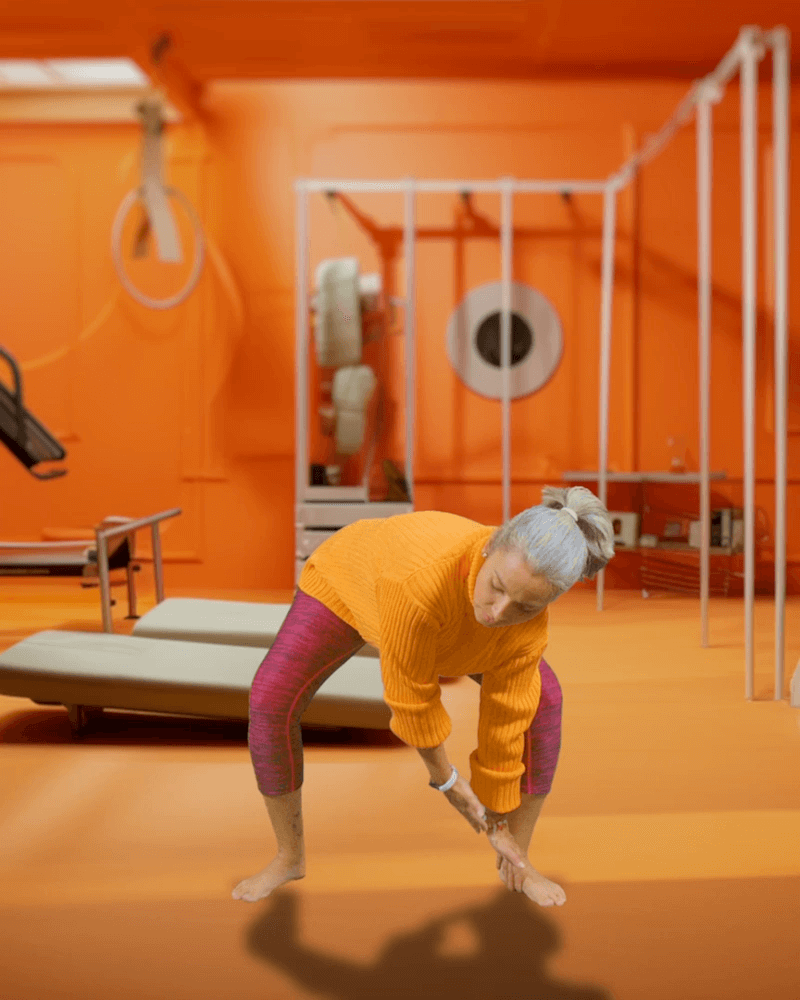 13 exercises
Mobility Range Extender
Delightful stretches targeting multiple body parts to expand range of motion.
Want the full routine?
Three minutes, guided by audio, in the iOS app. Or add Wakeout to Chrome — every new tab becomes a tiny movement break.