Wakeout pack — 14 exercises
Tension Release Shake Down
A full-body shaking routine where you shake your arms, legs, and torso while hopping beside your bed. Ideal for nights when something unnamed is buzzing inside you and threatening your sleep. The vigorous shaking dislodges stuck tension and leaves it on the floor instead of in your dreams.
standingbedroomeveningdo anywhere14 exercises
30-second preview
Full routine on YouTube
Press play and follow along
The whole routine in one video, 3:31 start to finish. Turn it up and follow along.
Reach for this when…
Your body is buzzing at bedtime for no clear reason and you want to shake it all out before you try to sleep.
Why this happens
Some nights your body is wired and you can't name why. No specific pain, no specific thought, just a low buzz that won't let sleep in. That state is usually residual sympathetic activation: the fight-or-flight system stayed slightly on all day and hasn't fully downshifted. Shaking is one of the oldest ways to discharge it. Prey animals literally tremor after a stress event to reset their nervous system. Somatic practitioners call the deliberate version TRE, or Tension and Trauma Release Exercises, and it works by using vibration to signal safety to the vagus nerve and drop the body out of arousal. This pack is a full-body standing shake-down before bed: arms, legs, torso, jaw. It looks silly. It works because it bypasses the thinking brain entirely. Most people feel heavier and calmer within five minutes. Use it when stretching won't touch what you're feeling.
About this routine
Best for buzzing, pre-sleep restlessness, done standing beside the bed. Takes five to seven minutes. Skip if you're pregnant beyond the first trimester, have recent concussion or vertigo, or have acute joint instability where shaking would aggravate it. Not for active panic attacks, which need slower breath-based regulation. None of this is clinical TRE and it's not therapy. But as a nervous-system discharge before sleep, it's one of the faster tools available.
Use this pack when you need to…
Built for these moments
Make Me Stand Up
Higher-intensity moves that get you up on your feet, from sit-to-stand flows to moves for your standing desk.
Why this pack: Standing up becomes the fun part here, with vigorous full-body shaking and Hop And Shake giving you an intense, playful burst of movement on your feet.
Engage My Hips
Hip exercises, leg stretches, kicks and Pilates-style moves that get your hips and legs happily in motion.
Why this pack: Leg Shakes and Hop And Shake get your legs bouncing and wiggling, and those leg movements bring your hips happily into the action.
Gain Mental Clarity
Cardio moves like punches, kicks, jumps and desk pumps that send oxygen through your blood and leave your head feeling clearer.
Why this pack: Vigorous full-body shaking and hopping give you a burst of intense cardio that gets oxygen pumping, helping your head feel clearer when you finish.
Frequently asked
What people ask about tension release shake down
Why does shaking help you relax?
Shaking discharges residual sympathetic nervous system activation, which is the same mechanism prey animals use to reset after a threat. Deliberate trembling sends high-frequency, low-amplitude input to the vagus nerve, which signals safety and allows the parasympathetic system to take over. Muscles holding chronic low-grade tension also release under vibration. The felt effect is usually a drop in arousal, slower breathing, and a sense of heaviness within a few minutes.
Is this the same as TRE therapy?
No, but it's adjacent. TRE (Tension and Trauma Release Exercises) is a specific protocol developed by David Berceli that uses induced muscle tremor to release deep chronic tension. It's typically done lying down and guided by a practitioner. This pack uses the same underlying mechanism, voluntary shaking to discharge arousal, but applied as a brief standing routine. If you're processing trauma, see a certified TRE provider or therapist, not a bedtime app.
Why can't I sleep even when I'm exhausted?
Exhaustion and nervous system arousal are different things. You can be physically depleted while your sympathetic system is still running slightly hot, which keeps the body primed for action even when you're tired. That's the wired-and-tired state. Slowing down cognitively doesn't fix it because the signal is in the body. Movement that discharges arousal, slow exhale breathing, and reduced light exposure work better than lying still and willing sleep to come.
Is it safe to do vigorous movement right before bed?
Moderate shaking and somatic discharge before bed are generally fine and often help sleep onset. What disrupts sleep is sustained high-intensity cardio or strength training in the 60 to 90 minutes before bed, because core temperature and catecholamines stay elevated. Shaking for five minutes doesn't reach that threshold. Most people find the body heavier and calmer after, not activated.
Will my neighbors hear me doing this?
Probably not if you're standing on carpet or a rug. The shaking is small-amplitude and low-impact, closer to a tremor than a bounce. On a hardwood floor in an apartment, some vibration can transfer. If that's a concern, stand on a folded blanket or yoga mat. The movement itself is quiet. The only sound is breath.
You might also like
Packs built for the same body, a slightly different moment.
 15 exercises
Stress Unwind
Punches, chops, and smacks to shake off tension before bed.
 12 exercises
Bed Bounce Chaos
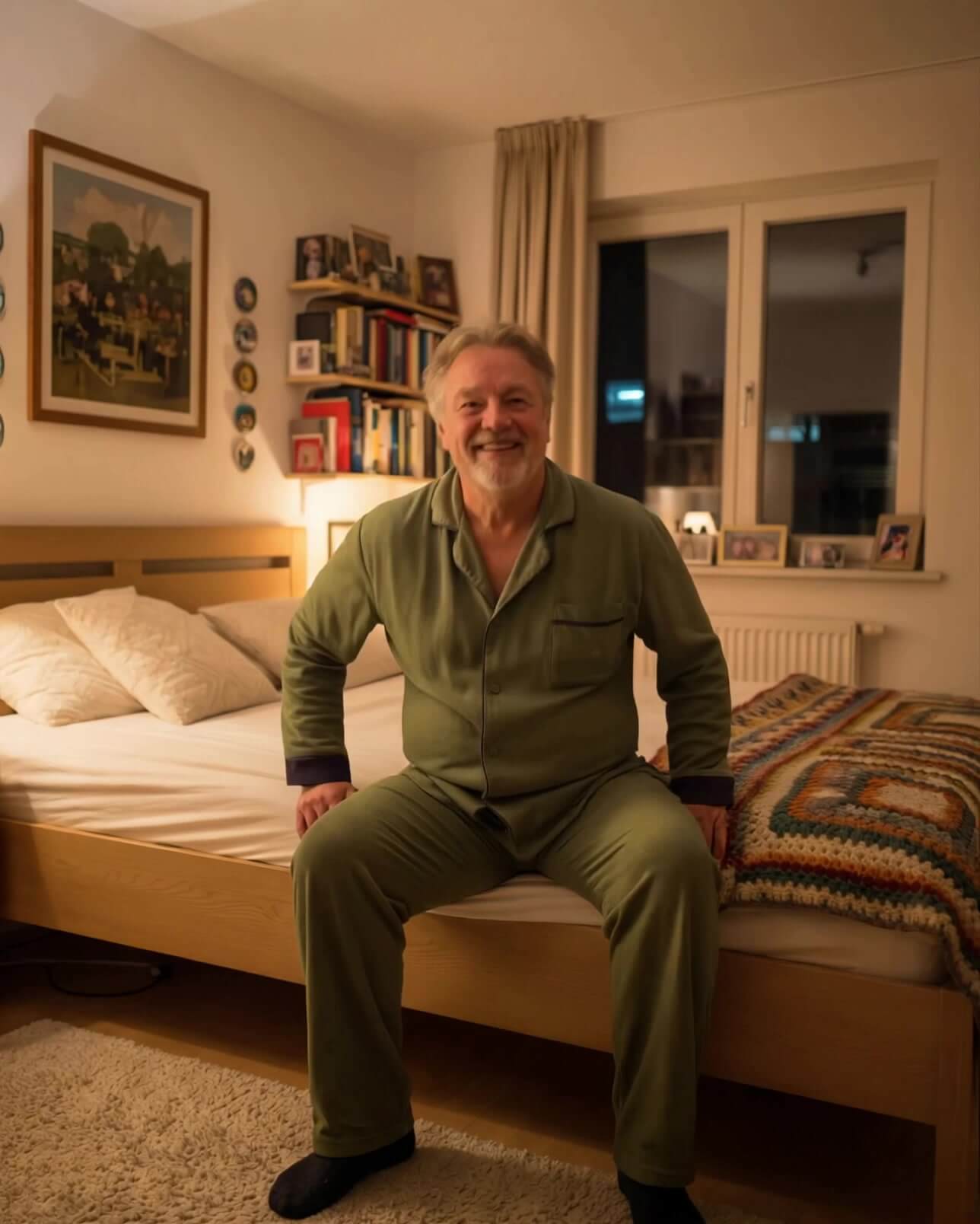
Playful bed-edge bouncing that shakes off stress and brings back childlike lightness.
 14 exercises
Couch Tension Release
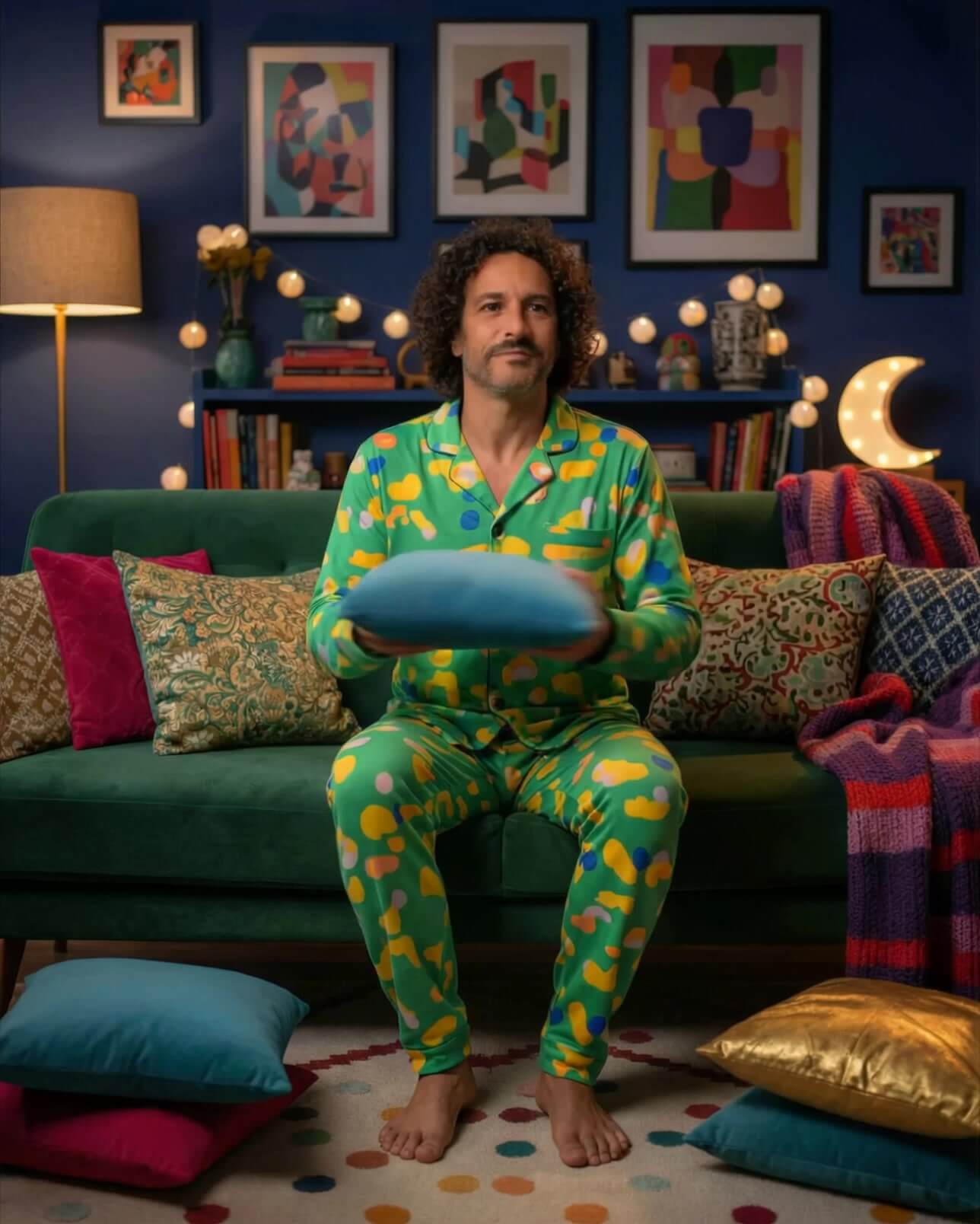
Punch and smack your cushions to release the day's frustrations.
 13 exercises
Funrobics
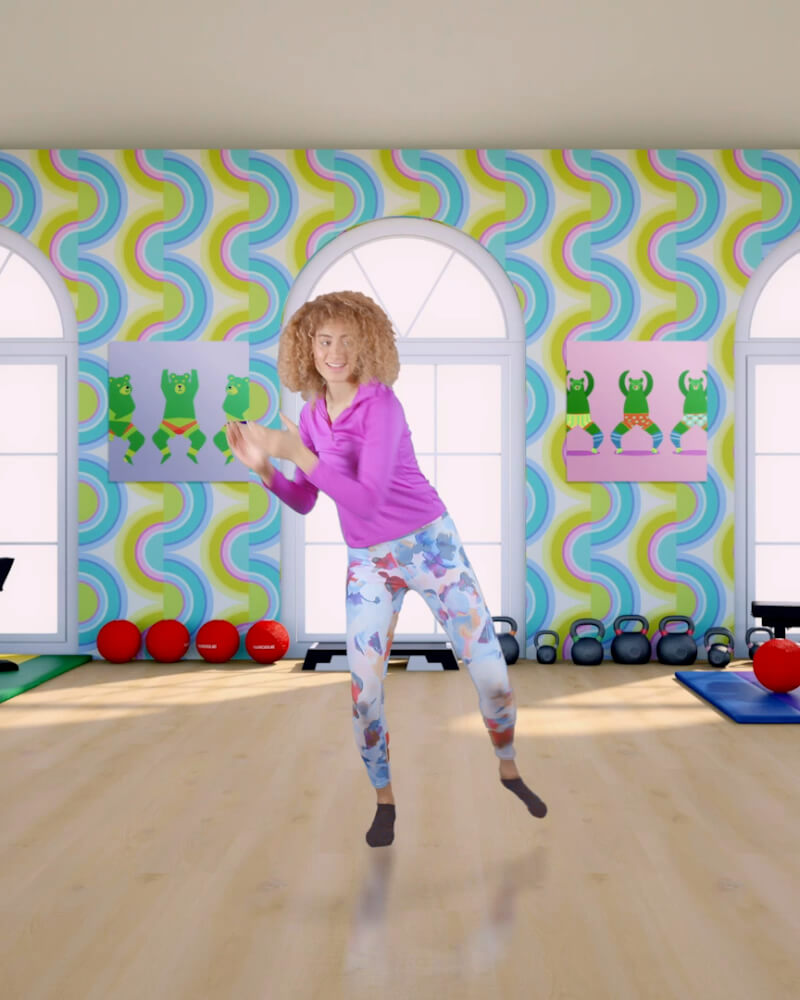
Retro 80s aerobics with upbeat movements updated for modern times.
 48 exercises
Morning Energy
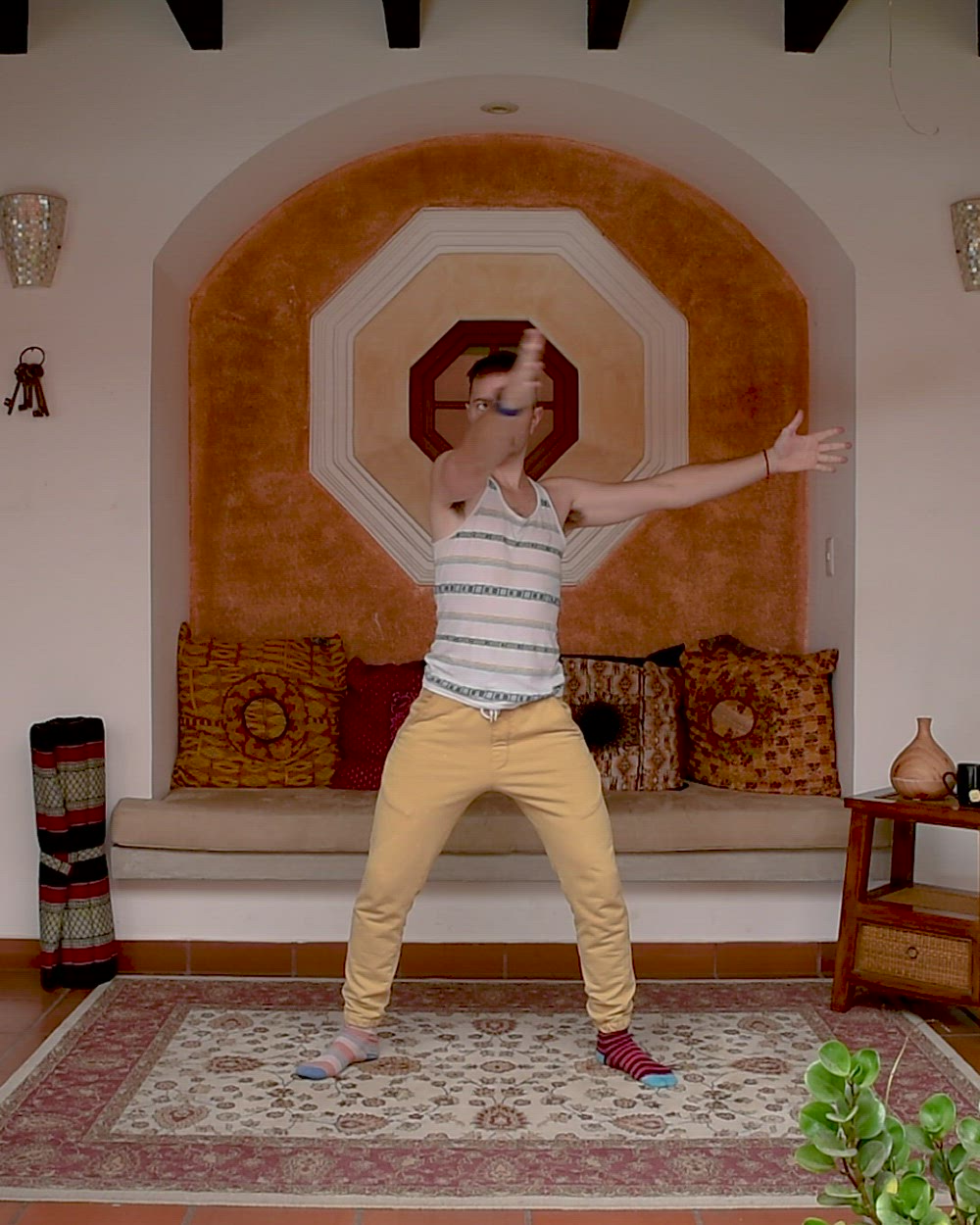
Rhythmic qi gong and yoga movements for a coffee-free morning boost.
Want the full routine?
Three minutes, guided by audio, in the iOS app. Or add Wakeout to Chrome — every new tab becomes a tiny movement break.