Wakeout pack — 52 exercises
Car
Safe passenger exercises designed to prevent stiffness during long car trips.
sittingcarmidday52 exercises
30-second preview
Reach for this when…
You're riding shotgun on a long drive, your legs feel stiff, and the seatbelt keeps you from doing much more than fidgeting.
Why this happens
Sitting in a car for hours carries specific circulatory risks that most people underestimate. Immobile legs below heart level plus a seatbelt pressing on the abdomen creates conditions for venous pooling in the calves — the precursor to deep vein thrombosis (DVT) risk that rises measurably after four hours of continuous travel, higher than economy-class flight risk because car trips rarely include dedicated movement breaks. Beyond the vascular side, hip flexors shorten, the lumbar spine loads unevenly from a reclined seat, and the diaphragm's range gets pinched by the seatbelt line. This pack is built for the passenger seat on a long drive — seatbelt-safe movements that pump the calf muscles (the 'second heart' that returns venous blood against gravity), rotate the ankles, decompress the hips, and keep the shoulders from locking into a steering-wheel shape even if you're not driving. None of it requires unbuckling. Drivers: do these only when stopped.
About this routine
Best for passengers on drives over two hours, or anyone in a car where the seatbelt must stay on. Every movement works around the belt geometry and the limited footwell space. Do not attempt while driving — these require enough attention that they'll compromise your road focus. Skip if you have an active DVT diagnosis (you need real medical care, not seated movement), or if a seatbelt over recent abdominal surgery is uncomfortable. Safe during pregnancy. Not medical advice, but it's gotten a lot of road-trippers through Nebraska.
Use this pack when you need to…
Built for these moments
Loosen Neck & Shoulders
Moves aimed at your neck and shoulders, plus arm-only work and push-ups or desk pumps where your arms hold you up.
Why this pack: Car Shrugs, Elbow Raises and Chin Ups bring friendly arm moves and stretches that ease stiffness in your neck and shoulders while you ride along as a passenger.
Engage My Core
Torso twists, side touches and similar moves that work your whole core: your abs, your sides and your lower back.
Why this pack: Right from your seat, Elbow To Knee, Cross Stabs and Chop Chop wake up your abs, obliques and lower back, turning the road trip into a sneaky little core session.
Frequently asked
What people ask about car
Can you get DVT from driving long distances?
Yes — any prolonged immobility over about four hours raises the risk, and long car trips are underestimated because people assume DVT is only a flight problem. The mechanism is the same: immobile calves can't pump blood back up against gravity, so it pools and can clot. Car travel often carries higher real-world risk than flights because drivers resist stopping, whereas flights have mandatory stand-ups. Frequent calf activation — even in the passenger seat with the belt on — measurably reduces stasis.
What exercises can you do in a car with a seatbelt on?
Calf pumps (heel raises), ankle circles, seated marches, glute squeezes, shoulder rolls, neck rotations, and spinal twists within the belt's constraint. All of these work the muscles that matter for circulation and postural relief without loosening the belt. The key is frequency — two minutes every hour beats one long session at a rest stop. This pack strings these into a structured routine so you don't have to think about it.
I'm the driver — what can I safely do?
Only at stoplights, rest stops, or while parked. Any movement that takes eyes off the road or hands off the wheel is a bigger risk than whatever circulation it helps. For driving itself, the recommendation is a real stop every two hours: get out of the car, walk for three to five minutes, do a couple of hip-opening stretches. Standing still outside the car doesn't help — the pump only works when the calves contract.
Why do my legs swell on long drives?
Gravity plus immobility. Blood pools in the lower legs because the calf muscles aren't contracting to push it back toward the heart, and the seat edge compresses the back of the thighs, partially restricting venous return. Over hours, fluid leaks from the veins into surrounding tissue — that's the swelling. Regular calf pumps and ankle circles restart the pump and reduce the pooling. Compression socks work through the same principle, externally.
How is this different from the airplane pack?
Seat geometry and constraints are different. A car seat is more reclined, has a real footwell, and the passenger can shift fairly freely. A plane seat is upright, has tray-table interference, and neighbors restrict lateral movement. Airplane assumes cramped upright seating; this pack assumes you have a bit more room but the seatbelt is non-negotiable. The movement vocabulary is similar, but the range and emphasis are calibrated to each environment.
You might also like
Packs built for the same body, a slightly different moment.
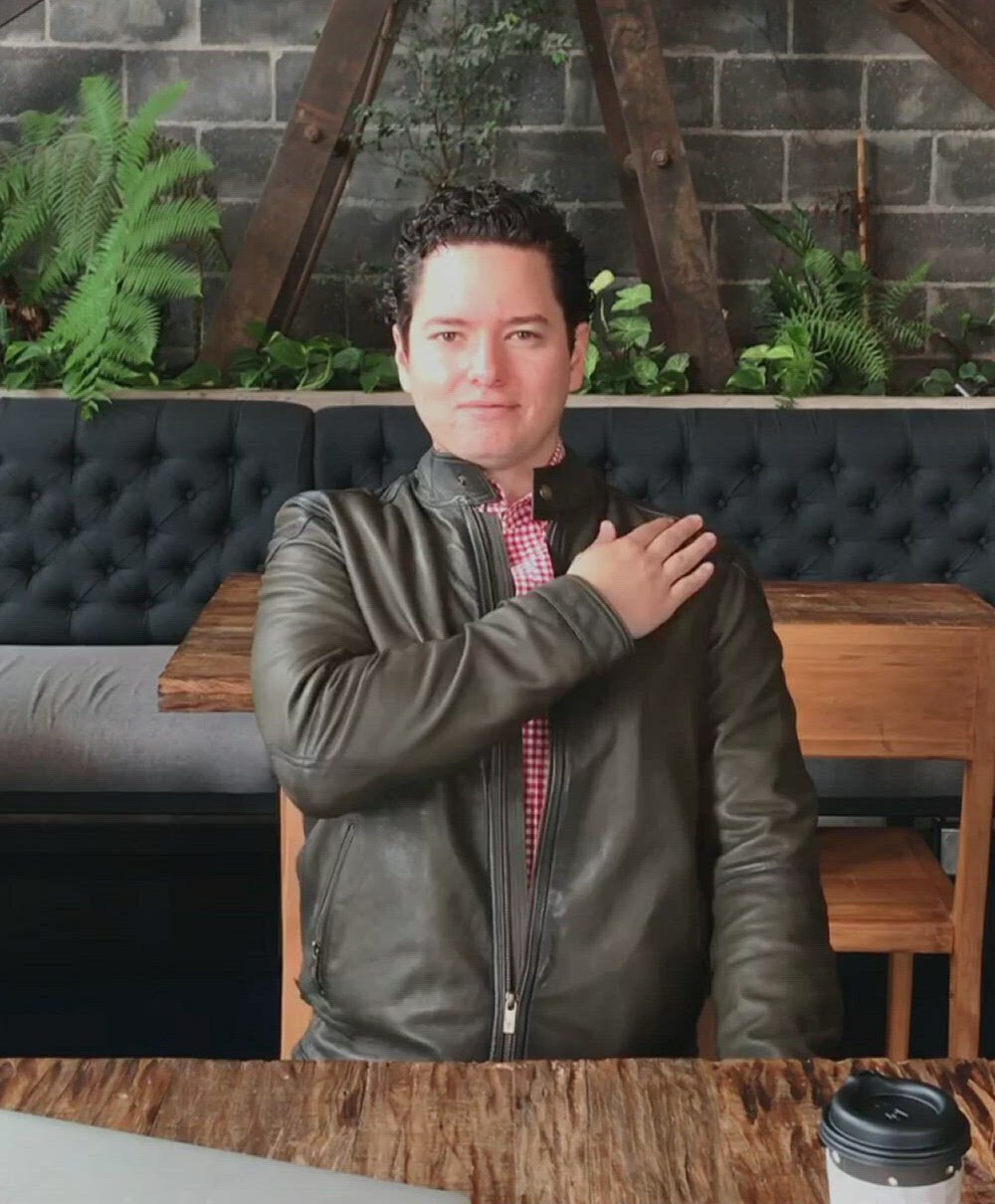 62 exercises
Coffee Shop
Discrete movements for public spaces that maintain energy without drawing attention.
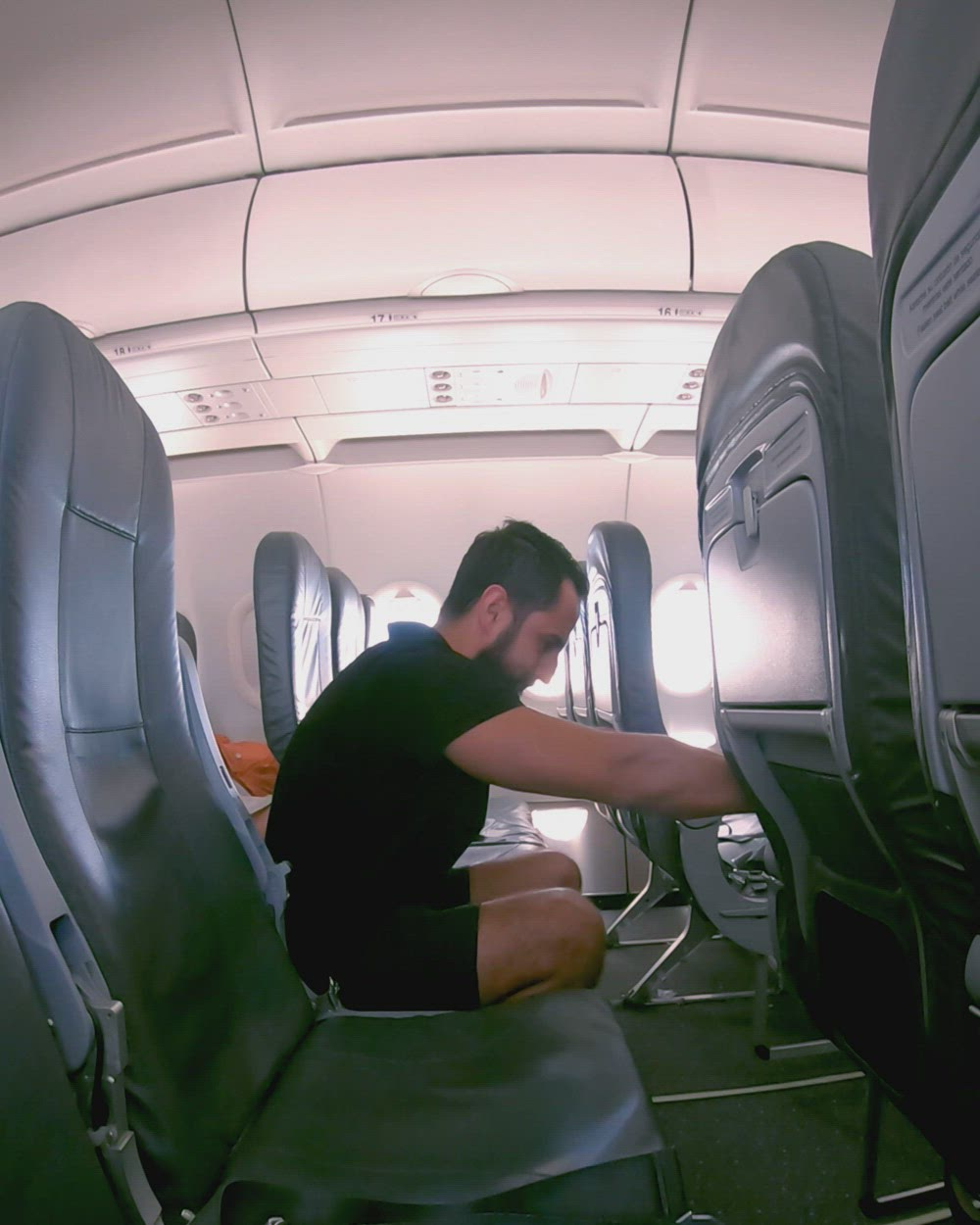 50 exercises
Airplane
Keep circulation flowing with movements designed for cramped airplane spaces.
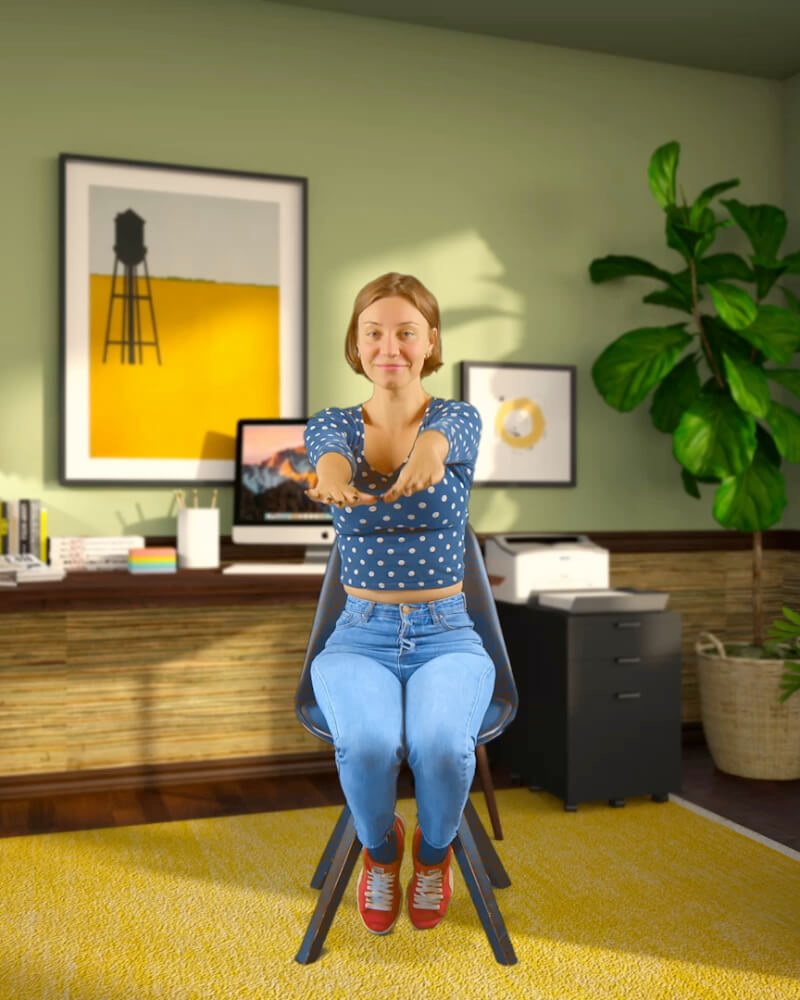 12 exercises
Arms Only
Desk-friendly upper body exercises that promote blood flow and energy while you work.
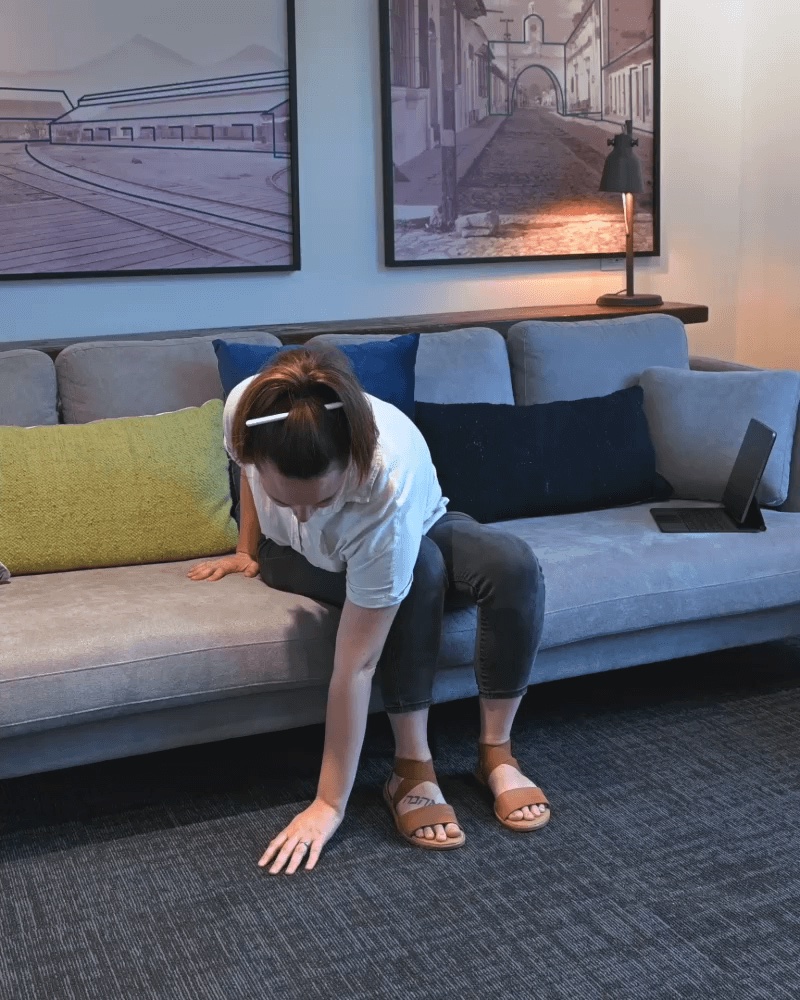 18 exercises
Couch Stretch
Creative comfort-focused stretches using your couch as a stretch station.
 18 exercises
Cushion Fun
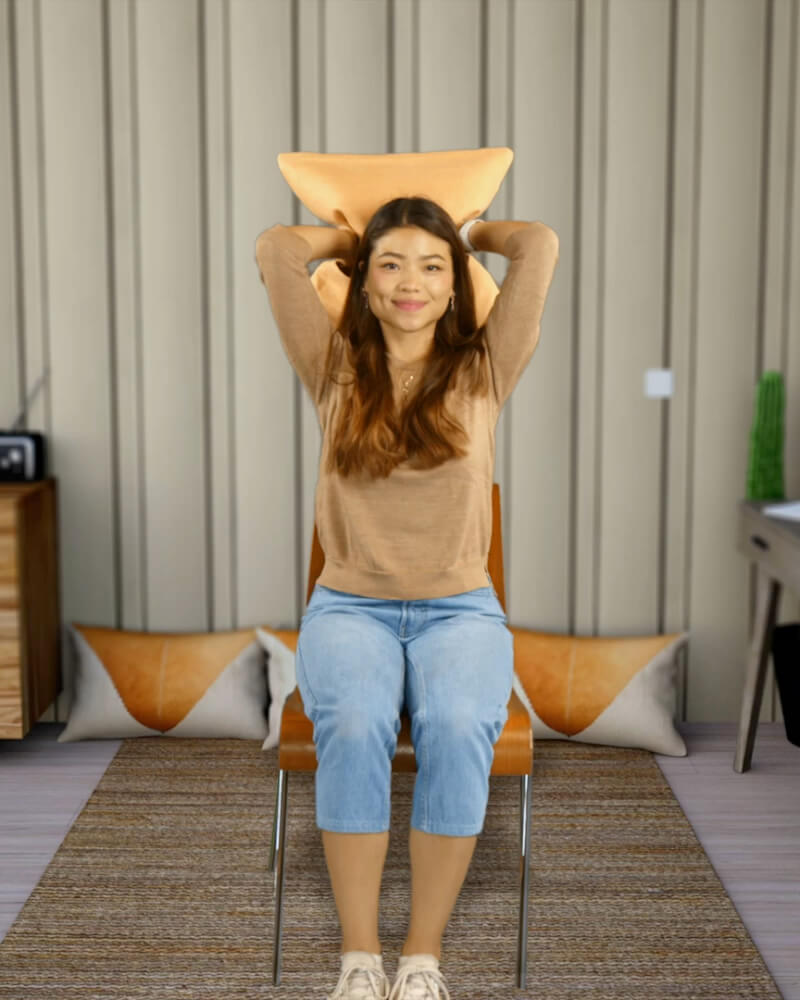
Playful seated movements using a cushion as an exercise prop.
Want the full routine?
Three minutes, guided by audio, in the iOS app. Or add Wakeout to Chrome — every new tab becomes a tiny movement break.