Wakeout pack — 13 exercises
Coffee Tai Chi
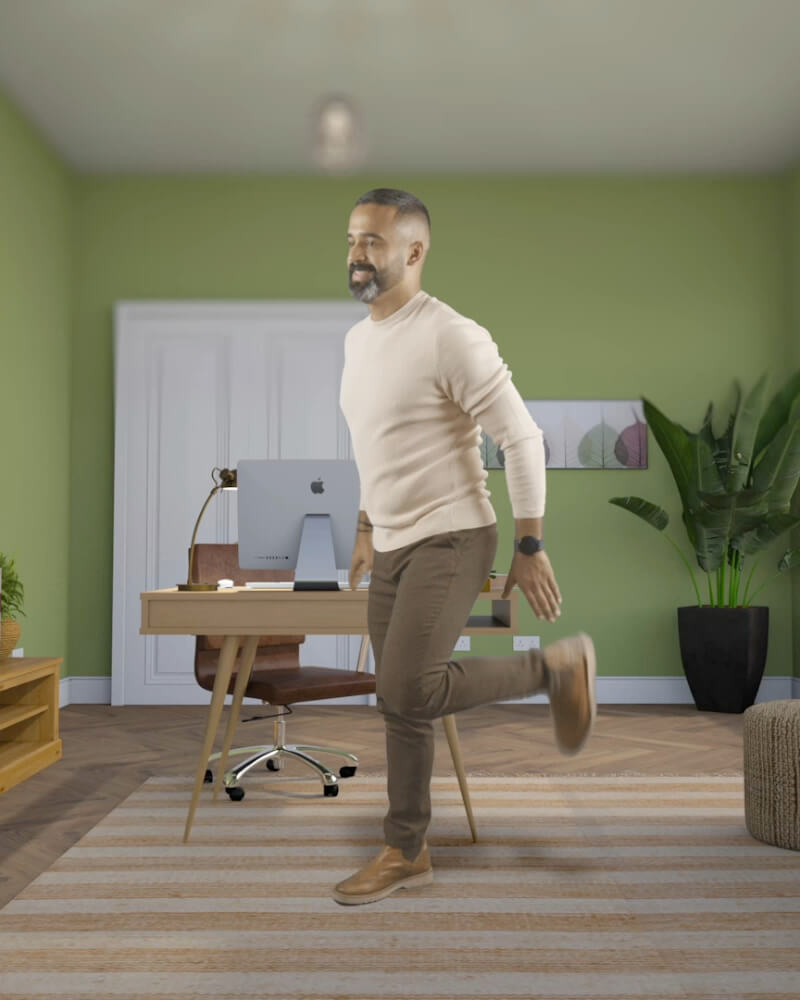
Balance and coordination practice while holding your coffee cup.
standingkitchen / living roommorningdo anywhere13 exercises
30-second preview
Reach for this when…
Your coffee is still too hot to sip and you want a slow, steady way to wake up your balance without setting the mug down.
Why this happens
Balance is the sneakiest fitness variable — it declines earlier than people realize, starts measurably degrading in the thirties if untrained, and barely recovers from strength work alone. The cerebellum and vestibular system that handle balance need the actual input: small challenges to stability, often. This pack inserts those challenges into an existing ritual you're already doing — holding a warm cup in the morning. The mug becomes a balance prop that requires offsetting weight management, and tai-chi-style slow transfers recruit the deep stabilizers of the ankle, hip, and trunk while the cerebellum integrates the data. There's a bonus cognitive effect: slow, unilateral movement with attention on proprioception has been shown to improve focus for the following several hours, which pairs well with whatever caffeine is doing. The brief is roughly three minutes of mindful single-leg weight shifts and flowing transfers, coffee in hand. Spills are part of the feedback loop.
About this routine
Best first thing in the morning while holding a full mug you're not in a hurry to drink. Standing, kitchen floor or any flat surface, no other props. Skip if your balance is impaired enough that holding a hot liquid is risky — work on Balance Training without the cup first. Not appropriate if you've recently had inner-ear surgery or vertigo episodes. Safe for most healthy adults. Not medical advice, but it beats scrolling while the coffee cools.
Use this pack when you need to…
Built for these moments
Boost Energy
High-energy moves you can do seated or standing, like seated boxing and kicks, right at your desk when you need a lift.
Why this pack: Your coffee break becomes a balance game with Coffee Raises and Slow Coffee Lunge, waking up mind and body so you feel alert and focused through the afternoon slump.
Make Me Stand Up
Higher-intensity moves that get you up on your feet, from sit-to-stand flows to moves for your standing desk.
Why this pack: Coffee Tai Chi is all standing balance practice with your cup in hand, so moves like Slow Squat and Slow Coffee Sumo Squats simply can't happen from your seat.
Strengthen Back
Desk yoga and focused moves that strengthen and stretch your lower back and give your spine some kind attention.
Why this pack: Gentle, flowing moves like Slow Coffee Rotations and Circle Of Life ask your core to steady the cup, encouraging spinal alignment through slow, controlled motion.
Engage My Hips
Hip exercises, leg stretches, kicks and Pilates-style moves that get your hips and legs happily in motion.
Why this pack: Slow Coffee Lunge, Low Coffee Slides and Slow Coffee Sumo Squats keep your legs and hips working through flowing weight shifts, a good fit for hips that need extra care.
Improve Mood
Playful moves for when your mood dips at work, from dancing to pretend punches, kicks and a little fun with your office chair.
Why this pack: Playful balance moves like Coffee Dive and Coffee Pick-ups make your break a little game, and finishing without spilling a drop feels like a cheerful win.
Frequently asked
What people ask about coffee tai chi
Can you really improve balance while holding a coffee cup?
Yes, and adding the cup actually makes the training more effective. Holding a filled vessel increases the stabilization demand — the arm, shoulder, and trunk must counterbalance a moving liquid mass, which recruits deeper postural muscles than empty-handed balance work. The vestibular system and cerebellum get richer proprioceptive input when there's a weighted offset to manage. It's the same principle behind waiters carrying trays as a training drill.
Why does balance decline as you get older?
Multiple systems degrade together: vestibular hair cells in the inner ear decrease, proprioceptive nerves in the feet and joints become less responsive, and the cerebellum loses some processing speed. Strength loss adds to it, because weak stabilizer muscles can't correct fast enough when balance is challenged. The process starts surprisingly early — measurable decline begins in the thirties for people who don't train balance, which is why daily low-dose balance work is one of the highest-leverage habits of aging well.
Is this suitable for older adults?
Yes, with the caveat that a very hot mug plus unsteady balance is a burn risk. For adults with known balance issues, start with a lukewarm or half-empty cup, stand near a counter you can touch, and stop the single-leg phases if you feel unsteady. The fundamentals — slow weight shifts, intentional foot placement, controlled transitions — are exactly the interventions that reduce fall risk in older populations. Just calibrate the difficulty honestly.
Does tai chi really do anything or is it just slow movement?
It really does something, and the 'slow' is the active ingredient. Slow, controlled movement forces continuous recruitment of stabilizers that fast movement bypasses through momentum. Randomized trials on tai chi in older adults consistently show reductions in fall rate, improvements in balance confidence, and modest cognitive benefits. The mechanism is repeated low-threat challenges to the balance system across multiple planes, which is exactly what the cerebellum and vestibular system need to stay calibrated.
Can I do this without coffee if I don't drink it?
Yes — any mug, cup, or water glass works as the prop. The coffee framing is about the ritual moment, not the caffeine. Tea, hot water, a smoothie glass, or even an empty mug all provide the same balance-training effect. The routine works because it attaches balance practice to a daily standing habit you already have, which is why it sticks. Pick whatever morning drink you're already making.
You might also like
Packs built for the same body, a slightly different moment.
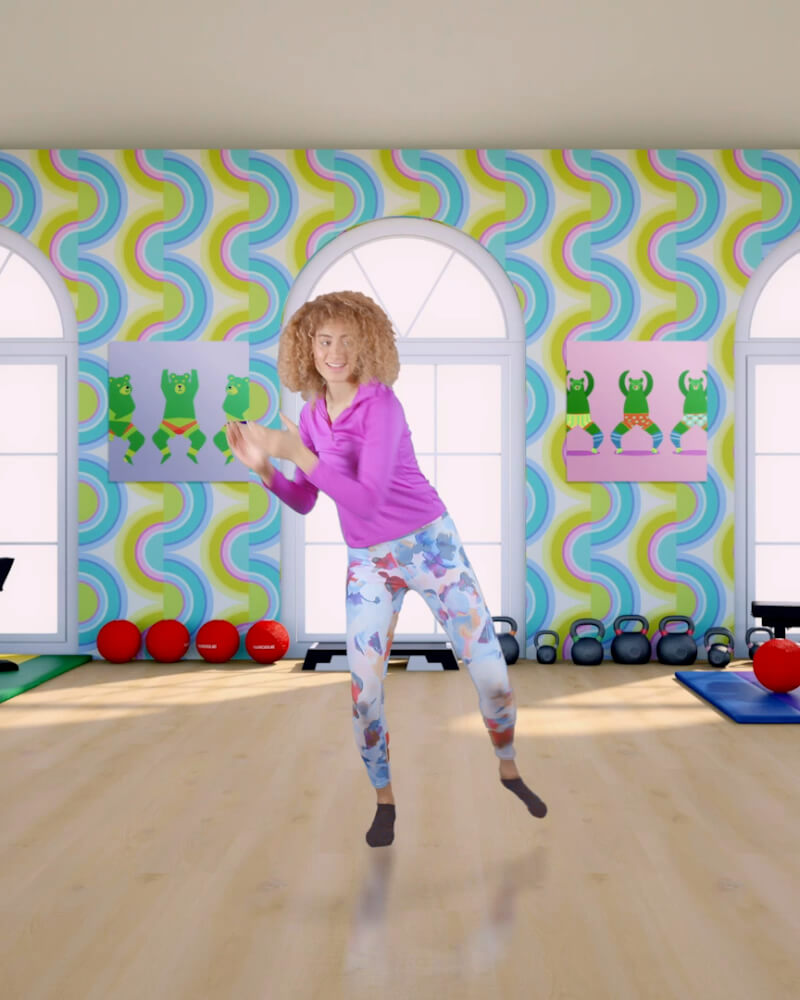 13 exercises
Funrobics
Retro 80s aerobics with upbeat movements updated for modern times.
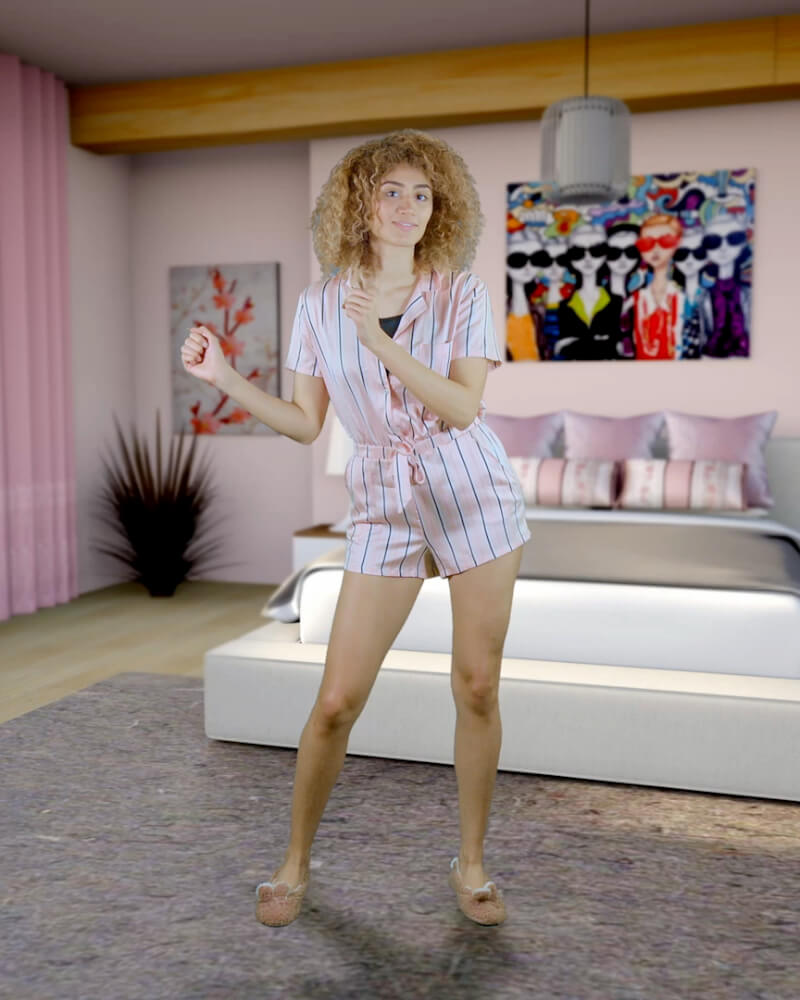 14 exercises
Pajama Dance
Upbeat morning dance movements you can do in your pajamas.
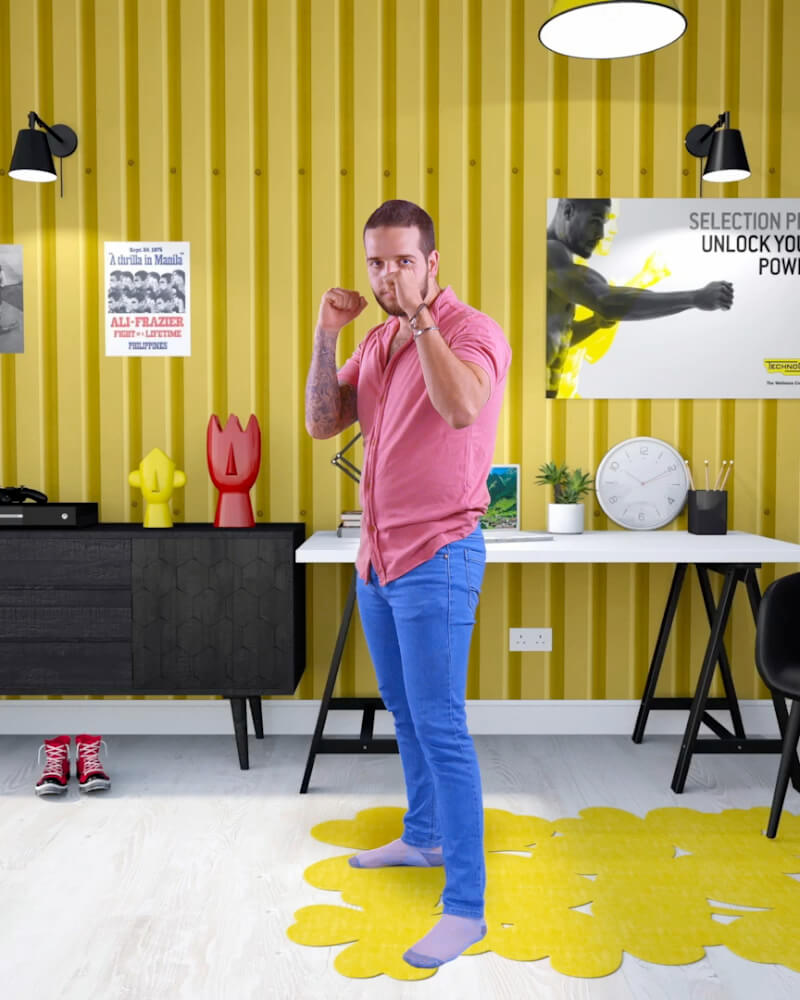 19 exercises
Standing Boxing
Upright boxing combinations that boost energy and confidence without equipment.
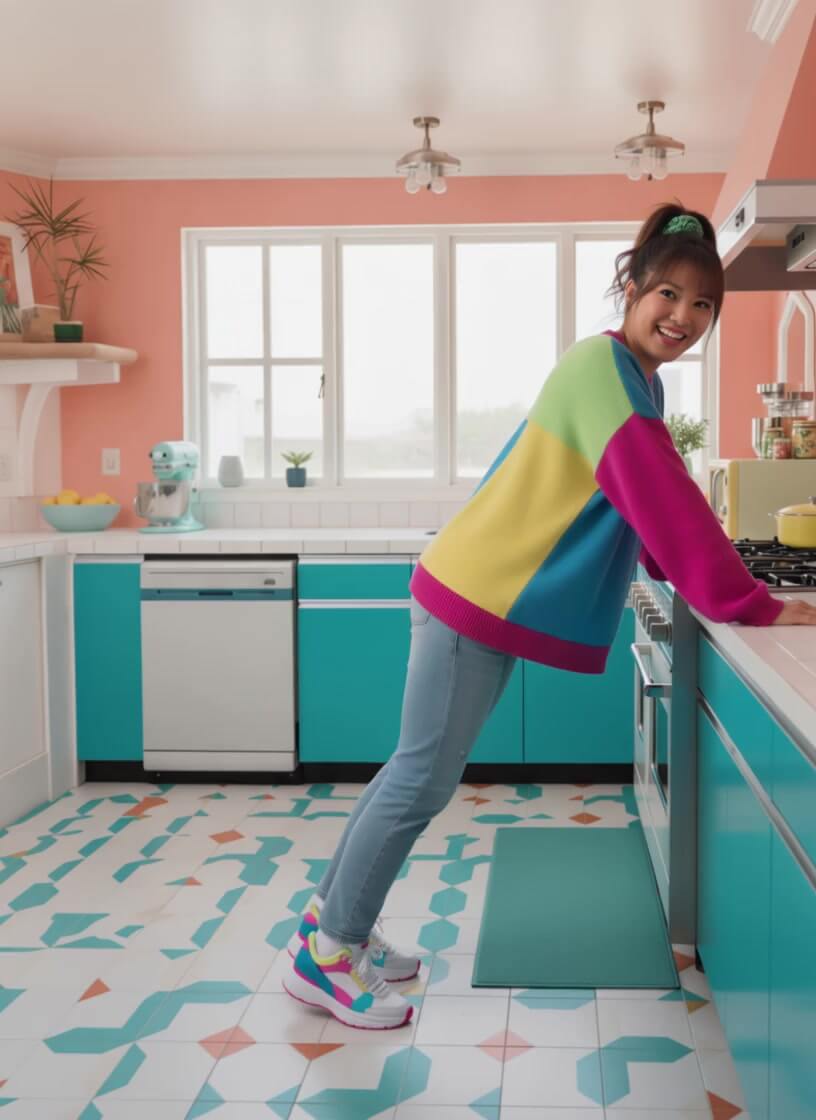 16 exercises
Kitchen Timer
Keep your body moving while your dinner cooks with kitchen-friendly exercises.
 13 exercises
Fun Kicks
Playful kicking movements that energize your legs and promote lower body circulation.
Want the full routine?
Three minutes, guided by audio, in the iOS app. Or add Wakeout to Chrome — every new tab becomes a tiny movement break.