Wakeout pack — 19 exercises
Chair Dancing
Fun dance moves adapted for your office chair, bringing joy to your workday.
sittingdeskmiddaydo anywhere19 exercises
30-second preview
Full routine on YouTube
Press play and follow along
The whole routine in one video, 3:42 start to finish. Turn it up and follow along.
Reach for this when…
The music is on and you want to break up work with something fun, without ever leaving your chair.
Why this happens
Seated rhythmic movement sounds trivial, but the research on it is surprisingly robust. Rhythm-synchronized motion activates the basal ganglia and supplementary motor area in ways that static stretching doesn't — which is why dance improves mood and executive function more reliably than equivalent-intensity exercise without music. For desk workers, there's a second mechanism: seated dance produces enough calf and thigh contraction to restart circulation after long periods of stillness, without requiring a standing break. This pack is for the moment when you want to break up work with something that doesn't feel like exercise, set to the rhythm of whatever's already playing. Eight to ten minutes of seated choreography that moves the hips, shoulders, spine, and feet in combinations that feel like having fun, not doing reps. The office chair is a design feature, not a limitation — the rotation and roll become part of the vocabulary. If you want a less rhythmic, more athletic seated option, try Sitting Boxing.
About this routine
Best mid-workday or late afternoon when focus is flagging and music helps more than another coffee. Requires a chair with some range — an office chair with wheels is ideal, but any stable chair works. Skip if the chair wobbles dangerously, if you have acute lower-back pain that rotation aggravates, or if you need discretion (Coffee Shop is quieter). Safe for most bodies. Not medical advice — but it's closer to free medicine than most things you'll do this afternoon.
Use this pack when you need to…
Built for these moments
Boost Energy
High-energy moves you can do seated or standing, like seated boxing and kicks, right at your desk when you need a lift.
Why this pack: Playful seated dance moves like Sky Punches, Fist Pumps and Forward Stomps get you grooving in your office chair and give your energy a lift at your desk.
Improve Mood
Playful moves for when your mood dips at work, from dancing to pretend punches, kicks and a little fun with your office chair.
Why this pack: Fun, playful moves like the Chicken Dance, Raise The Roof and The Cha Cha turn your office chair into a little dance floor that brings joy to your workday.
Frequently asked
What people ask about chair dancing
Does dancing in a chair actually count as exercise?
Yes, though calling it exercise slightly misses the point. Seated rhythmic movement raises heart rate modestly, contracts the major leg and core muscles, and moves most spinal segments through their range — enough to count as light physical activity by any public-health definition. The bigger effect is neurological: rhythm synchronization activates motor-planning regions that stretching doesn't touch, which is why dance sessions lift mood more than equivalent low-intensity cardio.
Why does music make movement feel easier?
Music activates the basal ganglia and temporal cortex, which couples with motor regions through established neural pathways — the brain literally offloads timing decisions to the beat. Perceived exertion drops measurably when movement is rhythm-synchronized, which is why people can dance for an hour and run for ten minutes. Music also triggers dopamine release, which adds a direct mood effect on top of the movement.
Can I do this during a Zoom call without looking weird?
Only the subtlest of these movements are camera-safe, and honestly not really the intent of this pack. Chair dancing is designed for camera-off or solo moments where you can actually move without worrying about how it reads on a grid view. For active Zoom calls, Arms Only or Zoom Meeting Fatigue stay below the camera frame and require almost no visible torso movement. Save chair dancing for the break between meetings, when you can turn the camera off and actually commit.
I feel silly doing this. How do I get past that?
The silly feeling is social self-monitoring, and it fades after about ninety seconds once the rhythm takes over. Two practical tricks: do it alone at first, and start with music you actually like rather than whatever the app suggests. The embarrassment comes from the mismatch between 'I am doing a workout' and the movements themselves; reframing it as 'I am listening to music, and my body is agreeing' removes the conflict.
What's the difference between this and a real dance workout?
This pack is designed for the desk chair — limited space, no risk of sweat, no prop requirements, and moves that work around a seated hip angle. A real dance workout assumes standing, floor space, and permission to get winded. Use this during the workday to break up sitting; use a standing class like Funrobics or Dad Moves when you have energy and space to commit.
You might also like
Packs built for the same body, a slightly different moment.
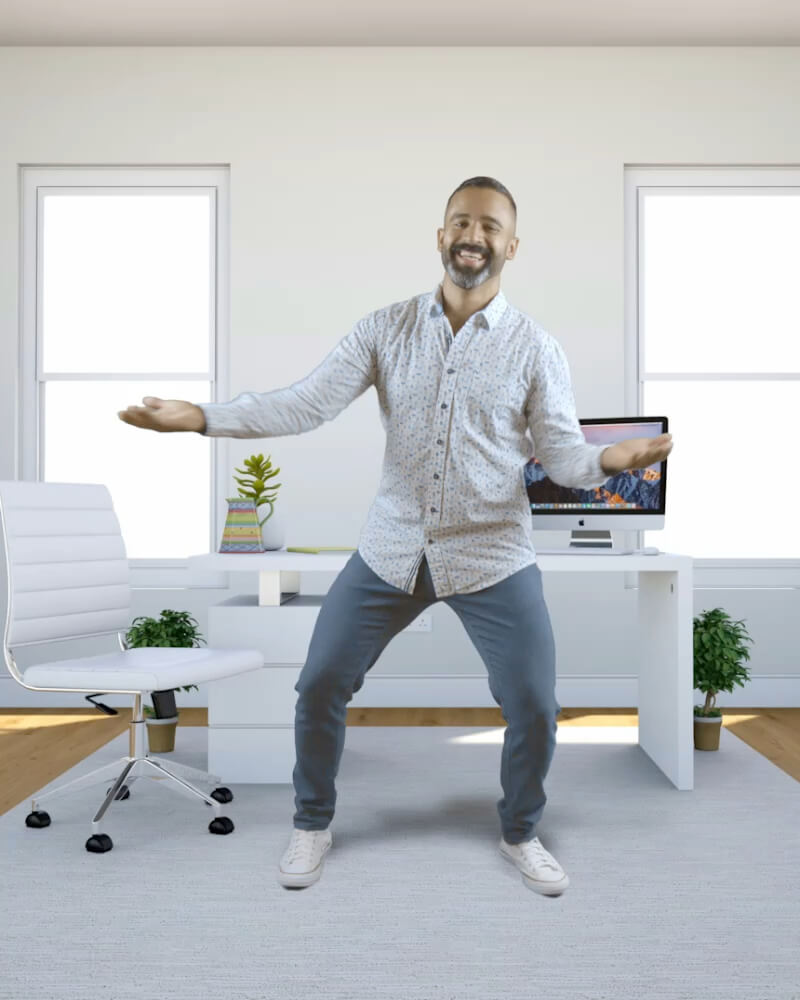 14 exercises
Dad Moves
Classic dad-inspired dance moves that combine humor with effective exercise.
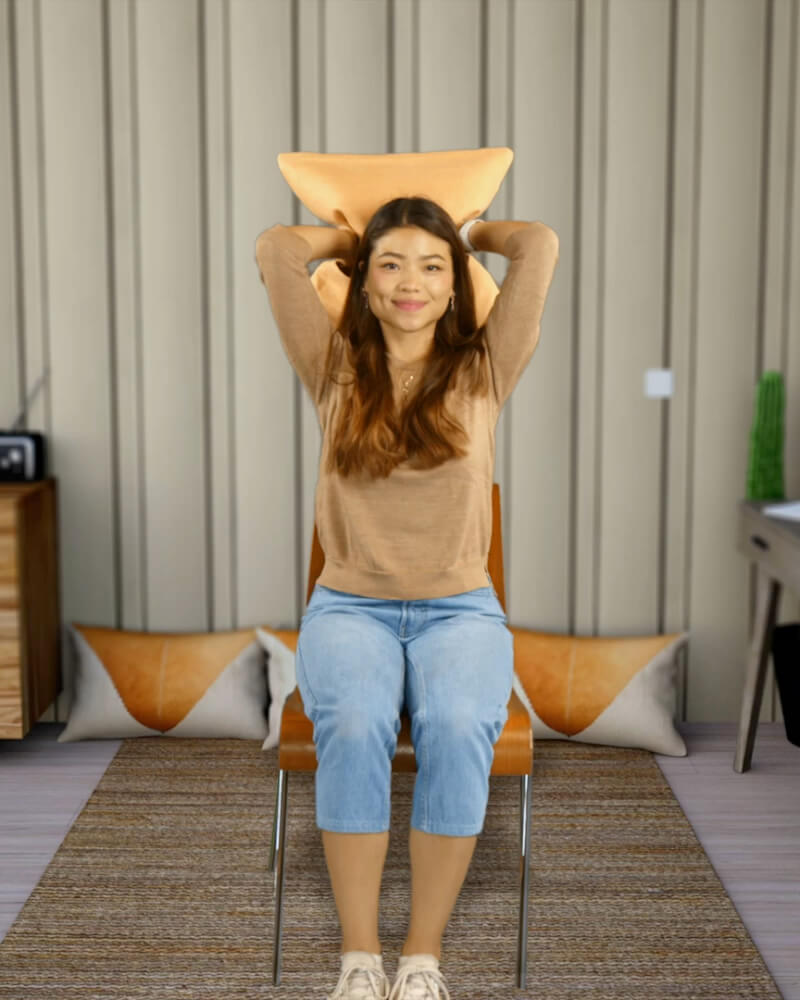 18 exercises
Cushion Fun
Playful seated movements using a cushion as an exercise prop.
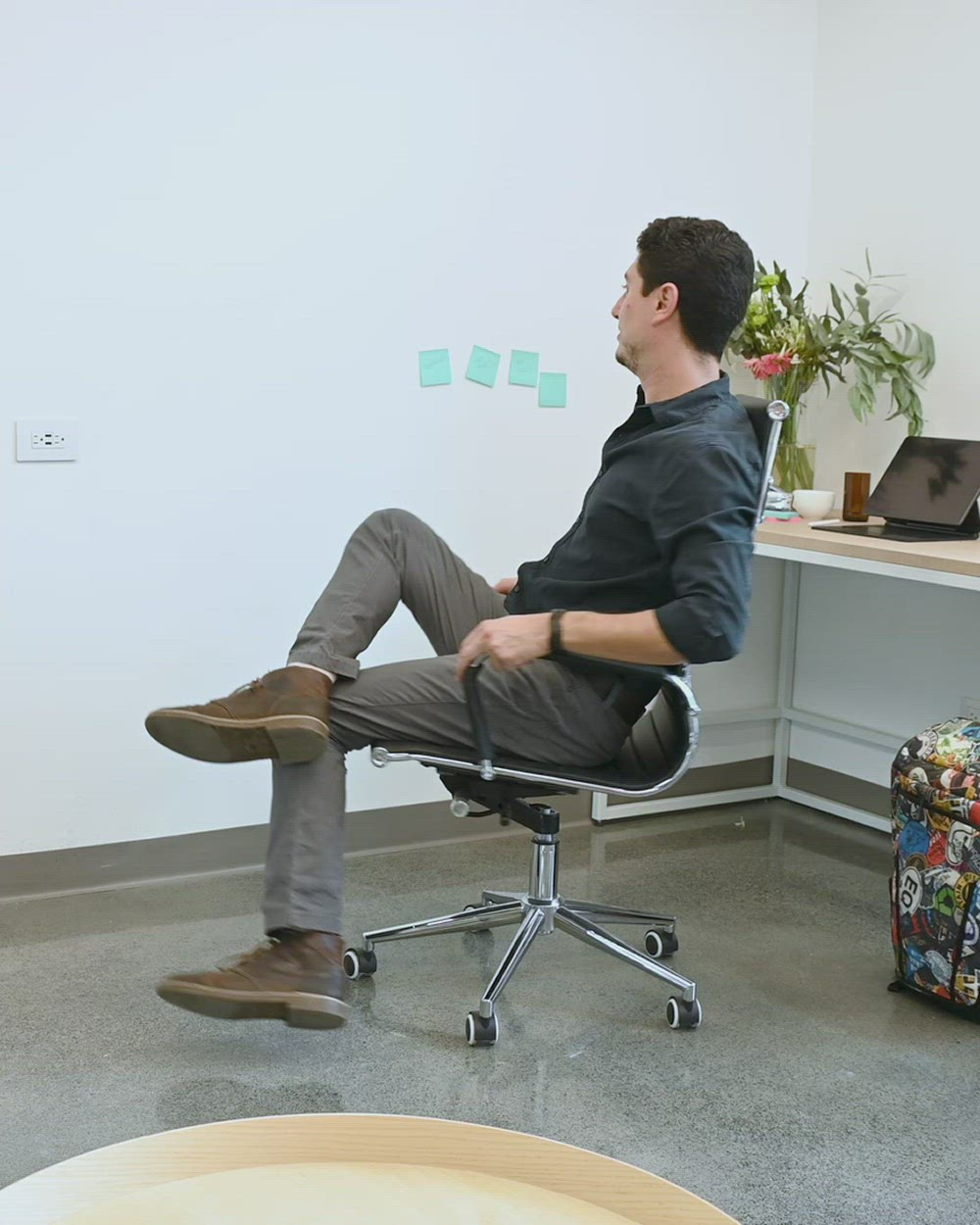 28 exercises
Office Chair
Playful chair exercises that turn your office chair into exercise equipment.
 29 exercises
Sitting Boxing
Seated punching combinations that energize your upper body while you work.
 13 exercises
Fun Kicks
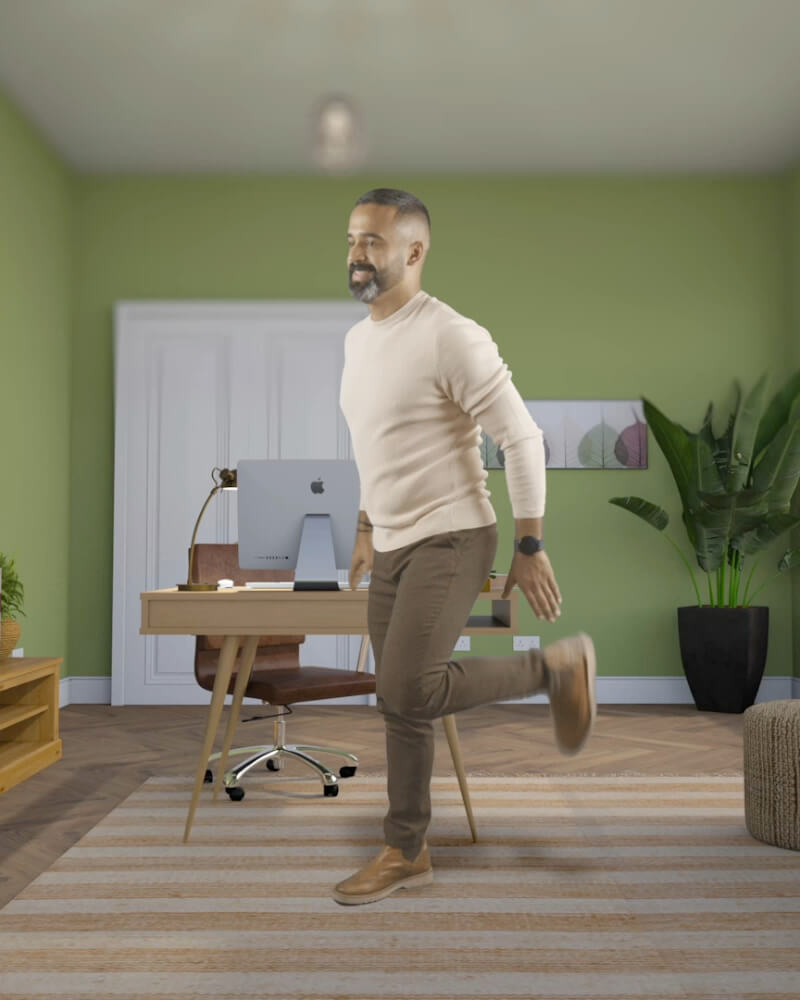
Playful kicking movements that energize your legs and promote lower body circulation.
Want the full routine?
Three minutes, guided by audio, in the iOS app. Or add Wakeout to Chrome — every new tab becomes a tiny movement break.